In general terms, water with 75 mg/L or less is considered soft, 76-150 mg/L moderately hard, 151-300 mg/L hard, and anything above that very hard. Edmonton’s water, therefore, sits comfortably in the “hard” category.
This guide breaks down what water hardness means, how water softening in Edmonton works, and what options Edmontonians have for tackling it within local regulations and available programs.
Why Hard Water Matters
Hard water is not a health risk, but it causes practical problems. Solving the following issues requires understanding both the water chemistry and the available solutions.
- Mineral buildup: Scale forms on kettles, showerheads, and heating elements, reducing efficiency and shortening appliance life.
- Cleaning challenges: Soap doesn’t lather well, leaving laundry dull and dishes spotty.
- Dryness and irritation: Hard water can make skin feel dry and hair less manageable.
- Plumbing wear: Over time, scale buildup narrows pipes and stains fixtures.
Edmonton’s Water Hardness at a Glance
The table below contextualises Edmonton’s hardness values. It combines data from EPCOR’s report with widely used hardness categories. Edmonton’s treated water sits at the lower end of the hard range. Residents who prefer softer water need a water softener or alternative conditioning system.
| Water classification | CaCO₃ range (mg/L) | Example | Edmonton’s value |
| Soft | 0–75 | Water in many coastal cities; soap lathers easily | Not applicable |
| Moderately hard | 76–150 | Some prairie towns, minor scale | Slightly below Edmonton |
| Hard | 151–300 | Typical of the North Saskatchewan River, scale forms readily | ~177 mg/L |
| Very hard | >300 | Water in limestone-rich regions; severe scaling | Not applicable |
How Water Softeners Work
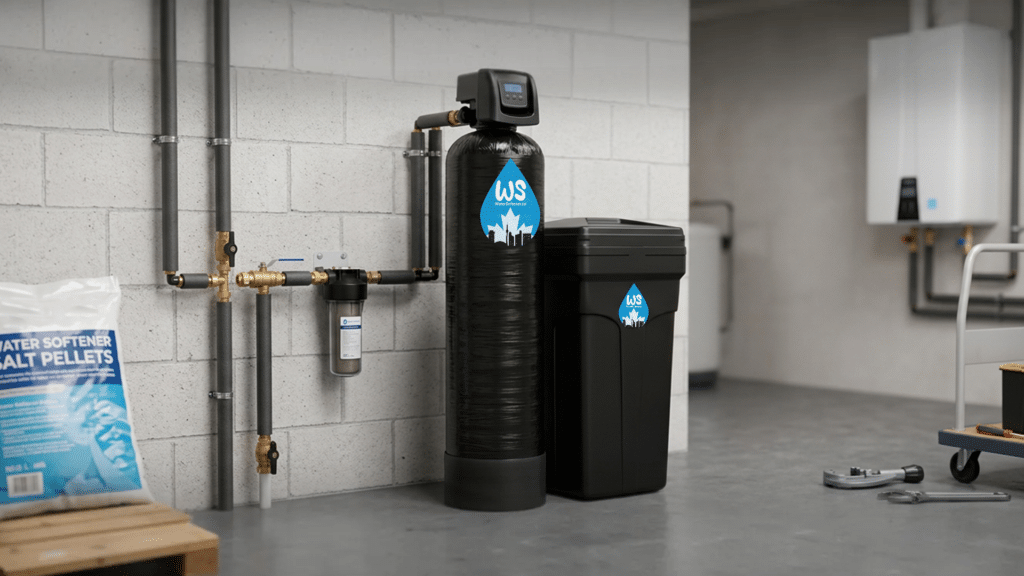
A conventional water softener uses a process called ion exchange.
Hard water flows through a tank filled with resin beads that hold sodium ions. As the water passes, the beads attract calcium and magnesium, the minerals responsible for hardness, and release sodium in exchange.
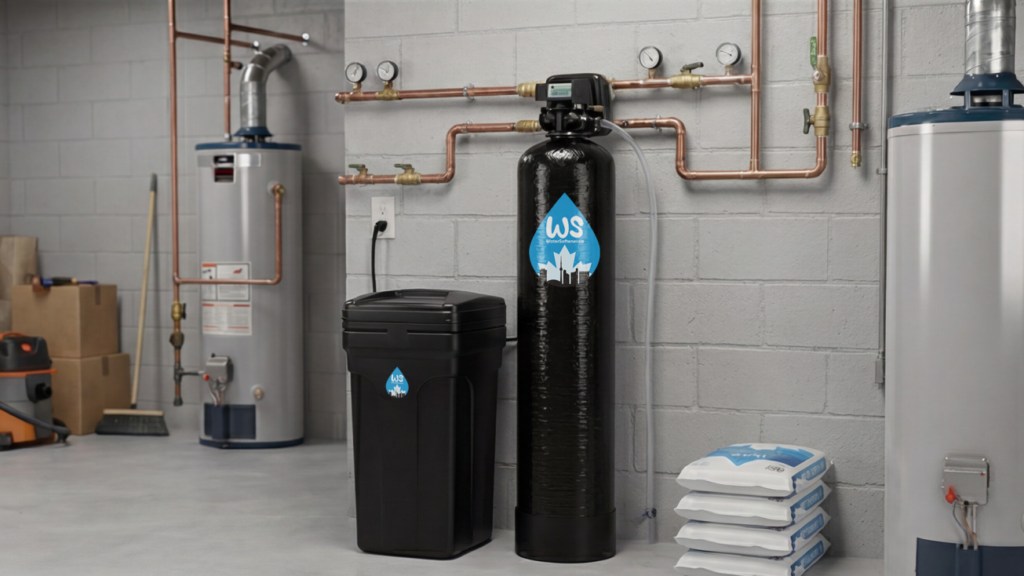
When the resin becomes saturated, the system automatically cleans itself through a regeneration cycle using a brine solution stored in a secondary tank. The brine flushes out minerals and recharges the beads with sodium.
After regeneration, the system resumes normal operation, delivering soft water throughout the home.
Note: The drain line must include an air gap or backflow prevention device to comply with plumbing codes.

Types of Water Softeners
1. Salt-Based Systems
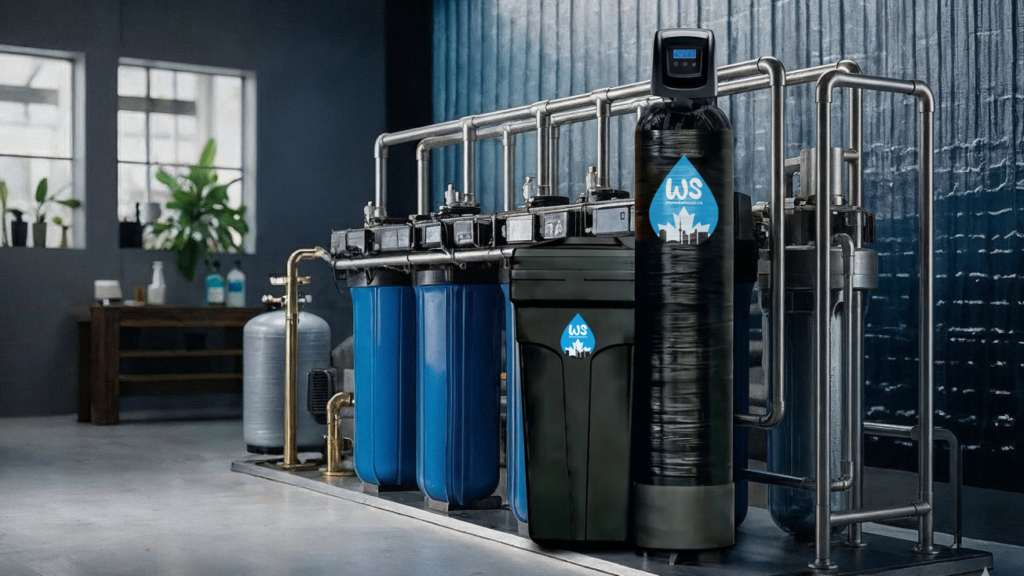
The most common type uses resin beads to swap calcium and magnesium for sodium. They’re highly effective for very hard water and come in single or dual-tank designs (dual-tank units provide continuous soft water during regeneration).
Pros:
- Effective even for high hardness levels
- Long lifespan with regular maintenance
Cons:
- Requires regular salt refills
- Discharges brine water to drain
- Slightly increases the sodium content in water
2. Salt-Free Conditioners
These systems don’t remove minerals; they alter the structure of hardness minerals so they can’t cling to surfaces.
Pros:
- No salt or regeneration cycle
- Compact and low maintenance
- Environmentally friendly
Cons:
- Less effective for very high hardness levels
- Don’t truly “soften” water; they condition it
Check out this blog to grasp a full understanding of Salt-Based Vs Salt-Free Water Softeners.
3. Magnetic and Electromagnetic Units
These units use a magnetic field to neutralize mineral ions, helping reduce scale buildup.
4. Polyphosphate and Filtration Systems
These combine filtration with conditioning media to handle both hardness and other impurities like chlorine or sediment.
When choosing a system, consider your water hardness, household size, plumbing setup, and whether anyone has sodium restrictions.
Practical Considerations for Edmontonians
Sodium and Health
The added sodium from softened water is minimal, but individuals on sodium-restricted diets may want to explore salt-free conditioners or reverse osmosis systems that remove minerals without adding salt.
Maintenance and Life Cycle Costs
Salt-based softeners require salt refills, periodic resin cleaning, and servicing every few years. Salt-free systems have higher upfront costs but minimal maintenance. Over time, both can save money by reducing appliance wear and cleaning needs.
Water Quality Testing
If you’re unsure about your home’s water hardness, get it tested. For residents of Edmonton, you can start with the latest municipal water quality report; you can also schedule a professional in-home test by the leading Edmonton water softener company. Knowing your water’s actual hardness and other parameters helps choose the right system.
Local Programs and Rebates
Currently, Edmonton doesn’t offer rebates specifically for water softeners. However, homeowners may still qualify for related energy-efficiency programs, such as:
- Home Energy Retrofit Accelerator (HERA)
- Clean Energy Improvement Program (CEIP)
- Canada Greener Homes Initiative
While water softeners aren’t covered, other upgrades like insulation or high-efficiency appliances can qualify for up to $5,600 in grants and rebates.
See our article on 2025 Edmonton Water Softener Rebate Programs for full details.
Tips for Choosing a Water Softener in Edmonton
- Identify your hardness level: Anything above 150 mg/L CaCO₃ benefits from Water softening in Edmonton.
- Consider your space and usage: Large households may need dual-tank systems; condos might prefer compact conditioners.
- Check sodium sensitivity: If anyone in the household is on a restricted diet, go salt-free or add reverse osmosis for drinking water.
- Follow plumbing codes: Always ensure proper drainage and air-gap installation.
- Plan maintenance: Refill salt, monitor regeneration, and service as needed for efficiency.
For deeper local insights, explore our supporting resources:
- Understanding EPCOR Water Quality Reports – Learn how to read and interpret Edmonton’s water hardness levels.
- Complying with Edmonton Plumbing Codes for Softeners – Understand air gaps, backflow prevention, and legal installation requirements.
Bringing It All Together & Why It Matters
Understanding your water is half the battle. Once you know your hardness level, usage patterns, and preferences, you can select the right system and spot when an installation is done well or poorly. A good system, installed correctly, protects your plumbing, keeps your appliances efficient and extends their life, with softer water, cleaner dishes, better-feeling skin, and fewer headaches.
Why Choose Water Softener Edmonton
If you’re ready to test your water and explore a tailored solution, Water Softener Edmonton is here to help. We offer free in-home water testing to identify your exact hardness and water profile, followed by a clear recommendation of softening or conditioning systems suited to your home. With upfront pricing, fast professional installation, and support on maintenance, we help Edmonton homeowners move from “hard-water problems” to “softer water, longer-lasting appliances, happier home.”Let us help you enjoy the comfort, clarity, and peace of mind that come with the right water treatment system. Contact us today to schedule your free water test and take the first step toward better water in your home.
Hard water is a daily reality in many Edmonton households. The North Saskatchewan River supplies the city with drinking water, and treated water typically contains calcium hardness around 117 mg/L and total hardness about 177 mg/L as CaCO₃.
In general terms, water with 75 mg/L or less is considered soft, 76-150 mg/L moderately hard, 151-300 mg/L hard, and anything above that very hard. Edmonton’s water, therefore, sits comfortably in the “hard” category.
This guide breaks down what water hardness means, how water softening in Edmonton works, and what options Edmontonians have for tackling it within local regulations and available programs.
Why Hard Water Matters
Hard water is not a health risk, but it causes practical problems. Solving the following issues requires understanding both the water chemistry and the available solutions.
- Mineral buildup: Scale forms on kettles, showerheads, and heating elements, reducing efficiency and shortening appliance life.
- Cleaning challenges: Soap doesn’t lather well, leaving laundry dull and dishes spotty.
- Dryness and irritation: Hard water can make skin feel dry and hair less manageable.
- Plumbing wear: Over time, scale buildup narrows pipes and stains fixtures.
Edmonton’s Water Hardness at a Glance
The table below contextualises Edmonton’s hardness values. It combines data from EPCOR’s report with widely used hardness categories. Edmonton’s treated water sits at the lower end of the hard range. Residents who prefer softer water need a water softener or alternative conditioning system.
| Water classification | CaCO₃ range (mg/L) | Example | Edmonton’s value |
| Soft | 0–75 | Water in many coastal cities; soap lathers easily | Not applicable |
| Moderately hard | 76–150 | Some prairie towns, minor scale | Slightly below Edmonton |
| Hard | 151–300 | Typical of the North Saskatchewan River, scale forms readily | ~177 mg/L |
| Very hard | >300 | Water in limestone-rich regions; severe scaling | Not applicable |
How Water Softeners Work
A conventional water softener uses a process called ion exchange.
Hard water flows through a tank filled with resin beads that hold sodium ions. As the water passes, the beads attract calcium and magnesium, the minerals responsible for hardness, and release sodium in exchange.
When the resin becomes saturated, the system automatically cleans itself through a regeneration cycle using a brine solution stored in a secondary tank. The brine flushes out minerals and recharges the beads with sodium.
After regeneration, the system resumes normal operation, delivering soft water throughout the home.
Note: The drain line must include an air gap or backflow prevention device to comply with plumbing codes.
Types of Water Softeners
1. Salt-Based Systems
The most common type uses resin beads to swap calcium and magnesium for sodium. They’re highly effective for very hard water and come in single or dual-tank designs (dual-tank units provide continuous soft water during regeneration).
Pros:
- Effective even for high hardness levels
- Long lifespan with regular maintenance
Cons:
- Requires regular salt refills
- Discharges brine water to drain
- Slightly increases the sodium content in water
2. Salt-Free Conditioners
These systems don’t remove minerals; they alter the structure of hardness minerals so they can’t cling to surfaces.
Pros:
- No salt or regeneration cycle
- Compact and low maintenance
- Environmentally friendly
Cons:
- Less effective for very high hardness levels
- Don’t truly “soften” water; they condition it
Check out this blog to grasp a full understanding of Salt-Based Vs Salt-Free Water Softeners.
3. Magnetic and Electromagnetic Units
These units use a magnetic field to neutralize mineral ions, helping reduce scale buildup.
4. Polyphosphate and Filtration Systems
These combine filtration with conditioning media to handle both hardness and other impurities like chlorine or sediment.
When choosing a system, consider your water hardness, household size, plumbing setup, and whether anyone has sodium restrictions.
Practical Considerations for Edmontonians
Sodium and Health
The added sodium from softened water is minimal, but individuals on sodium-restricted diets may want to explore salt-free conditioners or reverse osmosis systems that remove minerals without adding salt.
Maintenance and Life Cycle Costs
Salt-based softeners require salt refills, periodic resin cleaning, and servicing every few years. Salt-free systems have higher upfront costs but minimal maintenance. Over time, both can save money by reducing appliance wear and cleaning needs.
Water Quality Testing
If you’re unsure about your home’s water hardness, get it tested. For residents of Edmonton, you can start with the latest municipal water quality report; you can also schedule a professional in-home test by the leading Edmonton water softener company. Knowing your water’s actual hardness and other parameters helps choose the right system.
Local Programs and Rebates
Currently, Edmonton doesn’t offer rebates specifically for water softeners. However, homeowners may still qualify for related energy-efficiency programs, such as:
- Home Energy Retrofit Accelerator (HERA)
- Clean Energy Improvement Program (CEIP)
- Canada Greener Homes Initiative
While water softeners aren’t covered, other upgrades like insulation or high-efficiency appliances can qualify for up to $5,600 in grants and rebates.
See our article on 2025 Edmonton Water Softener Rebate Programs for full details.
Tips for Choosing a Water Softener in Edmonton
- Identify your hardness level: Anything above 150 mg/L CaCO₃ benefits from Water softening in Edmonton.
- Consider your space and usage: Large households may need dual-tank systems; condos might prefer compact conditioners.
- Check sodium sensitivity: If anyone in the household is on a restricted diet, go salt-free or add reverse osmosis for drinking water.
- Follow plumbing codes: Always ensure proper drainage and air-gap installation.
- Plan maintenance: Refill salt, monitor regeneration, and service as needed for efficiency.
For deeper local insights, explore our supporting resources:
- Understanding EPCOR Water Quality Reports – Learn how to read and interpret Edmonton’s water hardness levels.
- Complying with Edmonton Plumbing Codes for Softeners – Understand air gaps, backflow prevention, and legal installation requirements.
Bringing It All Together & Why It Matters
Understanding your water is half the battle. Once you know your hardness level, usage patterns, and preferences, you can select the right system and spot when an installation is done well or poorly. A good system, installed correctly, protects your plumbing, keeps your appliances efficient and extends their life, with softer water, cleaner dishes, better-feeling skin, and fewer headaches.
Why Choose Water Softener Edmonton
If you’re ready to test your water and explore a tailored solution, Water Softener Edmonton is here to help. We offer free in-home water testing to identify your exact hardness and water profile, followed by a clear recommendation of softening or conditioning systems suited to your home. With upfront pricing, fast professional installation, and support on maintenance, we help Edmonton homeowners move from “hard-water problems” to “softer water, longer-lasting appliances, happier home.”Let us help you enjoy the comfort, clarity, and peace of mind that come with the right water treatment system. Contact us today to schedule your free water test and take the first step toward better water in your home.