Protect your business equipment, plumbing, fixtures, and daily operations with a properly sized water softener system in Nisku.
Water Softener Edmonton provides commercial, residential, and light industrial water softener installation, replacement, repair, and maintenance across Nisku and nearby Leduc County areas.
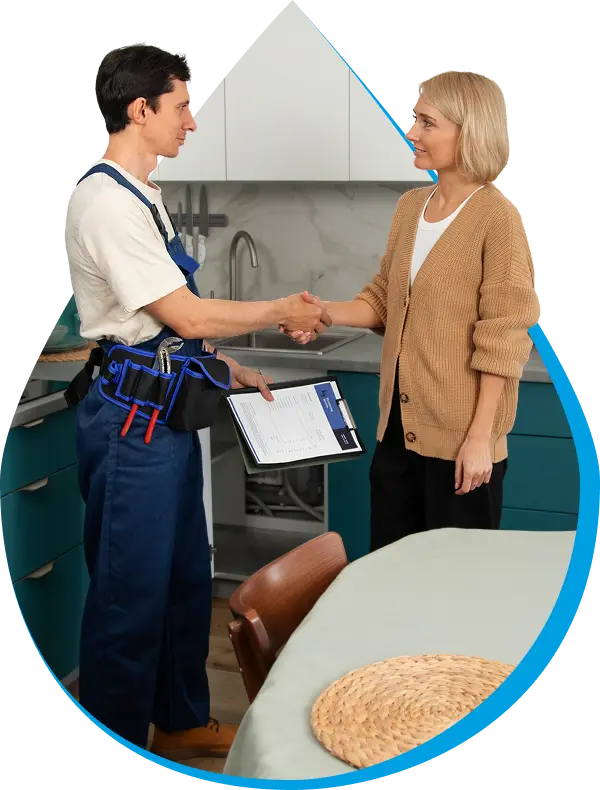
Nisku is different from a standard residential service area. Many properties here use water for more than showers, laundry, and household cleaning.
Restaurants, shops, offices, warehouses, salons, cafés, hotels, logistics facilities, and light industrial buildings all depend on water in different ways. That means the water softener needs to be sized around real demand, not a basic residential estimate.
Commercial water softener installation is the main focus for Nisku.
A properly sized system can help protect water heaters, dishwashers, coffee machines, ice machines, boilers, pressure washers, wash stations, laundry equipment, plumbing fixtures, and other water-using equipment.
Before recommending a system, we look at the type of business, daily water use, peak demand, operating hours, flow rate needs, plumbing layout, drain access, and available mechanical room space.
Older systems can become expensive to keep alive, especially in a business that uses water heavily.
Replacement may be the better option if your system is undersized, using too much salt, failing during busy hours, leaking, regenerating too often, or no longer keeping up with demand.
Nisku and nearby Leduc County also include homes, acreages, and rural-style properties that may need water softening.
For residential systems, we check water hardness, household size, bathrooms, laundry use, plumbing setup, and whether any filtration or reverse osmosis should be added.
If the system is still in good condition, repair may solve the problem.
Common issues include hard water returning, salt bridges, brine tank problems, valve issues, leaks, low pressure, drain line problems, resin bed issues, and incorrect programming.
For businesses, we also look at whether the system is failing because of a repair issue or because it was never sized for the property’s actual water use.
Commercial systems should not be ignored until something breaks.
Maintenance may include salt checks, brine tank cleaning, resin bed inspection, valve testing, control head checks, regeneration cycle testing, flow rate checks, and scheduled service.
For high-use properties, regular maintenance can help avoid downtime and equipment problems.
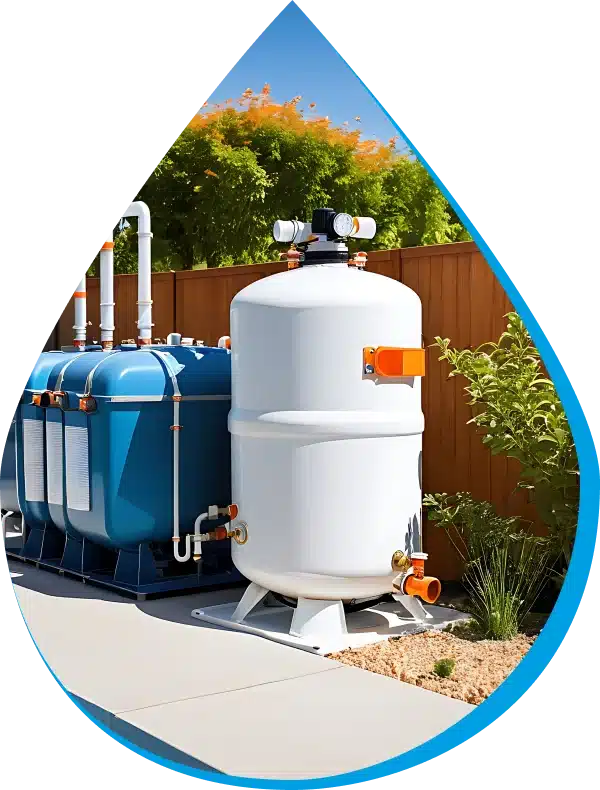
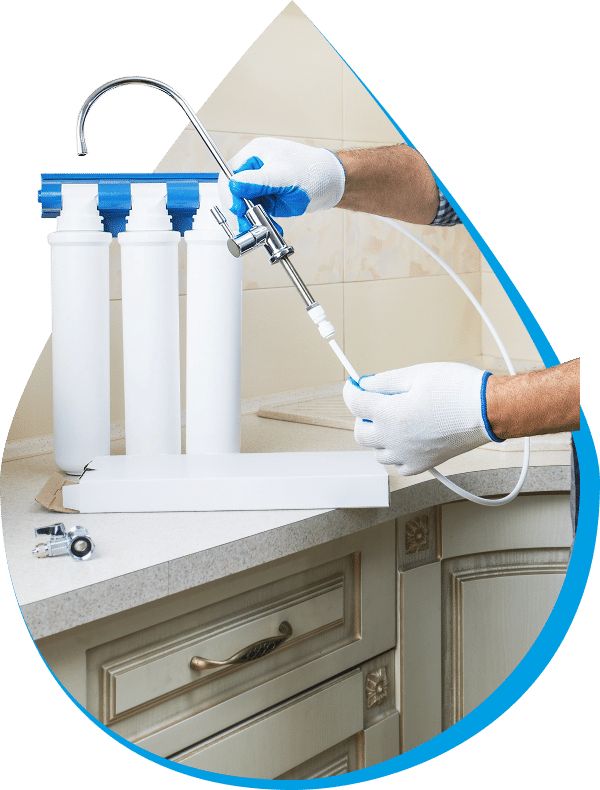
Hard water is not just a cleaning issue for businesses. It can affect equipment, operating costs, customer experience, and daily workflow.
A small office may only need basic water softening. A café, hotel, salon, shop, or industrial facility may need a system that can handle much higher demand.
Commercial equipment is expensive to repair and replace.
Water heaters, dishwashers, boilers, coffee machines, ice machines, humidifiers, laundry equipment, wash stations, and pressure washers can all be affected by scale buildup.
A properly sized softener helps reduce hardness minerals before they reach that equipment.
Businesses use water more often than homes.
That means scale buildup can happen faster, especially in hot water equipment, dishwashing systems, laundry equipment, and fixtures used all day.
Reducing scale helps cut down on avoidable maintenance and performance problems.
Water quality affects how well soap, detergent, and cleaning products work.
Restaurants, salons, car-related businesses, hospitality properties, and shops can all benefit from water that performs more consistently.
Softened water can help reduce detergent use, service calls, equipment strain, and cleaning time.
For a business, that matters because water problems are not just annoying. They can become operating costs.
Hard water can affect faucets, washroom fixtures, commercial sinks, hot water tanks, and connected plumbing equipment.
A water softener helps reduce mineral buildup before it spreads through the building.
Yes. Nisku is connected to the Leduc County utility context, and Leduc County states that water in its utility service areas comes from EPCOR. EPCOR reports North Saskatchewan River water as moderately hard, around 165 mg/L as calcium carbonate on average.
That gives Nisku businesses and nearby properties a real reason to consider water softening, especially when equipment protection matters.
A Nisku water softener page should not only talk to homeowners. Businesses here need water treatment that matches the building, equipment, and operating hours.
Food service businesses rely on water all day.
A softener can help protect dishwashers, glasswashers, coffee machines, ice machines, steamers, hot water systems, and plumbing fixtures.
Cleaner water performance can also help with glassware, cleaning, and equipment reliability.
Hotels and hospitality properties use water across guest rooms, laundry areas, kitchens, washrooms, and maintenance spaces.
A properly sized softener supports showers, linens, fixtures, water heaters, and water-using appliances.
Salons, spas, and clinics care about water feel, cleanliness, fixtures, and client comfort.
Softened water can support washing, rinsing, cleaning, and fixture maintenance in spaces where water quality is noticed quickly.
Warehouses, service shops, and commercial buildings may use water for washrooms, wash bays, employee areas, hot water systems, cleaning, and equipment support.
A softener helps reduce buildup across plumbing-connected systems.
Light industrial facilities may have higher water demand, longer operating hours, and more equipment tied into the water system.
These properties often need custom sizing based on flow rate, daily volume, fixtures, and equipment.
Water quality matters in car washes and detailing.
A softener can help reduce hard water minerals that contribute to spotting, residue, and equipment buildup. For this category, system sizing and water treatment add-ons should be reviewed carefully.
Nisku properties may need anything from a residential softener to a high-capacity commercial system.
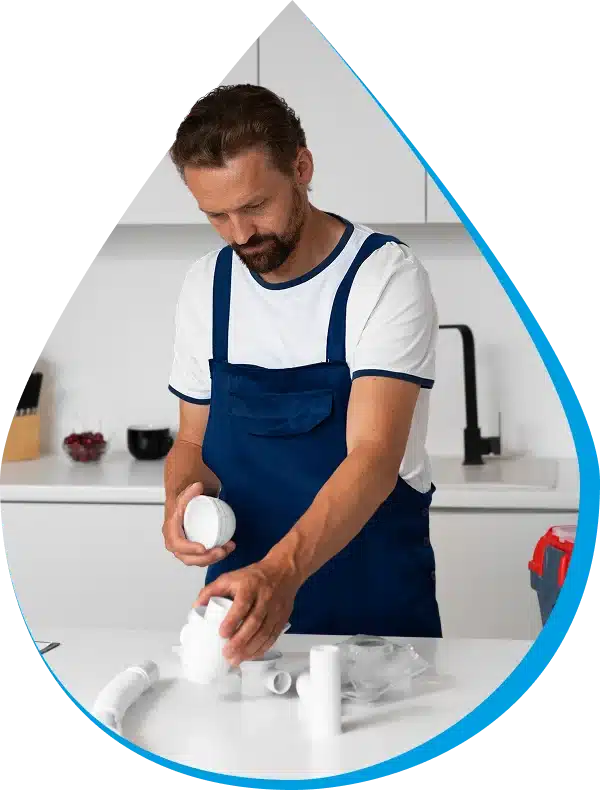
Commercial sizing should never be guessed.
A business may use more water in one busy day than a home uses across several days. If the softener is too small, it can fail during peak demand, regenerate too often, or leave equipment exposed to hard water.
Testing hardness is the first step.
The system needs to be sized around the amount of hardness it must remove from the water.
Commercial water use depends on litres per day, operating hours, number of staff, customer use, equipment use, and cleaning demand.
A café, warehouse, and hotel will not need the same setup.
Flow rate matters because businesses may have several fixtures or pieces of equipment running at the same time.
A system needs to keep up without creating pressure problems.
Sizing should account for dishwashers, water heaters, boilers, washing machines, wash stations, ice machines, coffee machines, restrooms, and any process equipment.
A business that uses water heavily during peak hours needs a system that can keep up during those busy windows.
A small office with light water use has a very different demand profile.
Installation planning matters.
We review mechanical room space, drain access, bypass valve setup, plumbing layout, service access, and existing equipment before recommending a system.
If your business may add fixtures, expand operations, increase staff, or install more water-using equipment, that should be part of the sizing conversation now.
A system that barely works today may become a problem later.
A commercial installation needs a practical process. The system has to fit the property, the water demand, and the workflow of the business.
We start by understanding the property, business type, water concerns, and equipment that needs protection.
We check hardness and review daily water use, peak demand, operating hours, and equipment requirements.
We review bypass valve options, drainage, installation space, electrical access if needed, existing equipment, and service access.
Water softener cost in Nisku depends heavily on whether the property is residential, commercial, or light industrial.
A small office may need a simpler system. A restaurant, hotel, car wash, warehouse, or manufacturing facility may need higher capacity, stronger flow rate, more installation planning, or filtration add-ons.
The main pricing factors include:
Commercial systems usually need more careful sizing because they may handle higher flow rates, longer operating hours, and more equipment.
The wrong system can cost more later through salt waste, service calls, equipment scale, and downtime.
Do not rely on generic online pricing.
The right quote should account for your water source, hardness level, household use, plumbing setup, and whether filtration or reverse osmosis should be included.

A commercial water softener should be serviced before it becomes a business interruption.
If the system is not softening properly, equipment may be exposed to scale and hard water buildup again.
Call for service if you notice:
Common problems include valve issues, resin bed problems, incorrect programming, brine tank issues, control head failure, drain line problems, and undersized systems.
In commercial properties, the issue is not always a broken part. Sometimes the system is simply too small for the demand.
Repair may be enough when the issue is specific, and the system is still properly sized.
Replacement is better when the system is old, undersized, inefficient, repeatedly failing, or no longer matched to the business.
We help you avoid repairing a unit that cannot keep up long-term.
Maintenance matters more when the softener supports business operations.
Restaurants, hotels, shops, car washes, laundromats, and facilities with heavy water use should not wait until the system fails.
Salt needs to stay at the right level so the system can regenerate properly.
High-use businesses may need salt monitored more often than a home system.
The brine tank can collect residue, salt mush, and buildup.
Cleaning helps protect regeneration and system performance.
The resin bed handles the softening process.
If it becomes worn, fouled, or overloaded, the system may stop reducing hardness properly.
The valve and regeneration settings control how the system performs.
Bad settings can waste salt and water or leave the property with hard water during busy periods.
Commercial properties need performance checked under real demand.
A system should not only work when water use is low. It needs to keep up when fixtures and equipment are running.
Scheduled maintenance is a smart option for businesses that cannot afford downtime.
It helps keep the system tested, adjusted, and serviced before problems affect equipment or operations.
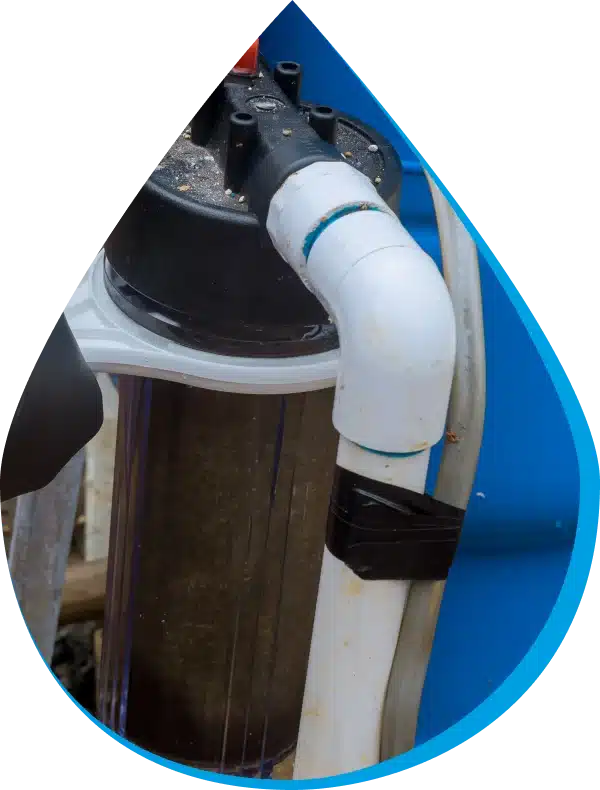
A water softener and a water filter are not the same system.
Many Nisku businesses need both, depending on how water is used.
A water softener targets hardness minerals like calcium and magnesium.
It helps reduce scale, mineral buildup, soap scum, rough laundry, equipment buildup, and hard water residue.
A water filter targets water quality concerns such as taste, odour, sediment, chlorine, iron, and other issues depending on the system.
A business may need both if it wants to protect equipment and improve water quality.
For example, a softener may protect dishwashers and water heaters, while filtration or reverse osmosis may improve drinking water, coffee, ice, or process water.
Reverse osmosis is used for drinking water, coffee, ice, and certain business applications.
It does not replace a water softener. It works with one when hardness control and filtered water are both needed.

Nisku needs a broader water treatment approach than most residential service areas.
Leduc County identifies Nisku Business Park as a major business area with hundreds of companies across sectors like energy, food processing, transportation and logistics, and advanced manufacturing.
This is the main focus of the page.
We help businesses choose softener systems based on water usage, flow rate, fixtures, equipment, operating hours, and future growth.
Nearby homes and Leduc County acreages may also need water softening or water testing.
For residential and rural properties, we look at hardness, water source, household size, plumbing, filtration needs, and any well-water concerns.
Light industrial properties may need more than a standard softener.
Manufacturing, logistics, transportation, food processing, energy-service, and equipment-heavy businesses may require larger systems, filtration add-ons, or custom water treatment planning.
We provide water softener installation, repair, replacement, and maintenance across Nisku and nearby business zones, including:
You get a commercial-aware approach, not a residential template forced onto a business property.
We look at hardness, usage, flow rate, fixtures, equipment, plumbing, and maintenance needs before recommending a system.
We also serve nearby communities, including:
Leduc County says water in its utility service areas comes from EPCOR, and EPCOR reports North Saskatchewan River water as moderately hard, around 165 mg/L as calcium carbonate on average.
Restaurants, cafés, hotels, salons, clinics, car washes, warehouses, shops, laundromats, manufacturing facilities, and light industrial businesses can benefit from properly softened water.
Cost depends on system size, flow rate, water usage, business type, plumbing setup, installation complexity, and whether filtration or reverse osmosis is added.
Sizing depends on water hardness, daily water usage, peak flow rate, number of fixtures, business hours, and water-using equipment.
Yes. A properly sized water softener can help reduce scale buildup in water heaters, dishwashers, coffee machines, ice machines, boilers, washing equipment, and plumbing-connected systems.
A water softener targets hardness and scale. A water filter targets taste, odour, sediment, chlorine, iron, or other water-quality concerns.
No. Reverse osmosis is usually used for drinking water or process-water filtration, while a water softener treats hardness for the whole building or selected water lines.
Commercial systems should be checked based on water usage. High-use businesses may need more frequent maintenance than a residential system.