Reliable water treatment for demanding industrial operations. From industrial water softening and filtration to reverse osmosis and specialized process water systems, we deliver solutions designed around your facility’s requirements.
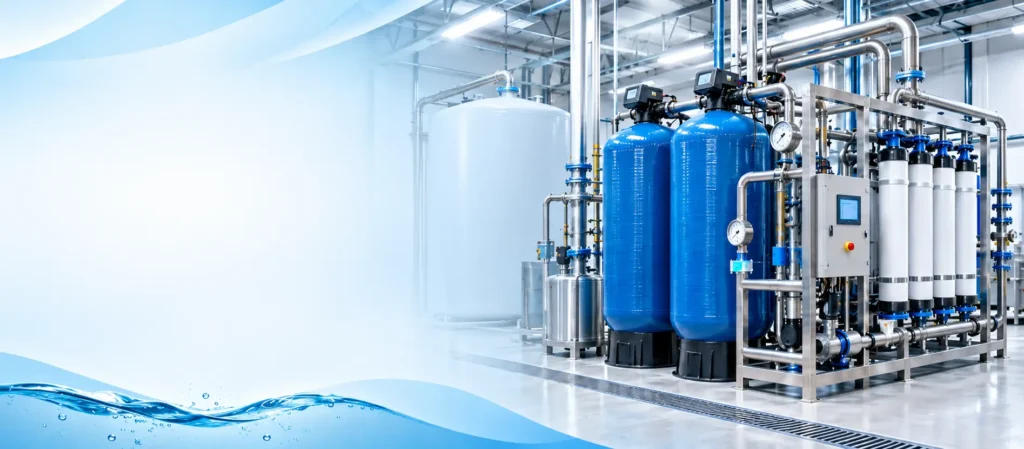
Engineered water treatment systems designed for industrial processes, equipment and demanding operating requirements. Industrial facilities throughout Edmonton and surrounding Alberta communities depend on water for manufacturing, production, cooling, heating, cleaning and specialized processes. However, incoming water can contain hardness minerals, iron, manganese, sediment, dissolved salts and other substances that affect equipment and process performance.
Water Softener Edmonton provides industrial water treatment solutions, including industrial water softeners, reverse osmosis, filtration and specialized process water systems. From water testing and engineering to system design, equipment supply, installation and ongoing maintenance, we help develop treatment configurations around your facility’s requirements.
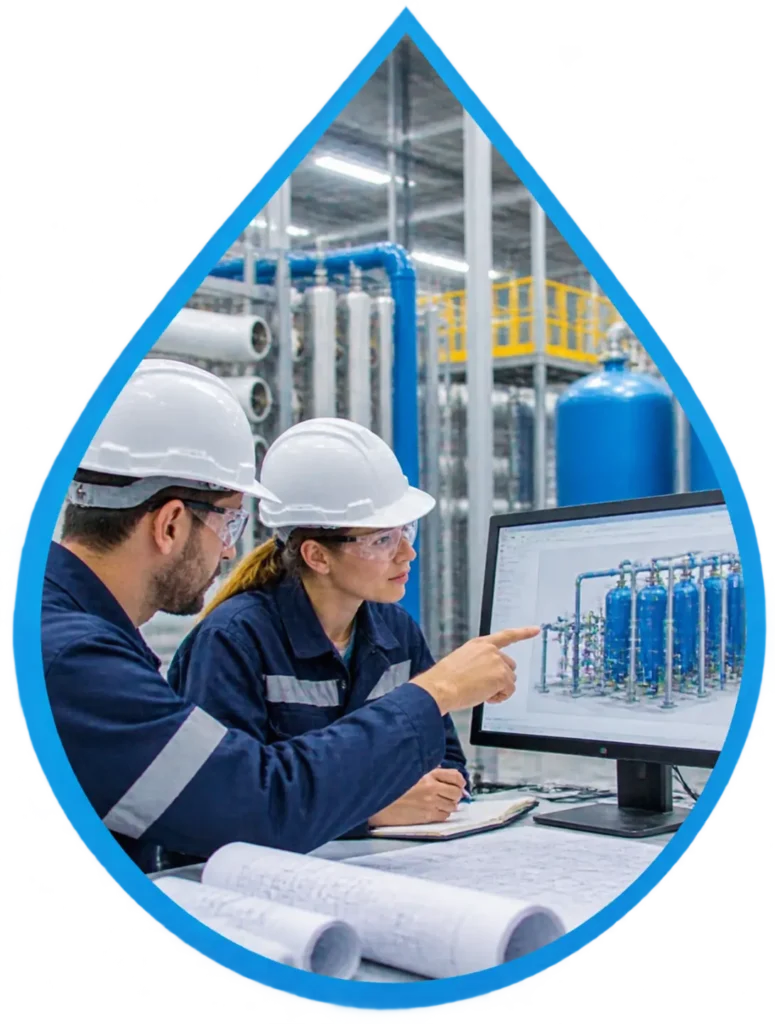
Industrial water treatment requirements vary depending on the facility, water source and production processes. While manufacturing operations may require softened water to protect equipment, pharmaceutical facilities and mining operations may need specialized filtration, reverse osmosis or additional purification.
Edmonton's municipal water has an average hardness of approximately 165 mg/L as calcium carbonate, according to EPCOR. Facilities using groundwater may also encounter iron, manganese, sulphur and sediment. The right treatment solution starts with understanding your water quality and operational requirements.
Our industrial water treatment solutions can help facilities:
We offer several treatment technologies that can be configured individually or integrated into a broader water treatment system.
Edmonton and the surrounding Alberta region have a diverse industrial and manufacturing base. Different sectors use water for production, processing, equipment cooling, cleaning and facility operations. Our industrial water treatment capabilities address the needs of several industries.
Pharmaceutical manufacturing requires carefully controlled water quality for production, cleaning and equipment preparation.
The required treatment depends on the intended use of water and the applicable pharmaceutical standards.
Potential treatment solutions:
Certain pharmaceutical applications require validated purification systems and additional technologies beyond conventional RO.
Pulp and paper manufacturing uses water throughout production, washing, cooling and processing operations.
Suspended solids, dissolved minerals and other water constituents can affect equipment, process conditions and water reuse requirements.
Potential treatment solutions:
Power generation facilities rely on water for steam production, cooling and auxiliary operations.
Boiler and steam-cycle systems may require carefully controlled feedwater quality to manage scale, corrosion and deposits.
Potential treatment solutions:
Mining operations use water for mineral processing, equipment cleaning, dust control and other site activities.
Water conditions can vary depending on the source, geology and operating environment.
Potential treatment solutions:
Electronics manufacturing can require highly controlled water quality for cleaning, rinsing and specialized production processes.
Even relatively low concentrations of dissolved minerals and other contaminants may be unsuitable for certain applications.
Potential treatment solutions:
High-purity and ultrapure water applications may require additional polishing technologies, such as deionization and specialized purification equipment.
Steel production and processing use water for cooling, equipment operation, cleaning and manufacturing processes.
Hardness minerals and suspended solids can contribute to deposits and maintenance requirements in water-using equipment.
Potential treatment solutions:
Automotive manufacturing facilities use water in component cleaning, surface preparation, cooling, rinsing and other production processes.
Consistent water quality can be important for equipment operation and process requirements.
Potential treatment solutions:
Petrochemical facilities use water throughout their utility systems, cooling operations, boilers, equipment cleaning and production processes.
Treatment requirements depend on the incoming water quality, operating conditions and equipment specifications.
Potential treatment solutions:
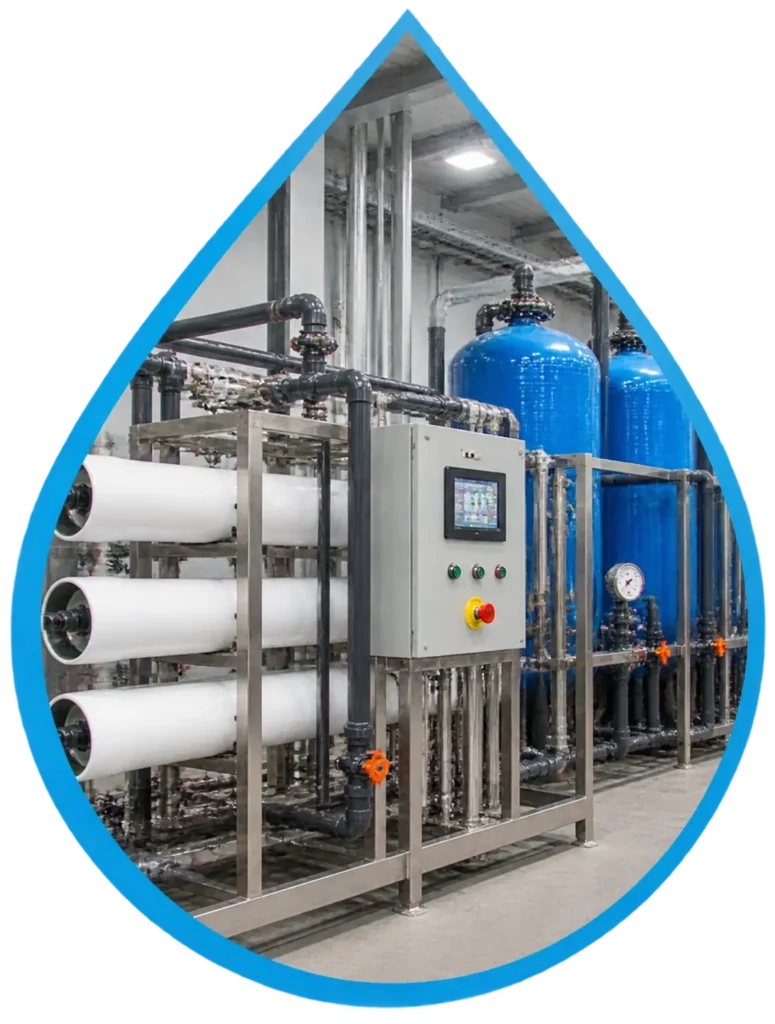
The water entering an industrial facility is one of the most important factors in system design. A treatment configuration suitable for Edmonton's municipal supply may not be appropriate for groundwater or recirculating process water.
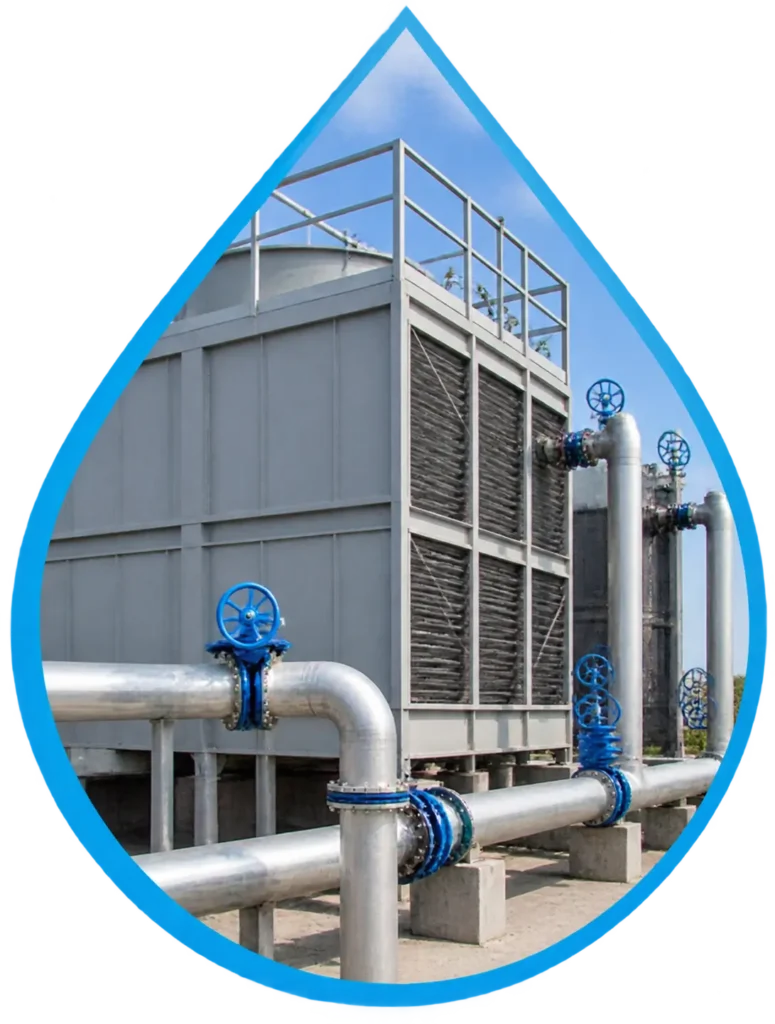
Cooling towers are used in many industrial facilities to remove heat from equipment and processes.
As water circulates and evaporation takes place, suspended solids and dissolved minerals can become concentrated.
Without appropriate water management, these conditions may contribute to deposits, fouling and maintenance concerns.
Cooling tower water treatment may include:
Side-stream filtration forms part of a broader cooling water management program. Scaling, corrosion and biological control may require separate treatment measures.
Industrial treatment systems must be designed around actual water conditions and process requirements.
Our engineering and system design approach considers several factors before recommending equipment.
Different industrial operations require different levels of treated-water availability.
The right configuration depends on flow rates, treatment capacity, redundancy requirements and the facility's operating schedule.
We discuss your facility, industrial process, water source and existing treatment challenges.
We evaluate water quality and identify the relevant treatment requirements.
We supply the selected treatment equipment and associated components.
We coordinate system installation and configuration for the intended application.
We provide ongoing support to help maintain system operation.
We develop a suitable treatment configuration based on water chemistry, flow rates and process specifications.
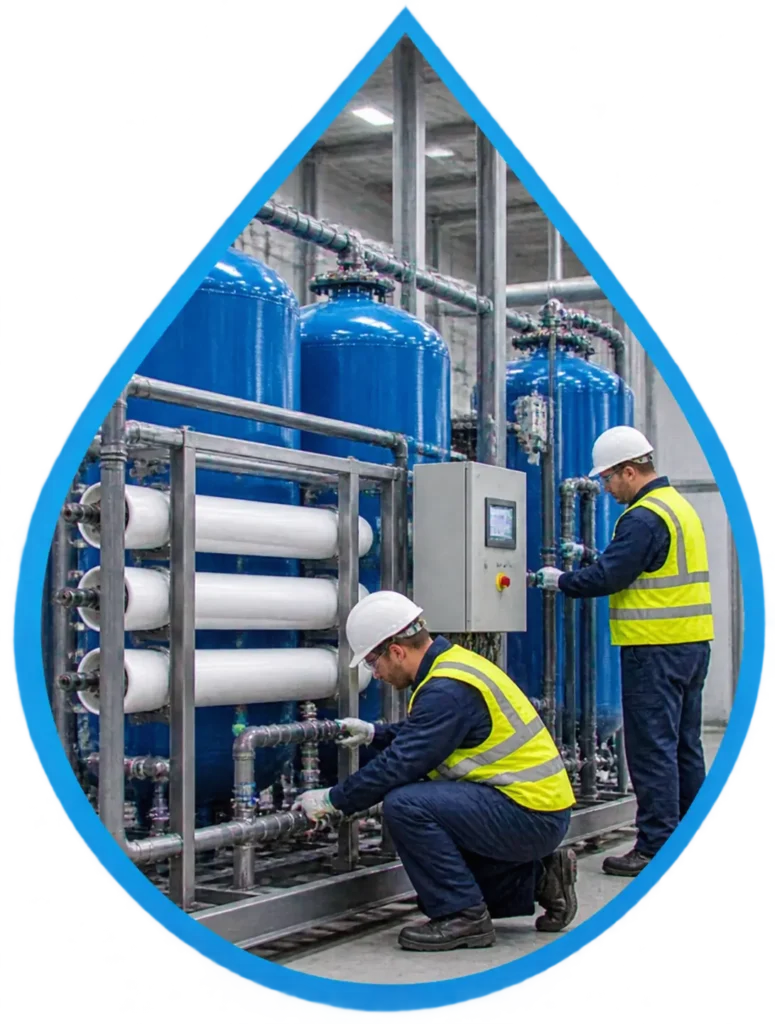
Industrial water treatment involves reducing or removing specific substances from water to meet the requirements of manufacturing, processing, heating, cooling and other industrial applications.
Pharmaceutical, pulp and paper, power generation, mining, electronics, steel, automotive manufacturing and petrochemical operations may require industrial water treatment depending on their water usage and process requirements.
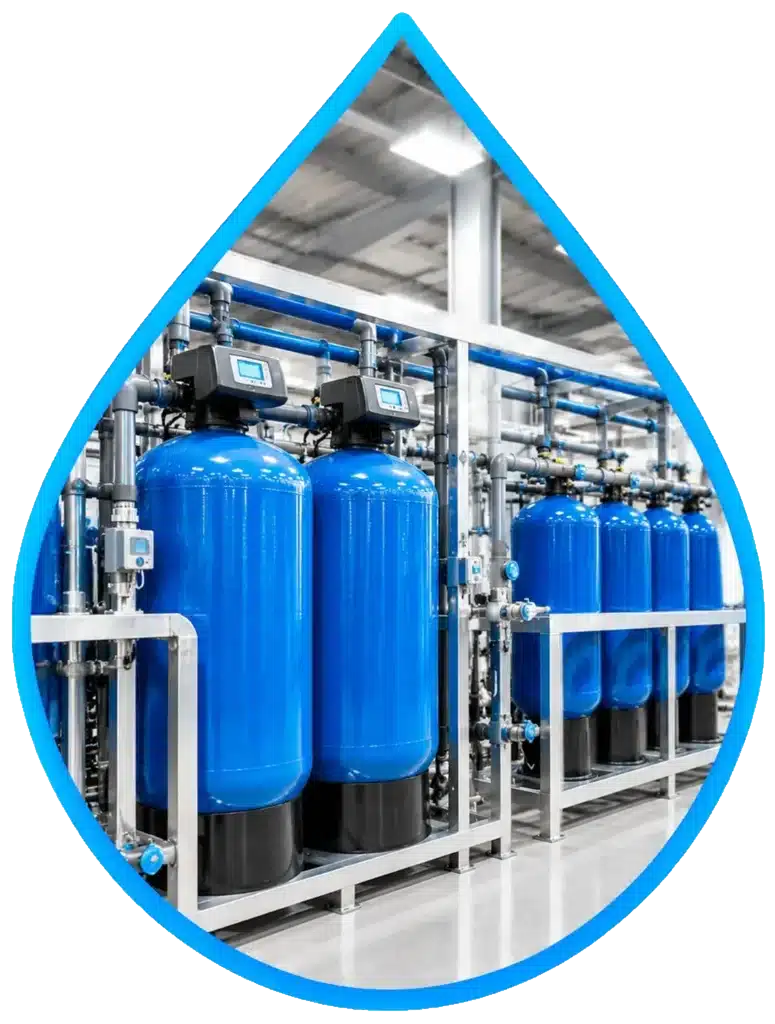
Yes. Industrial softeners can be configured for higher treatment capacities and flow requirements. Multi-tank configurations may be considered where continuous softened water availability is important.
No. Reverse osmosis reduces many dissolved substances, but additional pretreatment or polishing may be required depending on the water quality and application.
Yes. We provide custom system recommendations and industrial engineering and system design based on water testing results, flow requirements and intended applications.
Yes. An assessment can identify capacity limitations, treatment performance concerns, aging components and potential equipment upgrades.
Pricing depends on water chemistry, system capacity, equipment selection, engineering requirements and installation conditions. A project-specific assessment is required to prepare an accurate quote.
Yes. An assessment can identify capacity limitations, treatment performance concerns, aging components and potential equipment upgrades.