When Edmontonians receive an annual water quality report from EPCOR, the dense tables and technical terms can be intimidating. Yet these reports contain valuable information about what’s in your tap water and why it’s safe to drink.
This guide breaks down the key sections of the EPCOR report, highlights what the numbers mean for hard water, and explains how to interpret the data so you can make informed decisions about your home’s water quality and treatment.
Why Read the Report
EPCOR is required to monitor and publish results for a wide range of chemical, biological, and physical parameters. The reports demonstrate compliance with Health Canada guidelines for drinking water and assure residents that water is safe.
Municipal water supplies are tested regularly, and their results are available through the province’s regulated drinking water portal. Understanding these numbers empowers homeowners to make decisions about additional treatment, such as water softening or filtration.
Water Hardness and Minerals
One of the most important values in Edmonton’s water report is total hardness, measured in milligrams per litre of calcium carbonate (mg/L CaCO₃).
- In 2024, EPCOR reported calcium hardness around 117 mg/L and total hardness about 177 mg/L as CaCO₃.
- By general classification, water under 75 mg/L is soft, 76-150 mg/L moderately hard, 151-300 mg/L hard, and above 300 mg/L very hard.
This means Edmonton’s water clearly falls into the hard category, which explains why scale can form on fixtures, kettles, and water-using appliances.
Other key minerals in the report include:
| Parameter | Typical Value | Guideline / Limit | Why It Matters |
| Sodium | ~11 mg/L | 200 mg/L aesthetic objective | Low sodium levels can rise slightly after softening |
| Sulfate | 71.5 mg/L | 500 mg/L | Affects taste; very high levels may cause a laxative effect |
| Chloride | 6.36 mg/L | 250 mg/L | High chloride levels can cause corrosion or a salty taste |
| pH | 7.9 | 7.0 – 10.5 acceptable range | Slightly alkaline; helps reduce corrosion |
| Total Dissolved Solids (TDS) | 229 mg/L | 500 mg/L | Measures all dissolved minerals; affects taste and hardness |
These numbers show that while Edmonton’s water is chemically safe, its hardness and mineral content influence taste, lathering, and appliance performance.
How to Read the Tables
The table below summarises some key parameters from the 2024 report and explains why they matter.
| Parameter | Typical value* | Guideline/limit | Significance |
| Calcium hardness | 116–117 mg/L CaCO | No health guideline | Major contributor to total hardness; high levels cause scale |
| Total hardness | 177 mg/L CaCO | No health guideline; hard if >150 mg/L | Determines the need for a water softener |
| Sodium | ~11 mg/L | 200 mg/L aesthetic objective | Low levels can increase slightly after softening |
| Sulfate | 71.5 mg/L | 500 mg/L aesthetic objective | Contributes to taste; high levels may cause a laxative effect |
| Chloride | 6.36 mg/L | 250 mg/L aesthetic objective | High chloride causes corrosion and a salty taste |
| pH | 7.9 | 7.0–10.5 acceptable range | Slightly alkaline water helps control corrosion |
| Total dissolved solids (TDS) | 229 mg/L | 500 mg/L aesthetic objective | Sum of all dissolved minerals; affects taste and hardness |
*Typical values represent median or average measurements in the report. See EPCOR’s full table for minimum and maximum values.
When reviewing the tables, pay attention to three columns:
- Unit of measurement: mg/L (milligrams per litre) for most dissolved minerals; NTU for turbidity; μg/L for trace contaminants.
- Guideline or limit: Health Canada’s Maximum Acceptable Concentration (MAC) or Aesthetic Objective (AO). Values in parentheses indicate aesthetic limits rather than health limits. If no number appears, there is no specific guideline.
- Typical value: The average measured value. Compare this to the guideline to see whether the water meets standards.
Bacterial and Physical Parameters
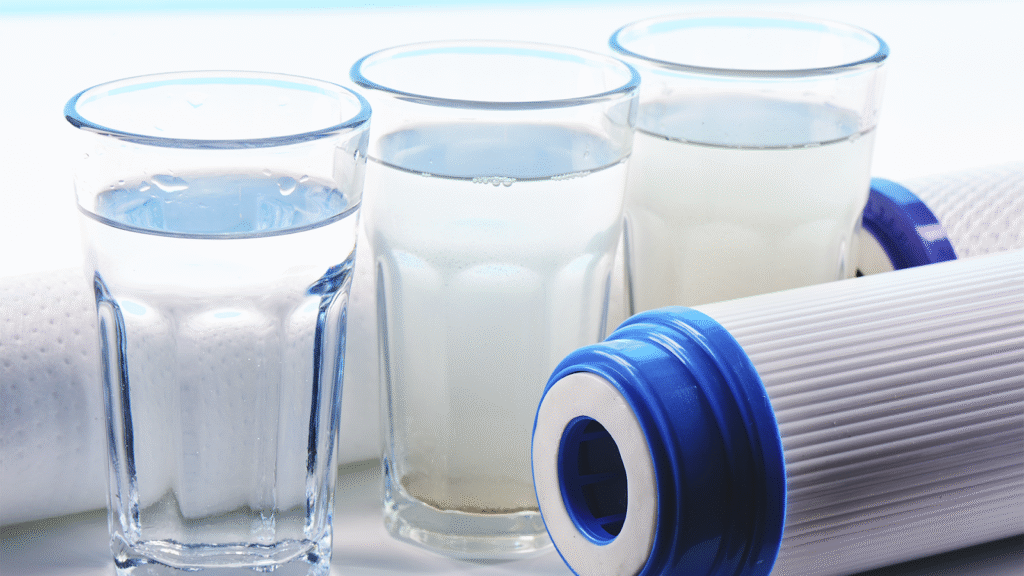
Besides minerals, the report lists microbiological parameters such as E. coli, total coliforms, Giardia, and Cryptosporidium. These pathogens were all below detectable limits in 2024, reflecting the effectiveness of Edmonton’s treatment process. Turbidity (cloudiness) averaged 0.05 NTU, well within the limit of 0.3 NTU. Low turbidity indicates effective sediment removal and helps ensure disinfection.
Frequently Asked Questions
Is Edmonton’s water safe to drink?
Yes. All measured parameters were within national guidelines, and no harmful bacteria were detected. The water is treated, filtered, and disinfected before distribution. Municipal supplies are tested regularly, and your most recent results are available through Alberta’s regulated drinking water portal.
Why does my water taste salty after installing a softener?
Ion‑exchange softeners release small amounts of sodium into the water. Sodium levels remain low (generally a few milligrams per litre), but sensitive individuals may notice a taste. Salt‑free conditioners avoid this issue.
Do I need to test my tap water?
If you are connected to the municipal system, routine testing is handled by EPCOR. However, if you notice changes in taste, odour, or colour, or if you have specific concerns (e.g., lead pipes), you may request additional testing or install a point-of-use filter. For private wells, Alberta Health Services offers free bacteria testing.
Interpreting Hardness and Choosing a Softener
EPCOR’s data shows that total hardness averages 177 mg/L, putting Edmonton’s water in the hard range. Hardness doesn’t pose health risks, but it causes:
- Reduced soap lather
- White scaling on fixtures
- Shorter appliance lifespans
- Dull laundry and dishes
Whether to install a water softener depends on personal preference and the level of buildup you’re experiencing. A softener removes hard water minerals, improves water quality, and can significantly reduce cleaning time, though it adds minimal sodium and requires periodic maintenance.
For a full comparison of softener types, see our related article: Navigating Water Softening in Edmonton: Local Insights.
Beyond Hardness: Contaminants and Aesthetic Factors
The EPCOR report also tracks disinfection by-products such as haloacetic acids (HAA5) and trihalomethanes (THMs), both of which were far below health limits in 2024. Trace metals like lead, mercury, arsenic, and uranium were all undetectable, confirming that Edmonton’s treatment meets strict national standards.
Why Understanding Your Water Report Matters
Reading EPCOR’s water quality Edmonton report helps you understand the “why” behind what you see at home: the chalky residue on faucets, the cloudy film on glassware, or the dull laundry that never feels truly clean.
Knowing your hardness level empowers you to take action, whether that’s through a water softener, filtration system, or full home treatment plan.
Professional Help for Edmonton Homeowners
If your EPCOR report leaves you wondering whether a softener is right for your home, Water Softener Edmonton can help.
We offer free in-home water testing across the Edmonton area to measure hardness, TDS, and mineral balance. Our experts interpret the same data EPCOR uses and then guide you toward the most effective solution, whether that’s a salt-based softener, salt-free conditioner, or full filtration system.
With professional installation, transparent pricing, and systems built for local water conditions, Water Softener Edmonton makes it easy to move from hard water frustration to clean, efficient comfort.Book your free water test today and discover how softer, better water can make everyday life easier, from your morning shower to your laundry and coffee pot.