If you’re shopping for a water softener in Edmonton, one of the first questions is usually pretty simple: how much is this actually going to cost?
The answer can vary quite a bit. Some systems are priced as equipment only, while others include installation, setup, and additional filtration. The right price also depends on your household size, water usage, plumbing setup, and what you want the system to handle.
That’s why it helps to look beyond the sticker price. A cheaper unit may seem like the better deal at first, but installation costs, salt use, regeneration efficiency, maintenance, and warranty coverage can all affect what you spend over time.
Let’s dive in and take a look at typical water softener prices in Edmonton, what installation can involve, and what to look for when comparing your options.
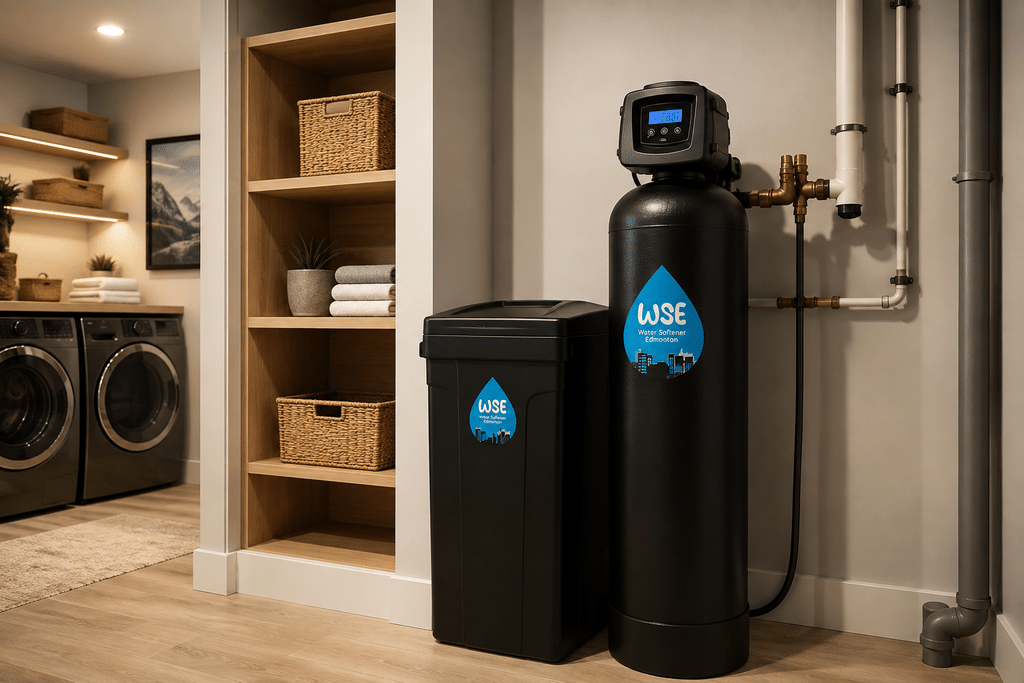
How Much Does a Water Softener Cost in Edmonton?
Water softener prices in Edmonton can vary depending on your household size, water usage, system efficiency, and whether your home uses city water or well water.
For a typical home, it’s also important to check whether the advertised price is for equipment only or includes professional installation.
Water Softener Prices at a Glance
Here are a few real examples from our current systems:
| Water Softener | Best Suited For | Installed Price |
| Advanced Water Softener | Homes with 1–4 people | $1,999 |
| Platinum Water Softener | Homes with 1–8 people or higher water demand | $2,999 |
| Advanced Well Water Softener | Homes using well water | $2,499 |
| Platinum Well Water Softener | Larger or higher-demand well-water homes | $2,999 |
These are installed prices, which makes them easier to compare with quotes that may separate the equipment and labour costs.
What Can Change the Final Price?
The biggest factors are usually:
- Household size: More people generally means greater daily water demand.
- Water usage: Homes with multiple bathrooms or high simultaneous water use may need greater flow capacity.
- Water source: City and well water can require different treatment setups.
- Additional filtration: Chlorine, iron, manganese, sediment, or sulphur issues may require extra equipment.
- Plumbing setup: An easy-to-access installation will usually be simpler than one requiring additional plumbing work.
City Water vs. Well Water
For most Edmonton homes connected to municipal water, the main concern is hardness, so a whole-home softener may be enough.
Well water can require a more customized setup. Depending on the results of a water test, you may need treatment for:
- Iron
- Manganese
- Sulphur odours
- Sediment
- Bacteria or other contaminants
That’s why a well water system can cost more than a straightforward city-water softener.
The key takeaway: compare the complete installed system, not just the price of the softener itself. The right system should match your household demand and actual water conditions rather than simply being the cheapest option.
What Affects the Price of a Water Softener?
Two water softeners can look fairly similar from the outside and still have very different price tags. A lot of that difference comes down to what’s inside the system, how efficiently it operates, and what kind of support comes with it.
System Capacity and Flow Rate
Higher-capacity systems generally cost more because they’re built to handle greater demand without noticeable pressure drops.
A system with a higher flow rate can be especially useful in homes where several fixtures may be running at the same time, such as showers, laundry, and the dishwasher.
Regeneration Efficiency
Not every softener uses salt and water at the same rate.
More efficient systems are designed to regenerate only when needed and use fewer resources during each cycle. That can mean a higher upfront price, but potentially lower operating costs over the life of the system.
When comparing models, look at:
- Salt used per regeneration
- Water used during regeneration
- How often the system regenerates
- Whether regeneration is based on actual water use
Control Valve and Components
The control valve is essentially the working brain of the softener. It manages water flow, tracks usage, and controls regeneration.
Higher-quality systems may include:
- Metered controls
- More precise programming
- Durable internal components
- Easier servicing and replacement parts
These features can add to the initial cost, but they can also affect reliability over the long term.
Resin Quality
Inside the mineral tank, resin beads are responsible for removing hardness minerals from the water.
The amount and quality of resin can influence both system performance and price. Better resin can offer stronger durability and maintain effective softening for longer when the system is properly maintained.
Warranty Coverage
A lower purchase price doesn’t always mean a lower overall cost.
Check what the warranty actually covers, including:
| Warranty Area | What to Check |
| Mineral tank | Length of coverage |
| Control valve | Parts and replacement terms |
| Electronics | Whether controls are covered |
| Labour | Whether service work is included |
| Conditions | Maintenance or registration requirements |
A system backed by stronger warranty coverage may cost more initially, but it can provide more protection if something fails later.
Service and After-Sales Support
Price can also reflect what happens after the installation is finished.
Access to local servicing, replacement parts, troubleshooting, and warranty support can make a meaningful difference over the years. When comparing systems, it’s worth looking beyond the hardware and asking what kind of support comes with it.
Also read: Water Softener Cost Edmonton: Reddit vs. Real Prices
How Much Does Water Softener Installation Cost in Edmonton?
If you’re paying for installation separately from the water softener, a straightforward Edmonton installation typically costs around 300–600. The price increases when new plumbing needs to be added or the installer has to work through finished walls.
Typical Installation Costs
| Installation Scenario | Typical Cost |
| Standard hookup with suitable plumbing already in place | $300–$600 |
| New softener loop in an accessible/unfinished basement | $450–$750 |
| Complex retrofit or additional plumbing adjustments | $700+ |
| Extended piping through a finished basement | $850–$1,350 |
A standard installation is usually the least expensive because the installer can access the main water line, drain, and installation area without major changes. Edmonton plumbing rates commonly fall around $100-$180 per hour, so extra routing or modification work can quickly increase the labour portion of the bill.
Where Do the Extra Costs Come From?
You’re more likely to move toward the upper end of the range if the job requires:
- A new plumbing loop: roughly $450-$750 for a straightforward unfinished-basement setup.
- Longer or concealed pipe runs: finished-wall routing can push the work toward $850-$1,350.
- Other plumbing changes: complex retrofits commonly start around $700+, depending on what needs to be changed.
These figures are for the installation side of the job. If a company quotes one price for both the equipment and installation, make sure you’re not comparing that figure directly with an installation-only quote.
Also read: Choosing the Right Water Softener Size for Edmonton Homes
What Is Included in a Professional Water Softener Installation?
A professional installation should leave the system fully connected, programmed, tested, and ready to use.
Typical installation includes:
- Connecting the softener to the main water line
- Installing or connecting the bypass valve
- Running the drain and overflow lines
- Connecting the brine tank
- Programming the system for your water hardness and household use
- Checking for leaks and proper water flow
- Running an initial regeneration or system test
- Showing you how to add salt, use the bypass, and handle basic maintenance
Before approving a quote, it’s worth confirming whether extra plumbing, old-unit removal, or additional materials are included or charged separately.
Upfront Price Isn’t the Only Cost to Consider
The purchase price is only one part of what a water softener costs to own. Over the years, salt, water use, replacement filters, and occasional servicing can make a noticeable difference to the total cost.
| Ongoing Cost | What to Expect |
| Softener salt | Regular refills depending on water use and regeneration frequency |
| Regeneration water | Each cleaning cycle uses water, with efficient systems generally using less |
| Replacement filters | Applies if your setup includes sediment, carbon, or other filtration |
| Maintenance & servicing | Periodic checks or cleaning may be needed as the system ages |
| Repairs & parts | Control valves, seals, injectors, and other components may eventually require service |
Efficiency Matters Over Time
A lower-priced softener can become more expensive to operate if it regenerates too often or uses more salt and water than necessary. On the other hand, a more efficient system may cost more initially but reduce those recurring expenses over its lifespan.
So, when comparing options, look at what the system will cost to run each year, not just what you pay on installation day.
Also read: The Best Water Softeners for Edmonton Homes: Rankings
What Should You Budget for a Water Softener in Edmonton?
For most Edmonton homeowners, a realistic budget for a professionally installed water softener is around $2000-$3000. If your water needs additional treatment or your plumbing requires more work, it makes sense to leave some extra room in the budget.
A Practical Budget Guide
| Situation | Suggested Budget |
| Standard city-water home | $2,000–$2,500 |
| Larger home or higher water demand | $2,500–$3,000+ |
| Softener plus chlorine filtration | $2,800–$4,500+ |
| Well-water treatment setup | $2,500–$5,000+ |
| Complex water issues requiring multiple treatment stages | $5,000+ |
Before Setting Your Budget
A few practical takeaways can help you avoid overspending:
- Start with your water source. City water and well water often need very different treatment.
- Don’t automatically buy the largest system. Bigger isn’t better if your household doesn’t need the extra capacity.
- Ask for an installed price. It gives you a clearer number to budget around.
- Leave room for add-ons only when testing shows you need them. Extra filtration should solve a real water-quality issue, not simply increase the quote.
- Compare long-term value, not just the lowest upfront price. Efficiency, warranty coverage, and servicing can matter just as much over time.
Frequently Asked Questions
How much does a water softener cost with installation in Edmonton?
For most Edmonton homes, a professionally installed water softener will typically fall around 2,000–3,000, depending on system size, features, and the complexity of the installation.
Is installation usually included in the water softener price?
Sometimes. Some companies advertise equipment-only pricing, while others include installation in one package. Always confirm exactly what is included before comparing quotes.
How long does water softener installation take?
A straightforward installation can often be completed within a few hours. More complex jobs may take longer if new plumbing, drain lines, or other modifications are required.
Can I install a water softener myself?
It is possible if you have solid plumbing experience, but professional installation is usually the safer option. Incorrect connections, drainage, or programming can affect performance and potentially cause leaks.
What size water softener do I need for my Edmonton home?
The right size depends on your household water use, hardness level, flow demand, and number of people in the home. Sizing should be based on actual demand rather than simply choosing the largest unit available.
How much does it cost to maintain a water softener?
Routine costs are generally fairly low and mostly come from softener salt and occasional servicing. Systems with additional filtration may also require replacement cartridges or media.
Does a water softener increase my water bill?
A softener uses some water during regeneration, so there can be a small increase. Modern efficient systems are designed to minimize how much water is used during these cycles.
How long does a water softener last?
A quality water softener can often last 10–15 years or longer with proper sizing, installation, and maintenance. Individual components may need servicing before the entire system needs replacement.
Final Thoughts
Choosing a water softener shouldn’t come down to finding the lowest price. The better approach is to look at the installed cost, efficiency, warranty, expected operating expenses, and whether the system is actually suited to your home and water conditions.
At Water Softener Edmonton, we can help you figure out what your water actually needs before you commit to a system. If you’re unsure what size or setup makes sense, you can start with a free water test, personalized recommendation, or installation quote based on your home.