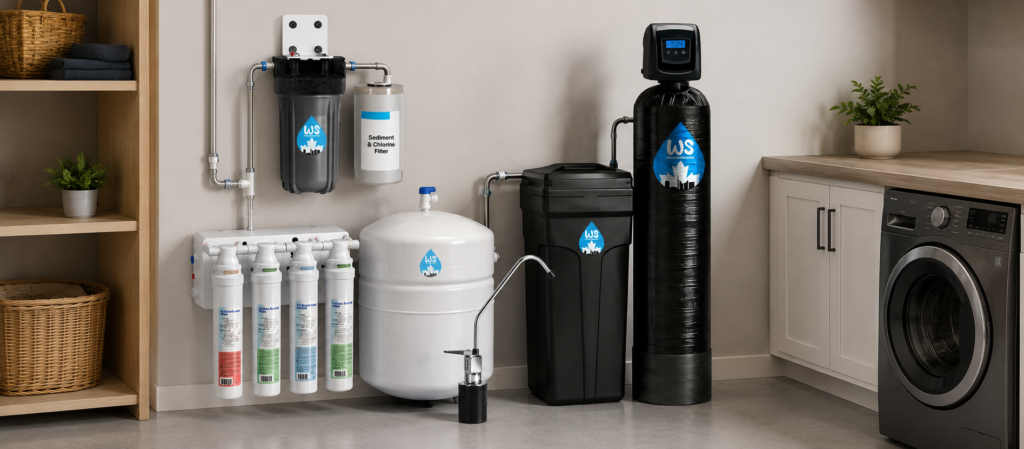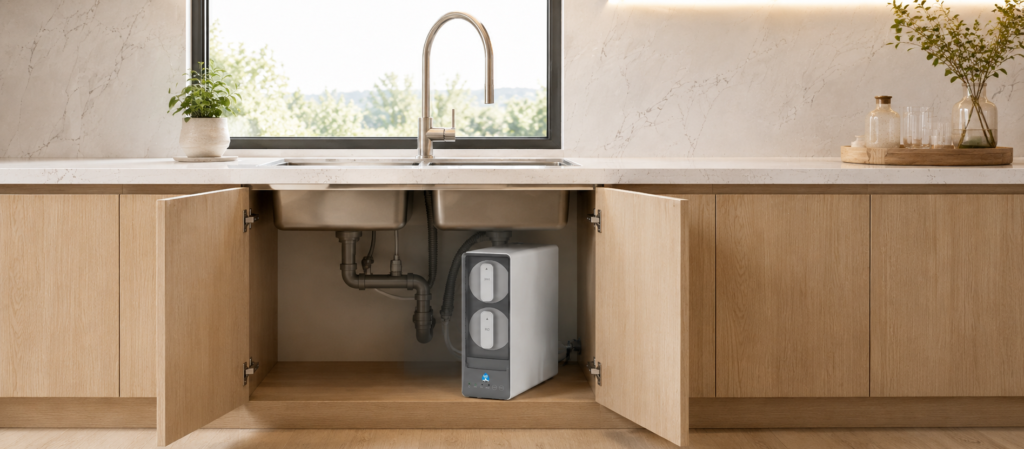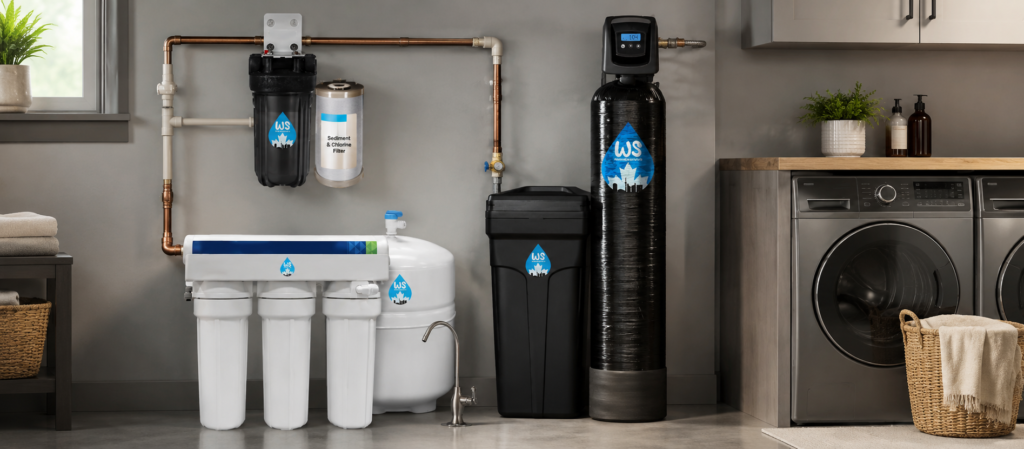
If you have hard water, you may have come across the same advice repeatedly on Reddit: get a water softener for the whole house and reverse osmosis (RO) for drinking water. It sounds simple enough, but it can also leave you wondering whether you really need both systems.
The answer depends on what you want to solve. A water softener is designed to reduce hardness and scale throughout your home, while an RO system provides additional treatment for drinking and cooking water. For Edmonton homeowners, using both can make sense, but it is not automatically necessary for every household.
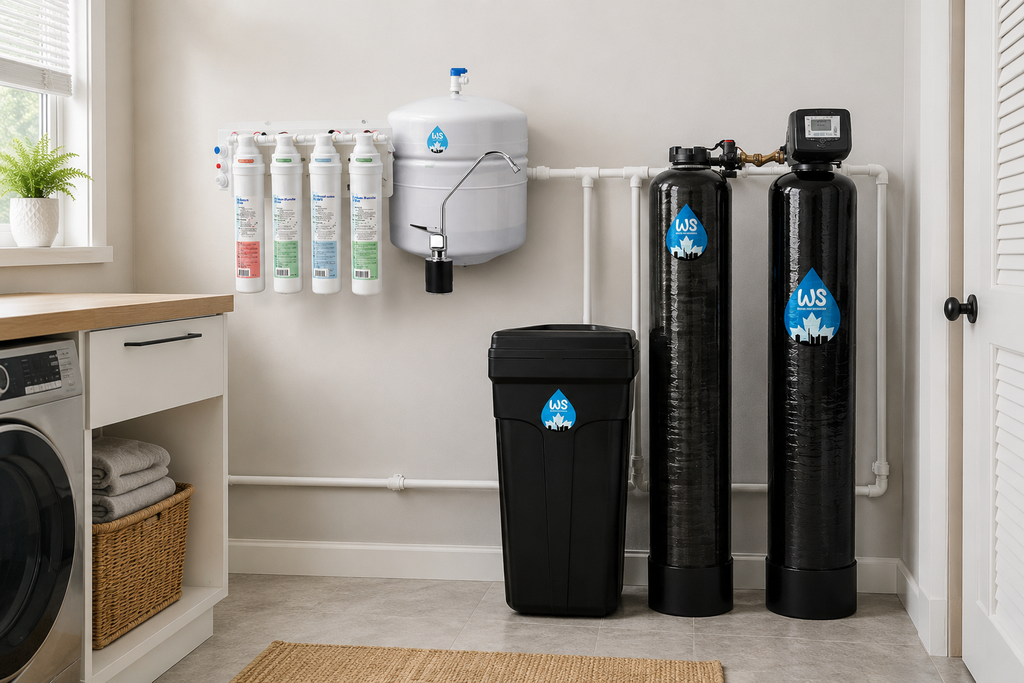
What Does a Water Softener Do?
A water softener is designed to deal with hard water. It removes minerals such as calcium and magnesium that can leave scale on faucets, showerheads, plumbing, and appliances.
For a typical Edmonton home, a softener can treat water throughout the house rather than just at one drinking-water tap.
A water softener can help with:
- Reducing scale buildup
- Protecting water-using appliances
- Making soap and shampoo work more effectively
- Improving the feel of water on your skin and hair
- Reducing mineral deposits on fixtures
The important distinction is that a softener is not a complete drinking-water filtration system. Its primary job is to reduce hardness.
That is where reverse osmosis can complement a softener. The softener handles the whole-home hard water problem, while RO can provide additional treatment specifically for drinking and cooking water.
Also read: Best Water Softener According to Reddit: 4 Brands Compared
What Does Reverse Osmosis Do?
Reverse osmosis (RO) is a drinking-water treatment system that uses a semi-permeable membrane to reduce many dissolved substances from water.
Unlike a water softener, an RO system is usually installed at a specific drinking-water point, such as the kitchen sink. It can help reduce:
- Dissolved minerals
- Sodium
- Certain contaminants
- Unwanted tastes and odors
RO is therefore useful when you want additional treatment for the water you drink and cook with.
The key difference is simple: a water softener treats hardness throughout the home, while RO focuses on producing more highly treated water at a specific tap. That is why the two systems can work well together rather than one necessarily replacing the other.
Also read: Choosing the Best Water Softener for Edmonton’s Hard Water (2026 Guide)
Do You Actually Need Both?
Not every home needs both a water softener and a reverse osmosis system. The better question is what problems are you trying to solve?
| Your Main Concern | Water Softener | RO System |
| Hard water and scale | ✓ | ✗ |
| Protecting plumbing and appliances | ✓ | ✗ |
| Better drinking-water taste | ✗ | ✓ |
| Reducing sodium and dissolved substances | ✗ | ✓ |
| Whole-home treatment | ✓ | ✗ |
| Dedicated drinking-water treatment | ✗ | ✓ |
When a Softener Alone May Be Enough
If your main issue is hard water, scale, and mineral buildup, a water softener may be all you need.
This can make sense when:
- Your drinking water already tastes good
- You have no particular concerns about dissolved substances
- Your main goal is protecting plumbing and appliances
When Adding RO Makes Sense
RO becomes more useful when you want additional treatment for the water you drink and cook with.
You might consider adding RO if:
- You want to reduce dissolved substances
- You are concerned about sodium in softened water
- You dislike the taste of your current drinking water
- You want dedicated drinking-water treatment at the kitchen sink
So, do you need both? Only if you have a reason for both. The softener handles the hard water throughout your home, while RO can handle additional drinking-water treatment where you actually need it.
Also read: Hidden Costs of Cheap Water Softeners in Edmonton
Why Reddit Often Recommends Both
The advice to get both a water softener and an RO system comes from the fact that they solve two different problems.
A softener handles hardness throughout the home, while RO provides more extensive treatment for water used specifically for drinking and cooking.
Think of the setup this way:
Water softener → whole-home water treatment → less hardness and scale
RO system → kitchen drinking water → additional filtration
The combination can be useful when a homeowner wants both:
- Protection from hard water throughout the house
- More highly treated water for drinking and cooking
But Reddit’s recommendation should not be taken as a rule that every homeowner needs both systems. If your only concern is hard water, a softener may be enough. If you also want additional treatment for drinking water, adding RO can make sense.
What About Edmonton City Water and Well Water?
The right combination of systems can also depend on where your water comes from. Edmonton city water and private well water can have very different treatment needs.
Edmonton City Water
For homes connected to Edmonton’s municipal water supply, the main reason to consider a softener is usually hardness and the scale it can create.
A softener can treat that hardness throughout the home. An RO system is optional and can be added at the kitchen sink if you want additional treatment for drinking and cooking water.
A common setup is: City water → Water softener → RO at the kitchen tap
Well Water
Well water requires a little more consideration because its quality can vary significantly from one property to another.
Before choosing a softener, RO system, or both, it is worth testing for things such as:
- Hardness
- Iron
- Sulfur
- Sediment
- Other water-quality concerns
A softener may address the hardness, while additional filtration may be needed for other issues. That’s why well-water testing should come before deciding which treatment combination you need.
Is It Better to Install Both Systems at the Same Time?
If you already know you want both a water softener and an RO system, installing them together can make the setup simpler.
- One installation: Both systems can be planned and installed as part of the same water-treatment setup.
- Better placement: The softener can be positioned for whole-home treatment, while RO can be placed at the kitchen sink or another drinking-water point.
- Simpler plumbing: The systems can be connected in the correct sequence from the start.
- Less disruption: You avoid having to modify the plumbing later to add the second system.
- Not required: If you only need one system today, there is no need to install both simply because they work well together.
The important thing is to install both only when both solve an actual need. A softener and RO system complement each other, but they are not automatically required in every home.
The Bottom Line
Reddit is right that a water softener and RO system can work very well together, but that does not mean every home needs both.
- Water softener: Hardness and scale
- RO system: Additional drinking-water treatment
The right setup depends on your water source, water quality, and what you want your water-treatment system to accomplish.
Frequently Asked Questions
Can you have a water softener and reverse osmosis system together?
Yes. They are commonly used together because they serve different purposes. The softener handles hardness throughout the home, while RO provides additional treatment for drinking and cooking water.
Does RO replace a water softener?
No. RO is not designed to provide whole-home protection from hard water in the same way a water softener does. If scale and hardness are your main concerns, a softener serves a different purpose.
Do I need RO if I already have a water softener?
Not necessarily. A softener may be enough if you are primarily concerned about hard water. RO is worth considering if you also want additional treatment for your drinking water.
Should RO be installed before or after a water softener?
When both systems are used, RO is typically installed after the water softener. This allows the RO system to receive softened water and focus on treating the water intended for drinking.
Is softened water better for an RO system?
Yes. Softened water can help reduce hardness minerals reaching the RO membrane, which can help limit scale buildup and support membrane performance.
Is a water softener enough for drinking water?
A water softener primarily addresses hardness. If your goal is additional treatment of drinking water, you may want to consider a dedicated filtration or RO system.
Do I need both a softener and RO for well water?
Not automatically. Well water should be tested first because hardness, iron, sulfur, sediment, and other conditions can vary from one property to another. The results can determine whether you need a softener, RO, additional filtration, or a combination.
How much does it cost to install a water softener and RO system together?
The cost varies based on the equipment, plumbing requirements, installation, and water-treatment needs of the home. Getting the water tested first can help determine which systems you actually need rather than paying for unnecessary equipment