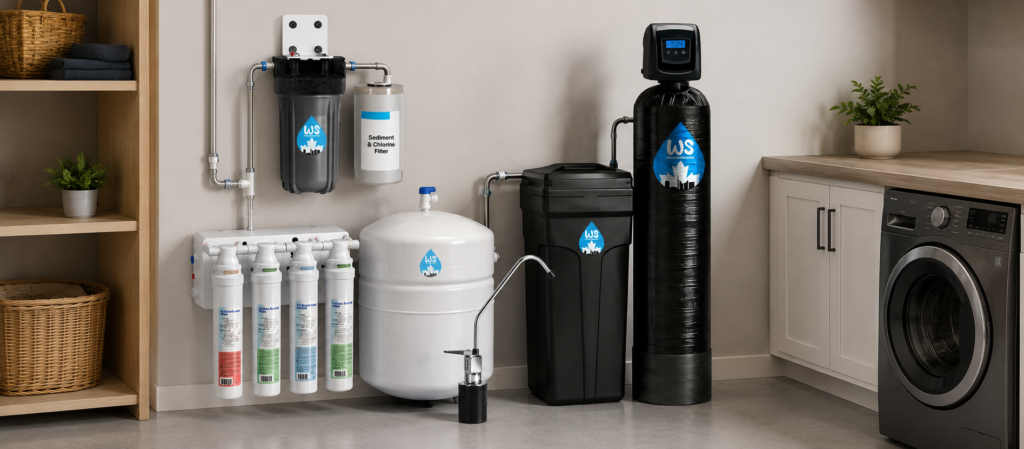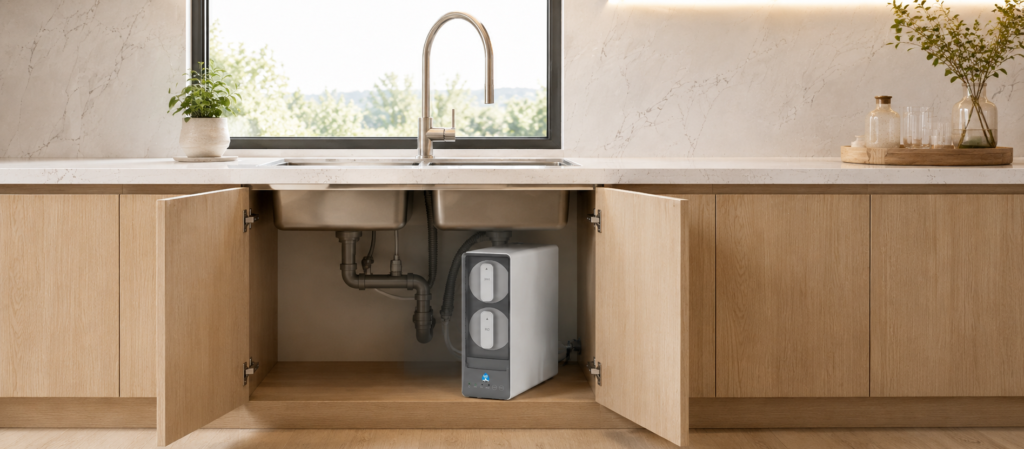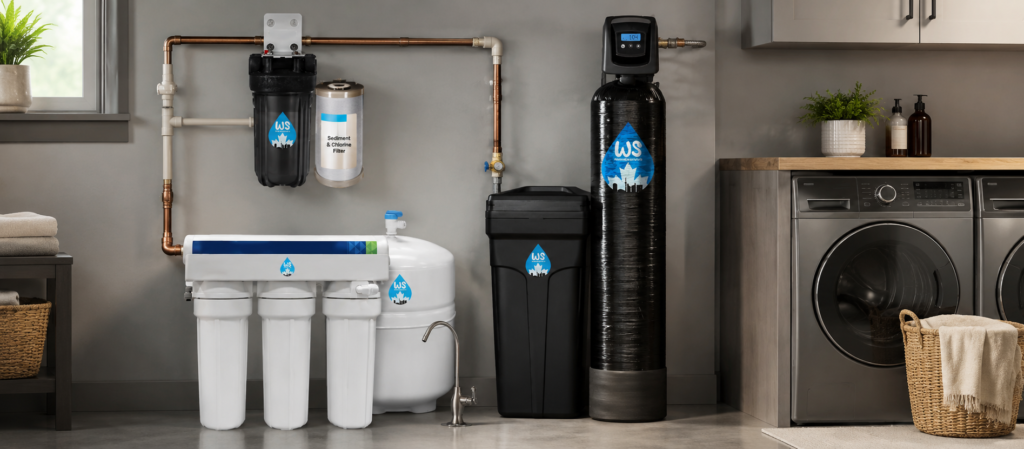
If you’re looking at water softener installation in Edmonton, the first thing to know is that the labour cost can vary quite a bit from one home to another. A simple replacement with accessible plumbing may be fairly straightforward, while a first-time installation can cost more if new piping, drainage, or other changes are needed.
That’s why it’s better to look at what the installer actually has to do rather than focus on one flat number. Let’s discuss typical installation costs in Edmonton, the factors that can push the price up or down, and what to check before you accept a quote.
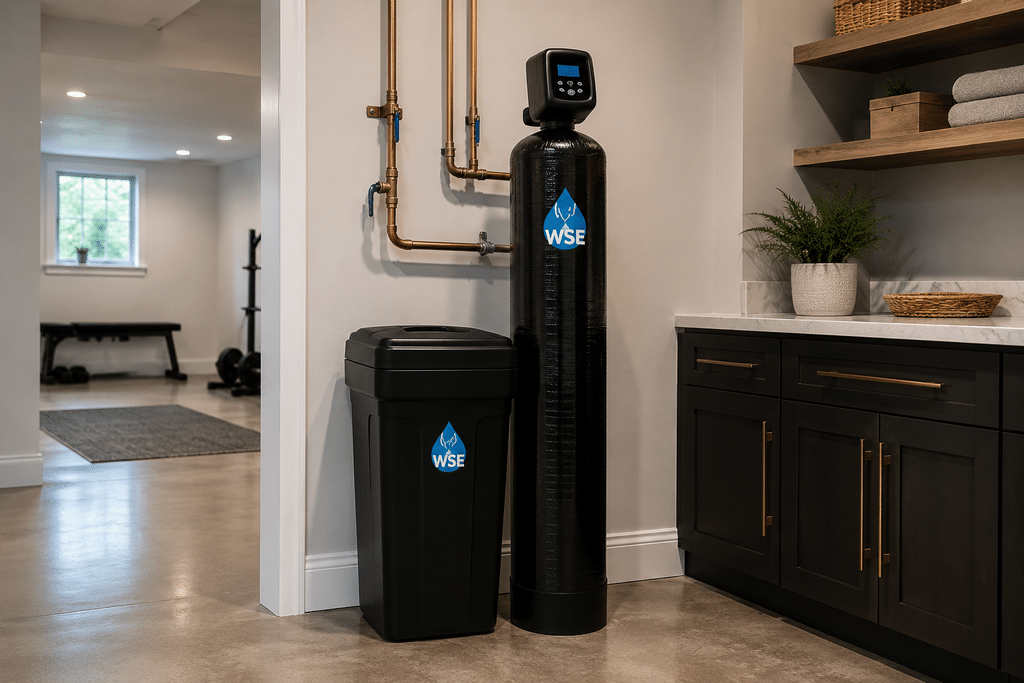
How Much Does Water Softener Installation Cost in Edmonton?
For installation labour alone, most Edmonton homeowners can expect to spend somewhere around $300–$600 for a straightforward job. If the installer has to add new plumbing, extend drain lines, or work through finished areas, the cost can move closer to $700–$1,350+.
Here’s a more practical way to look at it:
| Installation Scenario | Typical Cost |
| Simple replacement using existing connections | $300–$500 |
| Standard first-time installation | $400–$600 |
| New softener loop or added plumbing | $450–$750 |
| More involved retrofit | $700+ |
| Extensive piping through finished areas | $850–$1,350+ |
The lower end usually applies when the main water line, drain, and installation area are already easy to access. Once the installer has to open up finished spaces, reroute piping, or create new connections, labour and material costs start adding up.
One thing to keep in mind: these figures are for the installation itself, not the cost of the water softener. If you’re comparing quotes, make sure you know whether the number you’re looking at is labour-only or a complete supplied-and-installed price.
Also read: Water Softener Cost Edmonton: Reddit vs. Real Prices
What Impacts the Cost of Water Softener Installation?
The biggest price differences usually come from how easy the home is to work with. Two homeowners can install the same softener and still get very different quotes because one setup may need almost no plumbing changes while the other requires extra labour and materials.
Whether Your Home Already Has a Softener Loop
If your home already has a properly placed softener loop, installation is usually much simpler.
Without one, the installer may need to:
- Cut into the main water line
- Add new supply and return piping
- Install a bypass
- Create a suitable connection point
An unfinished basement usually makes this work easier than a finished space where plumbing is hidden behind walls or ceilings.
Access to the Main Water Line
Easy access can save both time and labour.
A main line that is exposed in a utility room is much easier to work with than one located:
- Above a finished ceiling
- Behind drywall
- Inside cabinetry
- In a tight mechanical room
The more difficult it is to reach the line, the more installation time the job may require.
Distance to a Drain
A water softener needs a proper place to discharge water during regeneration.
If a suitable drain is nearby, this part of the job is usually straightforward. If not, the installer may need to run a longer drain line or route it around walls, equipment, or other obstacles.
That means more material, more labour, and potentially a higher installation cost.
Where You Want the Softener Installed
The installation location matters more than many homeowners expect.
A softener placed close to the main water entry point, drain, and electrical outlet is usually easier to install. Costs can increase when the preferred location is:
- On the opposite side of the basement
- Inside a finished room
- In a cramped utility area
- Far from existing plumbing
In some cases, moving the unit only a few metres can add a surprising amount of piping.
How Much Plumbing Needs to Be Changed
Older homes or previous renovations can make the installation less straightforward.
Extra work may include:
- Rerouting existing pipes
- Replacing old valves
- Adding shutoffs
- Changing pipe sizes
- Correcting previous plumbing work
- Moving other equipment to create space
At that point, part of the bill is really for additional plumbing work, not just installing the softener itself.
Replacing an Existing Water Softener
A direct replacement can sometimes be cheaper because much of the plumbing is already in place.
That said, it may still cost more if:
- The new unit uses different connections
- The old bypass is no longer suitable
- Existing fittings are corroded
- The softener is being moved
- The old unit needs to be removed and disposed of
If the existing setup is in good condition and compatible with the new system, replacement is usually one of the more straightforward installation scenarios.
Also read: Best Water Softener According to Reddit: 4 Brands Compared
New Installation vs. Water Softener Replacement
A first-time water softener installation usually involves more work than replacing an existing unit, mainly because the plumbing, drain connection, and installation point may need to be created from scratch.
| Type of Job | What Usually Changes the Cost |
| First-time installation | New plumbing connections, bypass setup, and drain routing may be required |
| Direct replacement | Existing plumbing can often be reused, keeping labour lower |
| Replacement with modifications | Connections, valves, or piping may need to be updated |
| Replacement + relocation | New pipe runs and drainage can make the job similar to a new installation |
A straightforward replacement is often the simpler and less expensive option, especially when the existing plumbing is still in good condition and the new unit can stay in the same location.
However, replacing an old softener doesn’t automatically mean a quick swap. If the previous system was installed poorly, the fittings are corroded, or the new unit requires a different connection layout, some of the existing plumbing may still need to be changed before the new system can be installed properly.
Also read: Water Softener Installation Cost in Edmonton: Full Breakdown
Are There Extra Installation Costs to Watch For?
Yes. Even when the base installation price looks straightforward, a few extras can increase the final bill.
Watch for:
- Old unit removal: Some installers charge separately to disconnect, haul away, or dispose of an existing softener.
- Extra pipe and fittings: Longer pipe runs, additional elbows, valves, or adapters can add material costs.
- New shutoff or bypass valves: If the existing valves are missing, outdated, or damaged, they may need to be replaced.
- Longer drain-line runs: A distant drain can require more tubing and labour.
- Drywall or ceiling access: Finished spaces may need to be opened up to reach plumbing.
- Plumbing corrections: Older or poorly installed piping may need to be fixed before the softener can be connected properly.
- System relocation: Moving the unit to a different part of the basement usually means more piping and labour.
Before approving the work, ask whether these items are already included in the quote or billed separately. That way, the final price is less likely to come as a surprise.
How to Keep Your Water Softener Installation Cost Under Control
A little planning can help prevent the installation bill from creeping up.
- Have the area checked first: An installer can spot drainage, access, or plumbing issues before the work begins.
- Ask for a clear installed quote: Make sure labour, fittings, drain connections, and basic setup are included.
- Use the existing location when possible: Moving the softener can mean more piping and more labour.
- Reuse suitable plumbing: If existing valves, loops, or connections are still in good condition, they may not need to be replaced.
- Confirm extra charges in advance: Ask about old-unit removal, additional materials, and any work outside the standard installation.
- Compare the scope, not just the total: A cheaper quote may exclude work that another installer has already included.
The goal isn’t simply to find the lowest installation price. It’s to know exactly what you’re paying for before the job starts.
Final Thoughts
Water softener installation costs in Edmonton can vary quite a bit, but most of the difference comes down to the plumbing already in place, how accessible the installation area is, and whether extra drainage or retrofit work is required.
At Water Softener Edmonton, we can assess your setup before installation so you know what work is actually needed and what the total cost should look like. If you’re planning a new installation or replacing an older unit, you can request a water assessment, system recommendation, or installation quote before moving forward.
Frequently Asked Questions
How much does water softener installation cost in Edmonton?
A straightforward installation is often around 300–600, while more complex jobs involving additional plumbing or finished areas can cost 700–1,350+.
Is it cheaper to replace an existing water softener?
Often, yes. If the existing plumbing, bypass, and drain connections can be reused, a replacement may require less labour than a first-time installation.
How long does water softener installation take?
A standard installation can often be completed within a few hours. More involved plumbing changes may extend the job.
Does a water softener need a drain?
Yes. The system needs a suitable drain connection to discharge water during regeneration.
Can a water softener be installed anywhere in the basement?
Not always. The best location is usually close to the main water line, a suitable drain, and a power source, with enough room for servicing and salt refills.
Are plumbing materials included in the installation price?
That depends on the installer. Some quotes include standard fittings and materials, while additional piping, valves, or specialty parts may be charged separately.
Can any plumber install a water softener?
Many licensed plumbers can handle the plumbing side, but it also helps to use someone familiar with water-treatment equipment so the system is sized, programmed, and set up correctly.
What should I ask before accepting an installation quote?
Ask whether the quote includes labour, fittings, bypass setup, drain connection, programming, testing, old-unit removal, and any expected extra plumbing work.