Choosing the right size water softener sounds simple until you start comparing recommendations online. One person says a 32,000 grain system is more than enough, while another insists that a 48,000 grain softener is the better choice.
The debate shows up often on Reddit because both answers can be correct — depending on the home, water hardness, and daily water usage.
The truth is that water softener size is not determined by the number of people in your house alone. A properly sized system needs to match your actual water demand, including your home’s hardness level, how much water you use, and how often you want the system to regenerate.
For Edmonton homeowners, understanding the difference between 32,000 and 48,000 grain capacity can help you avoid buying a system that is either too small for your needs or larger than necessary.
What Does 32,000 or 48,000 Grains Actually Mean?
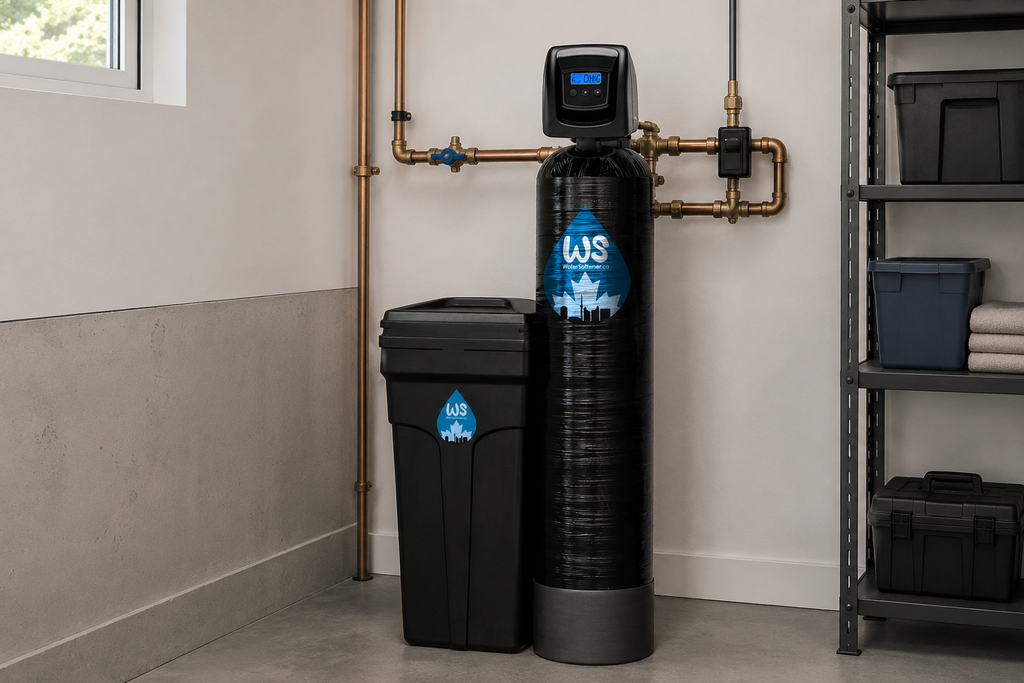
When you see a water softener labeled 32,000 grains or 48,000 grains, the number refers to the system’s softening capacity.
A grain is simply a measurement of water hardness. It tells you how much hardness the softener can remove before it needs to regenerate.
It does not mean:
- The physical size of the tank
- How much salt the system stores
- That a larger grain number is always the better option
A 48,000 grain softener has more capacity than a 32,000 grain system, but that does not automatically make it the right choice. The actual performance depends on your home’s water hardness, household size, and daily water usage.
Also read: Water Softener Prices and Installation in Edmonton
Why Reddit Is Split Between 32,000 and 48,000 Grain Softeners
If you search for water softener sizing advice on Reddit, you will often see two very different answers.
Some homeowners recommend a 32,000 grain softener, while others say a 48,000 grain system is the safer choice. The reason for the disagreement is simple: people are usually basing their recommendations on their own homes.
A system that works perfectly for one household may not be the right fit for another. Factors like water hardness, number of people, and daily water usage can completely change the recommended size.
The Case for a 32,000 Grain Softener
A 32,000 grain system can be a good fit when water demand is moderate.
Common reasons homeowners choose this size:
- Lower upfront cost
- Smaller equipment footprint
- Enough capacity for many average households
- Can work efficiently when properly sized
For a smaller family with average water use, a 32,000 grain softener may provide everything needed without paying for extra capacity that will rarely be used.
The Case for a 48,000 Grain Softener
A 48,000 grain system provides more capacity and a larger reserve for homes with higher demand.
Homeowners often choose this size because:
- It handles higher water consumption
- It may reduce how frequently the system regenerates
- It provides more flexibility for larger families
- It can be a better fit for homes with higher hardness levels
The important point is that neither side of the Reddit debate is automatically wrong. A 32,000 grain softener may be ideal for one Edmonton home, while a 48,000 grain system may make more sense for another.
The difference comes down to the actual water demand of the home — not just choosing the biggest or most popular option.
Also read: Salt-Based vs. Salt-Free Water Softeners: Reddit Verdict
How to Calculate the Water Softener Size You Actually Need
Choosing a water softener size is not just about counting the number of people in your home. The right capacity depends on how much hardness your system needs to remove each day.
A basic sizing calculation looks at three things:
Daily softening demand = Water usage × Water hardness
This helps estimate how much capacity your softener needs before regeneration.
1. Check Your Water Hardness Level
Water hardness is measured in grains per gallon (GPG). The harder your water is, the more capacity your softener needs.
For Edmonton homeowners:
- Municipal water is typically considered moderately hard.
- Well water can vary significantly depending on location.
- Additional issues like iron can also affect system requirements.
A water test is the best way to know your actual hardness level before choosing a system.
2. Estimate Your Household Water Usage
Your daily water consumption plays a major role in sizing.
Things that increase water demand include:
- More people living in the home
- Longer showers and frequent baths
- Higher laundry usage
- Dishwasher cycles
- Guests or larger households
Two homes with the same number of people may still need different softener sizes because their water habits are different.
3. Consider Regeneration Frequency
A properly sized softener should regenerate at a reasonable interval.
If the system is too small:
- It may regenerate more often
- It can use more salt and water over time
- It may struggle during periods of high usage
If the system is too large:
- You may pay more upfront without seeing much benefit
The goal is to find the balance between enough capacity and efficient operation. A 32,000 or 48,000 grain system can both be the right choice — depending on the actual needs of your home.
Can You Buy a Water Softener That Is Too Big?
Many homeowners assume that buying the largest water softener available is the safest choice. While having extra capacity is not always a problem, bigger is not automatically better.
A properly sized system should match your home’s actual water demand. Choosing a system that is too small or unnecessarily large can both create problems.
What Happens If a Water Softener Is Too Small?
An undersized system may struggle when your household uses more water than expected.
Possible issues include:
- More frequent regeneration cycles
- Higher salt and water usage over time
- Reduced softening performance during heavy usage
- Running out of capacity before the next regeneration
What Happens If a Water Softener Is Too Large?
An oversized system may still work, but you may be paying for capacity your home does not need.
Possible downsides include:
- Higher upfront cost
- Larger equipment size
- Less noticeable improvement compared to a properly sized unit
- Paying for extra capacity that rarely gets used
The goal is not to buy the biggest water softener you can find. It is to choose a system with the right amount of usable capacity for your home’s water hardness and daily usage.
Also read: Choosing the Right Water Softener Size for Edmonton Homes
Example: Choosing Between 32,000 and 48,000 Grain in Edmonton
The best way to understand water softener sizing is to look at how different homes can have different needs.
A few examples:
| Home Type | Water Usage | Likely Recommendation |
| Couple in a smaller home | Lower daily water use | 32,000 grain may be enough |
| Family of 4 with average usage | Moderate water use | 32,000–48,000 grain depending on demand |
| Larger family with multiple bathrooms | Higher water consumption | 48,000 grain may be a better fit |
The key takeaway is that household size alone does not decide the softener size.
For example, two Edmonton families with four people can have different requirements. One may use less water and do well with a 32,000 grain system, while another may need the extra capacity of a 48,000 grain unit because of higher daily usage.
A proper sizing recommendation looks at your home’s actual water conditions rather than simply choosing the most common size.
Also read: Best Water Softener According to Reddit: 4 Brands Compared
The Bottom Line
The Reddit debate between 32,000 and 48,000 grain water softeners does not have one universal answer. Both recommendations can be correct because they are usually based on different household needs.
The right choice comes down to:
Water hardness × actual water usage + a proper regeneration schedule
Not simply:
“I have four people in my home, so I need a 48,000 grain system.”
For Edmonton homeowners, the best approach is to size the system based on your home’s actual water conditions. A water test and professional recommendation can help you choose a system that provides reliable soft water without paying for capacity you do not need.
If you are unsure what size fits your home, Water Softener Edmonton can help evaluate your water quality and recommend the right solution, whether you need a system for city water or a more specialized setup.
Frequently Asked Questions
Is a 32,000 grain water softener enough for a family of four?
A 32,000 grain water softener can be enough for some families of four, especially if water usage is average. The right size depends on your home’s water hardness and daily consumption, not just the number of people.
Is a 48,000 grain water softener too big for a family of four?
Not necessarily. A 48,000 grain system can be a good option for families with higher water usage, multiple bathrooms, or higher-than-average demand. However, it may provide little extra benefit if your household uses less water.
How many grains should my water softener be?
The ideal grain capacity depends on your water hardness level, household size, and daily water usage. Many homes fall into the 32,000–48,000 grain range, but the best choice depends on your specific situation.
Does a larger water softener use less salt?
Not always. A properly sized system is usually more efficient because it regenerates based on actual demand. An oversized unit may not necessarily reduce salt usage if it is not configured correctly.
How often should a properly sized water softener regenerate?
Most properly sized systems regenerate based on water usage rather than a fixed schedule. The exact frequency depends on your household consumption, water hardness, and system settings.
Does Edmonton water hardness affect what size softener I need?
Yes. Harder water requires the softener to remove more minerals, which increases the required capacity. Edmonton homeowners should consider their actual hardness level when choosing between different grain sizes.