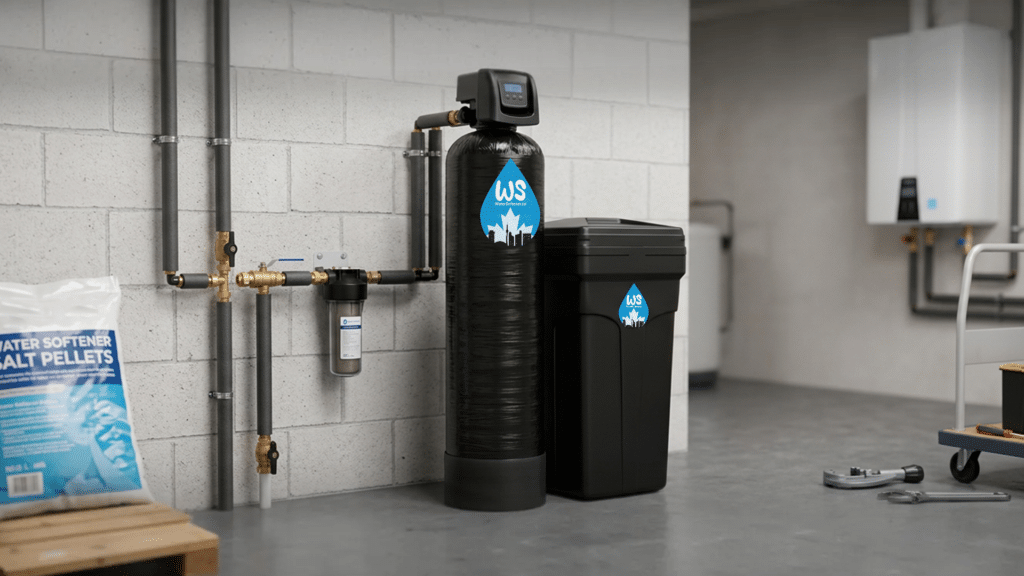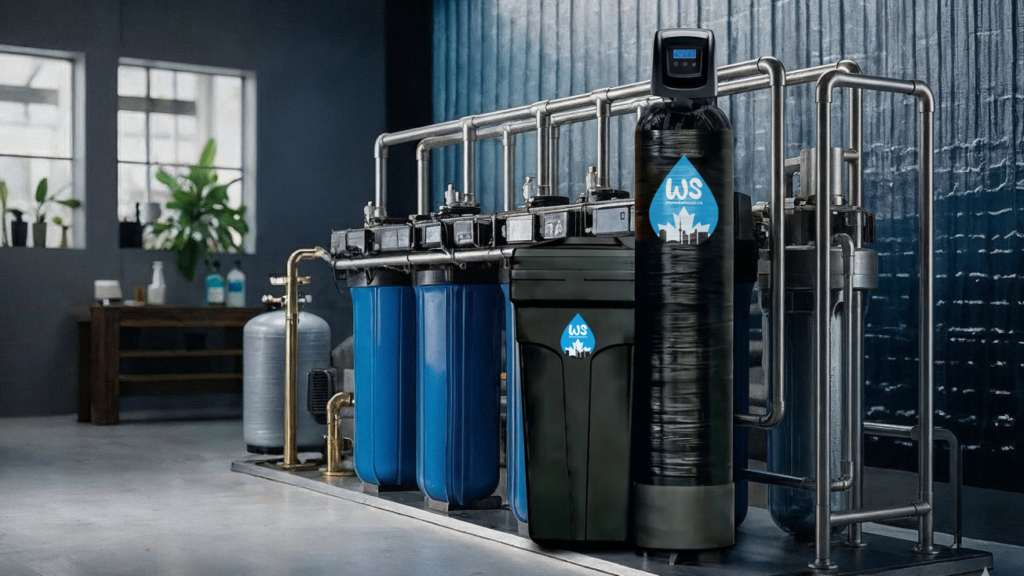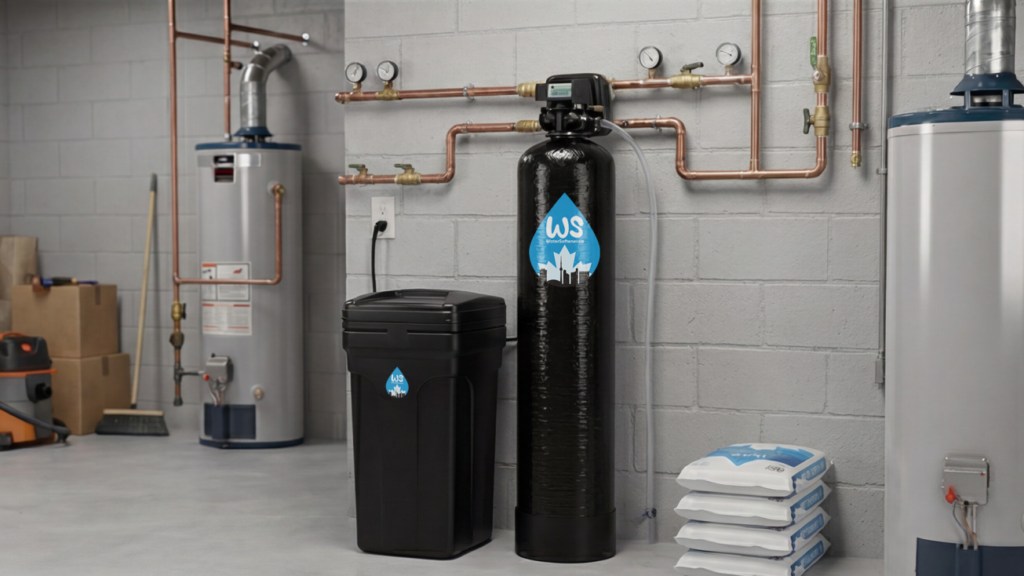
People who live in older Edmonton homes usually struggle while installing a standard water softener. They might be considering installing a water softener only to realize there’s no clear spot to install it, the main water line isn’t where you expected, or there’s no easy drain access nearby. What works perfectly in a newer build doesn’t always translate when your plumbing runs through tight basement corners or has been modified over the years.
That’s why it’s important to install a water softener that is compact enough to fit an older home. The layout, the pipe condition, the available space, and even how your water flows through the house all affect what will (and won’t) work. This guide focuses on those constraints, so you can make a decision that fits your home instead of trying to force a modern setup into an older structure.
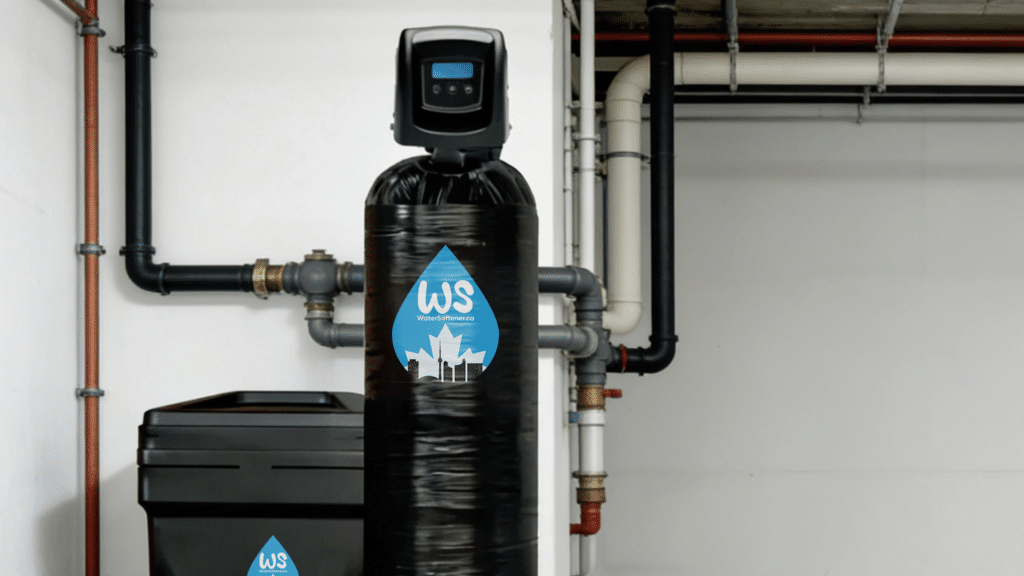
Constraints Related to Water Softeners in Older Edmonton Homes
- Limited Space Narrows Down Your Options
In many older homes, there isn’t a clean, open utility area where you can drop in a standard water softener. You’re often working with tight basement corners, narrow mechanical rooms, or shared spaces near a furnace and water heater.
A standard full-size softener can take up around 18–24 inches in width and 40–50 inches in height, which doesn’t sound like much until you try fitting it between existing lines and appliances.
This is why if you want to install a suitable water softener in an older home with a dated layout, you may be limited to compact or slimline systems.
- Main Water Line Access Can Be Tricky
Modern homes usually have a clearly accessible main shutoff and a convenient section of pipe to tie into. Older homes? Not always.
The main line might run behind finished walls, through awkward sections of the basement, or split in a way that makes full-home softening harder to achieve. In some cases, you need to get additional plumbing work done just to create a proper connection point. That can influence whether you go for a whole-home system or a more targeted setup.
- Drain Access Requirements Limit Your Options
Salt-based water softeners need a drain line for regeneration, and this is where many installations hit a wall. Older homes don’t always have a nearby floor drain, laundry standpipe, or sump connection in the right location.
Moreover, running a drain line across the basement isn’t always possible, and in some setups, it’s not allowed without proper air gaps or backflow prevention. Without an accessible drain within a reasonable distance (usually within 10–15 feet), your system choices can narrow quickly.
- Older Piping Can Affect Performance
A lot of Edmonton homes still have galvanized steel, older copper, or mixed-material plumbing. Over time, these pipes can build up internal scaling, reducing water pressure and flow.
Adding a water softener into that system doesn’t automatically fix those issues, and in some cases, it can expose them. If your flow rate is already low, a standard softener may struggle to keep up, especially in households with 2–4+ people using water at the same time.
- Inconsistent Water Pressure
Older plumbing layouts can lead to fluctuating pressure, especially if multiple fixtures are used at once. Most water softeners operate best within a certain pressure range (often 40–80 PSI).
If your home dips below that regularly, your softener’s performance can suffer. You might notice regeneration cycles not functioning efficiently, and water flow through the system being restricted. This is something that often needs to be assessed before choosing a unit.
Electrical and placement limitations
Not every installation spot in an older home has easy access to power. Since most modern softeners require an electrical connection for their control valve, placement becomes more limited. You might find the ideal plumbing location but no nearby outlet. That adds another layer of planning, especially if running new electrical lines is involved.
Also read: Is a Water Softener Worth It in Edmonton Homes?
Suitable Water Softeners for Older Homes in Edmonton
Before getting into the details, here’s a quick breakdown of which systems tend to work best depending on your home setup:
| System Type | Best For | Space Required | Drainage Required? | Performance Level |
| Compact Salt-Based Softener | Most older homes with workable plumbing | ~18–20” width | Required | ⭐⭐⭐⭐⭐ |
| Dual-Tank Softener | Larger households in older homes | ~24–30” width | Required | ⭐⭐⭐⭐⭐ |
| Salt-Free Conditioner | Homes with installation limitations | ~10–14” width | Not Required | ⭐⭐⭐ |
| Partial / Point-of-Use Systems | Homes where full install isn’t feasible | Minimal | Depends | ⭐⭐⭐ |
Compact Salt-Based Water Softeners (Best for Older Homes)
If your home has at least a basic installation setup available—meaning a nearby drain and access to the main line—this is usually the best route.
Compact salt-based systems are designed to:
- Fit into tighter spaces (around 18–20 inches wide)
- Handle Edmonton’s higher hardness levels effectively
- Deliver consistent soft water across the home
In older homes, full-size systems can feel oversized or difficult to place. That’s where compact units make a difference, they give you the same performance, just in a footprint that’s easier to work with. For most homeowners, this strikes the right balance between performance and practicality.
Dual-Tank Systems (When Water Usage Is Higher)
Some older homes, especially those that have been renovated or house larger families have higher daily water demand.
A dual-tank system:
- Alternates between two tanks
- Ensures you always have soft water, even during regeneration
- Handles continuous usage more efficiently
That said, these systems:
- Require more space (24–30 inches or more)
- Still need proper drain access
- May not fit in tighter basement setups
These work well if your home can support them, but they’re not always the easiest fit in older layouts.
Salt-Free Conditioners (When Installation Is Limited)
This is where things shift. If your home:
- Doesn’t have a nearby drain
- Has limited space
- Makes it difficult to tap into the main line
…then a salt-free water conditioner becomes a practical alternative.
Instead of removing minerals, these systems:
- Help reduce scale buildup
- Require no drain connection
- Take up less space (often under 14 inches wide)
They’re easier to install in constrained setups but it’s important to understand the trade-off: you’re not getting full soft water, but you are reducing the impact of hard water on plumbing and fixtures. Basically, conditioners alter the structure of minerals so they don’t create scale buildup on appliances, fixtures and other surfaces.
Partial or Point-of-Use Solutions (When Full Systems Don’t Fit)
In some older homes, installing a full system just isn’t realistic without major plumbing changes.
That’s where partial solutions such as these come in:
- Under-sink systems
- Softening only specific lines (like hot water)
- Pairing filtration with targeted treatment
These setups require less space and can be installed without major modifications. They’re not a complete solution but they’re often better than forcing a system that doesn’t fit your home.
Curious about how much does a water softener system actually cost in Edmonton? Read this blog to learn more!
Final Verdict: What Should You Choose for an Older Edmonton Home?
For most older Edmonton homes, a compact salt-based water softener is usually the best option if your home has the plumbing and drain access to support it. It gives you full softening, handles Edmonton’s hard water properly, and makes more sense than trying to work around the problem with a weaker solution.
That said, not every older home is set up for a standard softener. If space is very tight, drain access is missing, or installing a salt-based system would require too many plumbing changes, then a salt-free conditioner is the more practical alternative.
So if you want a straightforward recommendation, this is it: go with a compact salt-based softener whenever your home can reasonably support one, and look at a salt-free system only when installation constraints make a full softener difficult.
If you are not sure what your home can support, let us help! At Water Softener Edmonton, we provide advanced water softeners that are suitable for both modern residential spaces and older homes. Reach out to us and let us help you figure out which system works best for your space, your plumbing, and your water usage.
Frequently Asked Questions
Can installing a water softener damage old pipes?
Not directly, but it can expose existing issues. If your pipes already have heavy buildup or corrosion, softening the water may loosen deposits over time, which can lead to leaks or reduced flow in weak spots. It’s usually a good idea to have your plumbing checked if your home is significantly older.
Do older homes need smaller water softeners?
Not always smaller in capacity, but definitely more compact in size. The key is choosing a system that matches your household water usage while still fitting into the available space.
Will a water softener improve water pressure in an older home?
It can help slightly over time by reducing scale buildup, but it won’t fix major pressure issues caused by old or narrow pipes. If pressure is already low, that’s usually a plumbing limitation rather than something a softener can fully solve.
How long does installation usually take in an older home?
In straightforward setups, installation can take 2–4 hours. But in older homes with limited access, unusual layouts, or required plumbing adjustments, it can take longer. Is it worth installing a water softener before upgrading old plumbing?
In many cases, yes, especially if your plumbing is still functional. A properly sized system can help reduce further buildup and protect what’s already there. But if your pipes are heavily corroded or causing major issues, you should address those first before installing a full system.