Skip to content
Edmonton water is hard enough that a softener is not really a “set it and forget it” system. It may keep running in the background for years, but that does not always mean it is working the way it should.
A tank can have salt in it and still fail to regenerate properly. The settings can be slightly off and waste salt or water. A small salt bridge can stop the system from softening water even when everything looks fine from the outside.
That is where most maintenance mistakes happen. Homeowners are not usually doing anything careless; they are just missing the small checks that keep the system working properly.
In this blog, we’ll go through the common water softener maintenance mistakes Edmonton homeowners make, why they can cause problems, and what to do instead before hard water starts affecting the rest of the home.
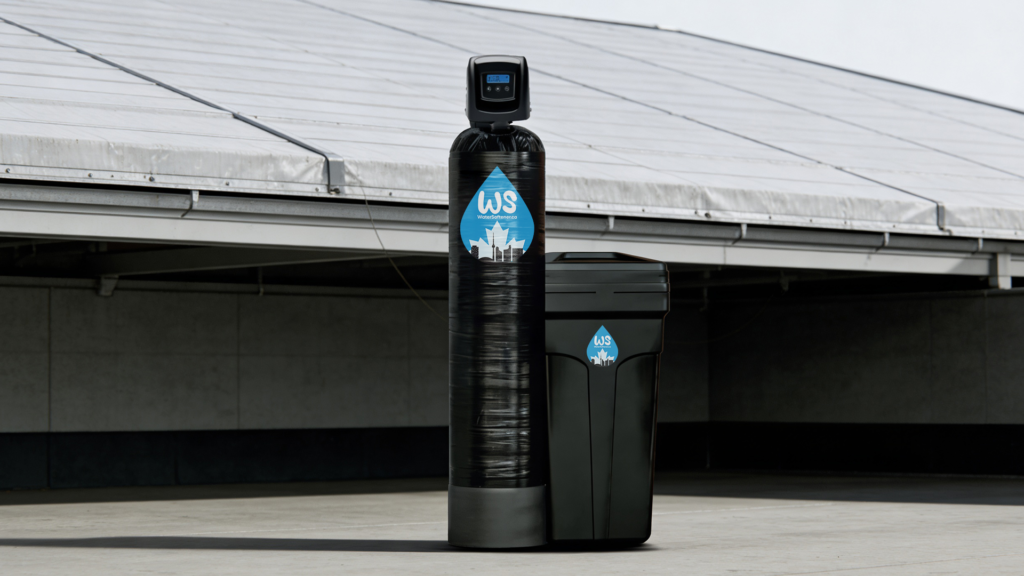
Mistake #1: Assuming the Softener Is Working Just Because It Has Salt
Seeing salt in the brine tank does not always mean the softener is working properly. The system still needs to pull brine during regeneration, and that can be affected by what is happening inside the tank.
This mistake usually happens when:
- The salt level looks fine from the top
- A salt bridge has formed underneath
- Salt has turned into mush at the bottom
- The salt level has not changed for weeks
- The system is running, but the water still feels hard
The confusing part is that the softener may still make its usual sounds and go through its regular cycle. From the outside, nothing looks broken. But if the salt is not dissolving properly, the system cannot regenerate the resin beads the way it should.
What to do instead:
Check more than the salt level. Look for a hard crust, hollow gap, or mushy buildup in the tank. Keep the brine tank around half full, use the right salt for your system, and gently break up any salt bridge with a broom handle before running a regeneration cycle.
Mistake #2: Forgetting to Check the Salt Level Regularly
A water softener does not need daily attention, but it should not be ignored for months either. Many Edmonton homeowners only check the brine tank when they remember, which usually means the system has already gone too long without a quick look.
This mistake usually happens when:
- There is no monthly reminder to check the tank
- The softener is tucked away in a basement or utility room
- Salt is only added after hard water problems return
- A busy household uses more softened water than expected
- The homeowner is unsure how much salt should normally be in the tank
The issue is not just that the salt can run low. It is that without a routine, you also miss changes in how the system is behaving. For example, if the salt level is dropping much faster than usual, the softener may be regenerating too often. If it barely drops at all, something may be off with the regeneration cycle.
What to do instead:
Make salt checks part of a simple monthly routine. Open the tank, see whether the salt level looks normal for your home, and notice whether it is dropping too quickly or not dropping at all. Once you know your system’s usual pattern, it becomes much easier to spot a problem early.
Also read: Maintaining Your Water Softener in Edmonton: Best Practices
Mistake #3: Ignoring the Softener Settings
A water softener can be full of salt and still work poorly if the settings are wrong. Many homeowners never touch the control panel after installation, but those numbers matter more than people think.
This mistake usually happens when:
- The hardness level is not set correctly
- The household size has changed
- Water usage has increased
- The regeneration schedule is too frequent or not frequent enough
- The system was installed years ago and never adjusted again
The problem is that wrong settings can quietly waste salt, waste water, or let hard water pass through the home. For example, if the hardness setting is too low, the softener may not regenerate enough. If it is too high, the system may regenerate more than necessary and use extra salt.
What to do instead:
Check whether the softener settings still match your home’s water hardness and daily water use. If your family size, water habits, or plumbing setup has changed, the system may need to be adjusted. A quick water test can also help confirm whether the current settings are still doing the job.
Mistake #4: Skipping Water Tests After the Softener Is Installed
Once a water softener is installed, many homeowners assume the water is now handled for good. But without testing the water every now and then, you are mostly guessing whether the system is still softening properly.
This mistake usually happens when:
- Water is only tested before the system is installed
- No one checks hardness levels after adjustments
- The softener seems fine because it is still running
- Changes in water feel are brushed off as “normal”
- The home has an older system that has not been tested in years
The issue is that not every softener problem is obvious right away. Water can slowly become harder again if the settings are off, the resin is aging, the system is undersized, or regeneration is not happening properly. A simple test gives you a clearer answer instead of relying only on how the water feels.
What to do instead:
Test your water after installation, after any major setting change, and a few times a year if you want to stay ahead of problems. You do not need to overcomplicate it. A basic hardness test can tell you whether the softener is actually reducing minerals the way it should.
Mistake #5: Forgetting About the Bypass Valve
The bypass valve is easy to ignore because most of the time, you do not need to touch it. But if it is left in the wrong position after cleaning, repairs, plumbing work, or a vacation, the water may skip the softener completely.
This mistake usually happens when:
- The softener was put on bypass during service
- Someone changed the valve position and forgot to switch it back
- The homeowner is unsure which direction means “service” and which means “bypass”
- The system is bypassed during a trip and not returned to normal
- Plumbing work is done near the softener and the valve is not checked afterward
The confusing part is that water will still flow normally through the home. Your taps, showers, washing machine, and dishwasher may all keep working, so it does not always feel like something is wrong right away. The difference is that the water is no longer passing through the softener before reaching the rest of the house.
What to do instead:
After any service visit, plumbing work, cleaning, or vacation, check the bypass valve position. Make sure the system is back in normal service mode so water is actually moving through the softener. If the valve labels are unclear, take a photo when it is in the correct position so you have an easy reference later.
Also read: Troubleshooting Common Water Softener Issues in Edmonton: A Homeowner’s Guide
Mistake #6: Ignoring Unusual Regeneration Patterns
A water softener should not feel random. If it starts regenerating too often, at odd times, or not often enough, that usually means something needs attention. Many homeowners ignore this because the system is still running, but the pattern itself can tell you a lot.
This mistake usually happens when:
- The softener regenerates more often than it used to
- The system runs during the day instead of overnight
- Regeneration sounds louder or longer than normal
- The household keeps running out of soft water
- The system does not seem to regenerate at all
The problem is that regeneration affects both performance and running costs. If the softener regenerates too often, it may waste salt and water. If it does not regenerate enough, the resin may not recharge properly, and hard water can start moving through the home again.
What to do instead:
Pay attention to your softener’s normal schedule. Most systems are set to regenerate at night when water use is low. If the timing, frequency, or sound changes, check the settings, salt use, and water usage. If the pattern keeps changing without a clear reason, it is worth having the system inspected.
Mistake #7: Not Cleaning the Brine Tank When It Needs It
The brine tank does not need to be cleaned all the time, but it should not be ignored forever either. Over time, dirt, residue, and leftover salt buildup can collect at the bottom of the tank, especially if the system has been running for years without a proper cleanout.
This mistake usually happens when:
- The tank has never been emptied since installation
- Old salt is always topped up with new salt
- There is visible dirt or sludge at the bottom
- The water inside the tank looks dirty
- The softener has started performing inconsistently
The issue is that the brine tank plays an important role during regeneration. If the bottom is full of residue, the system may not draw brine as cleanly as it should. It can also make future salt problems harder to notice because everything is buried under years of buildup.
What to do instead:
Check the inside of the brine tank a few times a year. If you notice dirty water, heavy residue, or buildup at the bottom, let the salt level run low, empty the remaining salt, clean the tank, and refill it with fresh salt. For most homes, this is not a monthly job, but it should be done when the tank clearly needs it.
Mistake #8: Forgetting to Check for Leaks Around the Softener
Small leaks around a water softener are easy to miss, especially if the unit sits in a basement, utility room, or mechanical area that does not get checked often. A few drops near a fitting or drain line may not look serious at first, but it can point to a loose connection, worn seal, cracked part, or drainage issue.
This mistake usually happens when:
- The area around the softener is rarely inspected
- A small puddle is wiped up without checking where it came from
- Drain lines are not checked after regeneration
- Moisture around fittings is treated as normal
- The floor drain area is blocked or hard to see
The problem is that leaks usually do not fix themselves. Even a slow drip can damage flooring, create moisture problems, or get worse during regeneration when more water is moving through the system. In Edmonton homes with finished basements, this can become a bigger issue if the softener is installed near drywall, storage, or flooring materials.
What to do instead:
Look around the softener once a month for moisture, rust marks, mineral staining, loose hoses, or water near the drain line. Check after a regeneration cycle if you suspect a leak. If the same spot keeps getting wet, do not keep wiping it up and ignoring it. Find the source early before it turns into water damage.
Mistake #9: Ignoring the Drain Line
The drain line is not the most noticeable part of a water softener, but it matters every time the system regenerates. During regeneration, the softener sends wastewater through this line, so if it is kinked, blocked, loose, or installed poorly, the system may not drain the way it should.
This mistake usually happens when:
- The drain line is pushed behind the unit and forgotten
- The line gets bent, kinked, or pinched
- The drain connection becomes loose
- The floor drain area is blocked by storage items
- The homeowner never checks where the regeneration water is going
The problem is that drainage issues can affect both performance and safety. If water cannot leave the system properly, regeneration may not complete correctly. In some cases, water can back up, spill near the unit, or create moisture problems around the softener.
What to do instead:
Check that the drain line is secure, open, and not bent sharply. Make sure it leads to the proper drain and that the area around the drain is clear. If you notice water near the softener after regeneration, or the system seems stuck during a cycle, the drain line should be one of the first things you inspect.
Mistake #10: Waiting Too Long to Replace an Aging Softener
A water softener can last for years, but it will not last forever. Many homeowners keep repairing the same old unit because it still turns on, still uses salt, and still runs through a cycle. The problem is that “still running” does not always mean it is still softening well.
This mistake usually happens when:
- The system is more than 10 to 15 years old
- Hard water keeps coming back even after basic maintenance
- The softener uses more salt than it used to
- Repairs are becoming more frequent
- The resin tank, control valve, or internal parts are starting to fail
- The system no longer matches the home’s water use
The issue is that an aging softener can become less efficient over time. You may end up using more salt and water while still getting poor results. At some point, repeated repairs can cost more than replacing the unit with a properly sized system.
What to do instead:
If your softener is older and the same problems keep returning, have the system inspected instead of guessing. Sometimes a repair or setting adjustment is enough. Other times, replacement makes more sense, especially if the unit is undersized, inefficient, or no longer keeping up with Edmonton’s hard water.
Also read: Signs You Need to Replace Your Water Softener in Edmonton
‘Keep Your Water Softener Working the Way It Should
Most water softener problems start small. A setting is slightly off, the salt level is not checked for a few months, the drain line gets ignored, or the system keeps regenerating more often than usual. None of these things seem major at first, but they can slowly bring hard water problems back into the home.
A simple maintenance routine can make a big difference:
| Maintenance Task | How Often To Check? |
| Check the salt level | Once a month |
| Look for salt bridges or buildup inside the tank | Every 1–2 months |
| Pay attention to regeneration timing and frequency | Monthly |
| Check around the softener for leaks or moisture | Monthly |
| Make sure the drain line is clear and secure | Every few months |
| Test your water hardness | A few times a year |
| Clean the brine tank | When you notice dirt, residue, or heavy buildup |
| Inspect older softeners more carefully | After 10 years or when problems keep returning |
If your softener is not working the way it used to, or you are not sure whether it is still keeping up with your home’s water, Water Softener Edmonton can help. We’ll check settings, test water hardness, inspect common problem areas, and help you understand whether your current system is still worth keeping. Likewise, if you are looking for a new, more advanced city water softener or well water softener for your Edmonton home, reach out to us to find a system that is optimized for your needs.