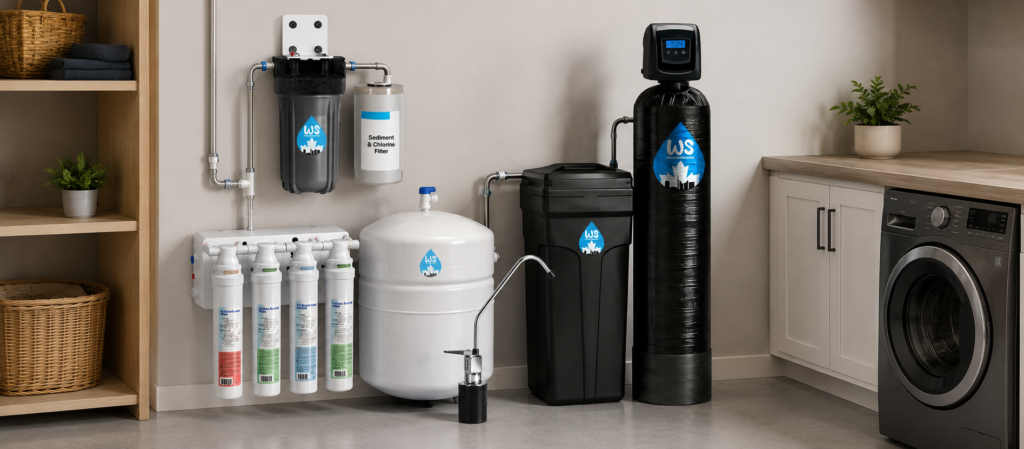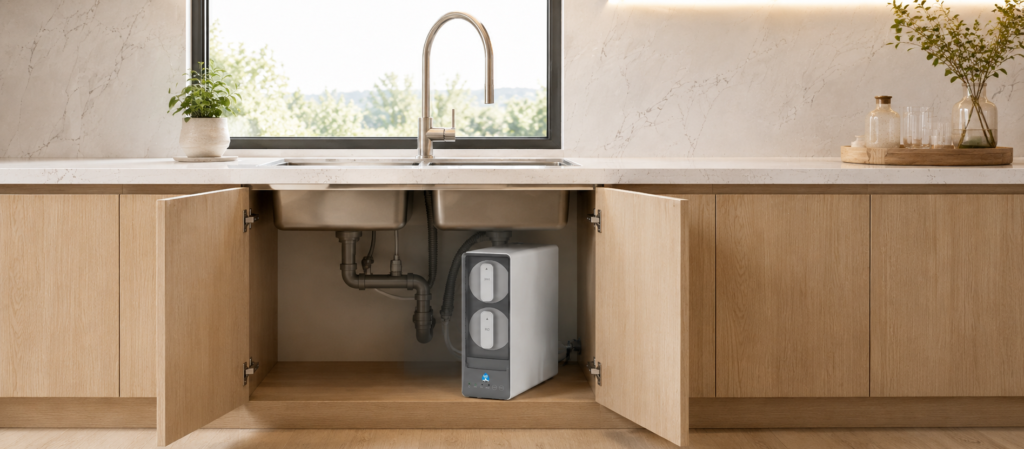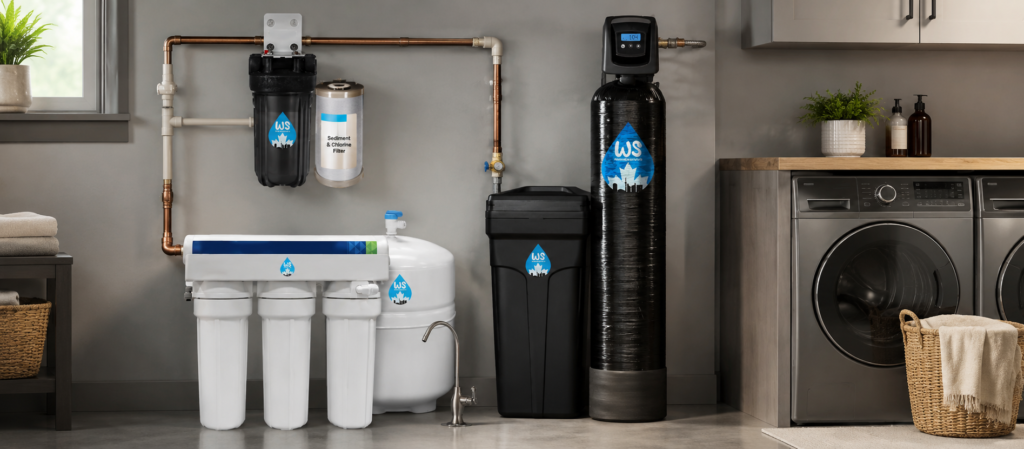
Living in a condo or apartment comes with its fair shares of struggles, especially when the situation involves installing a water softener. You have less room to work with, fewer options when it comes to plumbing changes, and in some buildings, even small upgrades need approval. So when hard water becomes a problem, finding a solution is not as simple as picking the biggest or most powerful water softener you can find.
Edmonton’s water is hard enough to affect how your water feels day to day, how often fixtures need cleaning, and how well soaps and shampoos perform. But not every unit can support a full softening system, and not every person living in an apartment needs one either. Some people are better off with a compact softener, some need a conditioner, and some only need a point-of-use setup.
If you’re looking for a condo water softener in Edmonton or for an apartment, this guide will help sort that out clearly, so you can choose the option that works for your space.
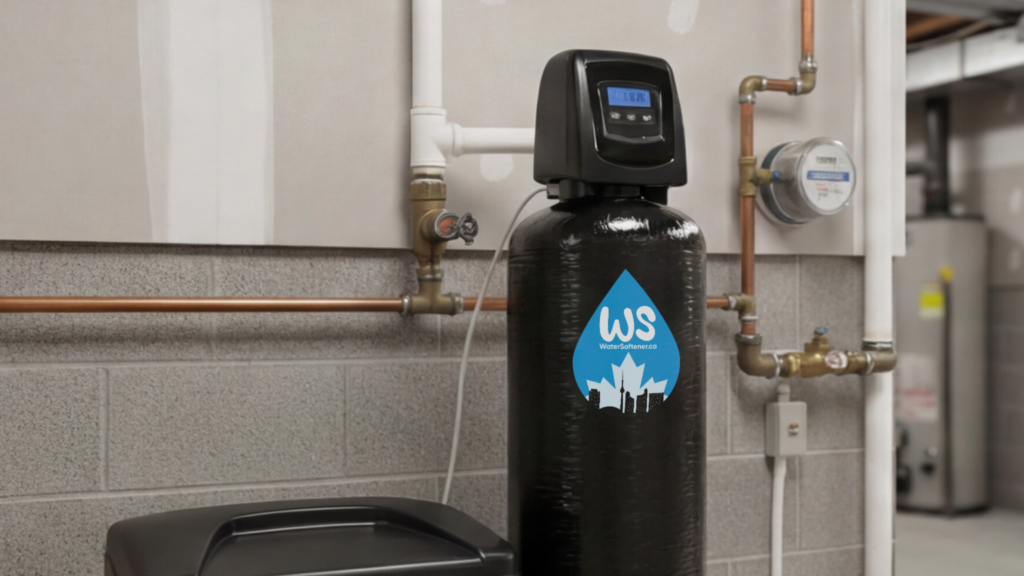
Why Water Softeners Are Different for Condos and Apartments
In a house, installing a water softener is usually a straightforward decision. You pick a system, connect it to the main water line, and you’re good to go.
In a condo or apartment, it’s more about working within limitations than choosing the “best” system on paper. What matters here is not just performance, but whether the system can actually be installed and run properly in your unit.
Here’s why water softeners are different for those living in condos or apartments:
Space is limited and often predefined
Most condos don’t have a dedicated utility area. You’re usually working with a small closet, under-sink space, or a tight corner near the laundry. That immediately rules out larger, high-capacity systems that are commonly used in houses.
You may not have access to the main water line
In many apartment setups, individual units don’t have a clear entry point where you can install a whole-home system. Without that, traditional softeners that treat all incoming water simply aren’t an option.
Drain access isn’t always available
Salt-based softeners need a drain line for regeneration. If your unit doesn’t have a nearby drain (or if it’s not accessible), that alone can eliminate a lot of otherwise effective systems.
Building rules can limit what you install
Condo boards or strata regulations often restrict plumbing modifications. Some buildings won’t allow permanent installations at all, while others may require approvals that make the process slower or impractical.
Because of these factors, choosing a water softener for a condo isn’t about finding the most powerful system, but finding one that fits your space, your plumbing, and your building’s rules without creating more complications.
Also read: Complying with Edmonton Plumbing Codes for Water Softeners
Best Water Softeners for Condos and Apartments
Edmonton’s water hardness (around 15–25 GPG) is high enough that small, underpowered solutions won’t do much, but at the same time, most units can’t support full-scale systems either. So instead of guessing, here’s a clear breakdown of what works best based on real living situations:
| Living Situation | Recommended System | Capacity Range | Space Needed |
| Studio / 1 person | Portable softener | 8,000–12,000 grains | Very compact (under sink/closet) |
| 1–2 bedroom condo | Compact cabinet softener | 12,000–20,000 grains | Small utility space |
| Larger condo / townhouse | Compact whole-home softener | 20,000–32,000 grains | Dedicated utility area |
| Strict condo rules / no drain | Salt-free conditioner | N/A | Minimal |
| Renters / temporary fix | Point-of-use filters | N/A | None |
Portable Water Softeners (Best for Studios and Small Households)
If you’re living alone or in a smaller unit, this is the best place to start. Portable softeners mostly fall in the 8,000 to 12,000 grain range, which is enough to handle Edmonton’s hardness for 1 person (or light use for 2 people).
They can easily fit in tight spaces, like under a sink, inside a cabinet, or even near a laundry hookup. Most models regenerate every 3–7 days depending on usage, and salt consumption stays relatively low (around 5–10 lbs per cycle).
This is one of the few options that gives you actual soft water without needing a full-scale installation.
Compact Cabinet Softeners (Best Overall for 1–2 Bedroom Condos)
For most condo owners, this is the sweet spot. These systems range between 12,000 and 20,000 grains, which is ideal for 1–2 people using 120–150 gallons per day.
They’re called “cabinet” systems because everything (resin tank + salt tank) is built into a single compact unit, usually around:
- 35–45 inches tall
- 10–15 inches wide
That makes them manageable in a small utility closet or near a laundry area.
They also regenerate less frequently than portable systems and are more consistent in performance, especially in areas like Edmonton where hardness levels are on the higher side.
Compact Whole-Home Softeners (Only for Suitable Condo Setups)
This is the closest thing to a full house-style system, but it only works if your unit allows it.
You’re looking at systems in the 20,000 to 32,000 grain range, which can comfortably handle:
- 2–3 people
- Higher daily usage
- Full water coverage (kitchen, bathroom, laundry)
However, this option only makes sense if you have:
- Access to your unit’s main water line
- A nearby drain
- Enough space for separate tanks
In most apartments, this won’t be possible, but in larger condos or townhouse-style units, it can be a solid long-term solution.
Salt-Free Water Conditioners (Best for Restrictions and Low Maintenance)
If your building doesn’t allow drain connections or major plumbing work, salt-based systems are usually off the table. That’s where salt-free conditioners come in.
Instead of removing hardness minerals, they alter how minerals behave, helping reduce scale buildup in pipes and appliances.
These systems:
- Require no salt
- Need little to no maintenance
- Take up very little space
They won’t give you the same “soft water feel” as a traditional softener. However, they’re best suited for people who want to reduce buildup (not fully soften water) and those who need a system that works within strict condo rules.
At Water Softener Edmonton, we offer advanced salt-free water conditioning systems that are low-maintenance, eco-friendly and involve multi-stage filtration – perfect for apartments or condos.
Point-of-Use Systems (Best for Renters or Minimal Setup)
If installing anything permanent isn’t an option, point-of-use systems are the simplest way to improve your water experience.
These include:
- Shower filters
- Under-sink filters
They won’t handle hardness across your entire unit, but they can make a noticeable difference in:
- Shower comfort
- Skin and hair feel
- Chlorine reduction
What This Really Comes Down To
In condos and apartments, the “best” water softener isn’t about size or power – it’s about fit.
- If you want actual soft water → portable or compact softener
- If your building has space restrictions → salt-free conditioner
- If you just want a quick improvement → point-of-use systems
The key is choosing something that works within your space and setup, not against it.
With so many different types of water softeners, it can be difficult to know which to install in your house. Here’s a guide on choosing the best water softener for Edmonton’s hard water in 2026.
Key Features to Look for in a Condo-Friendly Water Softener (Edmonton-Specific)
Right Capacity for High Hardness (Not Just “Small Size”)
Edmonton water typically sits around 15–25 GPG, which falls into the very hard category and requires proper treatment.
For condos, you don’t need oversized systems, but you do need enough capacity to handle that hardness:
- 1 person → 8,000–12,000 grains
- 2 people → 12,000–20,000 grains
- 3+ people → 20,000+ grains (if space allows)
Capacity matters because it determines how much hardness the system can remove before regenerating. An undersized system might regenerate every 1–2 days, which wastes salt and water. In contrast, an oversized system would take up unnecessary space. So, the goal is balance, not maximum size.
Regeneration Frequency (Ideally Every 4–7 Days)
Most well-sized systems are designed to regenerate every 4–7 days, not daily.
In a condo, this matters more than people realize. Frequent regeneration means more water usage and noise, while less frequent regeneration leads to a more efficient and quieter operation
Look for systems that regenerate based on usage (metered systems) rather than fixed timers.
This helps avoid unnecessary cycles when you’re not using much water.
Compact Footprint (Actual Dimensions Matter)
This is where a lot of people underestimate things.
Instead of vague “compact” claims, look at real dimensions:
- Height: ~35–45 inches
- Width: ~10–15 inches
- Depth: ~18–22 inches
Anything larger than this usually becomes difficult to fit in:
- under-sink spaces
- utility closets
- laundry corners
In condos, even a few extra inches can make installation impossible.
Low Water Usage During Regeneration
Every regeneration cycle uses water. In smaller units, this can add up quickly.
Typical ranges:
- Portable systems: ~15–25 gallons per cycle
- Larger systems: ~30–60+ gallons per cycle
If your system regenerates too often and uses a lot of water, your monthly usage can spike. This is why correct sizing and efficient regeneration settings matter together.
Salt Efficiency (How Much It Uses Per Cycle)
Salt usage is often overlooked, but it directly affects maintenance:
- Smaller systems: 5–10 lbs of salt per cycle
- Larger systems: 10–20+ lbs per cycle
If your system regenerates weekly:
- You’re looking at roughly 20–40 lbs of salt per month for a condo setup
Lower salt usage means easier maintenance, which is especially important in apartments where storage space is limited.
Noise Levels (Important in Shared Living Spaces)
Unlike houses, your softener might be near your bedroom, inside a hallway closet or close to shared walls. Softeners can produce water flow noise and drainage sounds during regeneration, which is why we recommend picking a system with metered regeneration and modern control valves for quieter operation.
Installation Flexibility (This Can Make or Break It)
In condos, installation is often the biggest barrier, not the system itself.
Key things to check:
- Does it need a drain line?
- Can it connect to existing plumbing without major changes?
- Does it require permanent installation?
If your building has restrictions, a salt-based system may not work at all, and you may need a portable or salt-free option instead.
Takeaway
If you simplify all of this, the “right” water softener for a condo comes down to:
- Enough capacity for 15–25 GPG hardness
- Compact enough to physically fit your space
- Efficient enough to avoid constant regeneration
- Flexible enough to work within building limitations
Everything else is secondary.
Once you get these four things right, you avoid 90% of the problems people run into with water softeners in apartments.
Still Not Sure Which Water Softener Is Right for Your Condo in Edmonton?
By now, you probably have a good idea of what could work in your unit, but the reality is, every condo and apartment setup in Edmonton is different. Two units in the same building can have completely different plumbing access, space limitations, or installation restrictions.
That’s why choosing the right system all comes down to finding something that actually fits your space and works without complications. At Water Softener Edmonton, we focus on helping you get that right the first time.
We’ll test your water, look at your setup, and recommend a system that makes sense for your unit, whether that’s a compact softener, a conditioner, or a simple point-of-use solution.
If you’re dealing with hard water in your condo or apartment, reach out to us for a free water test and consultation. We’ll help you figure out exactly what you need, and just as importantly, what you don’t.