Skip to content
Living on an acreage or farm near Edmonton usually means your water setup is a little different from a regular city home. You may be using well water, a cistern, or another private water source, and that water can come with extra minerals that make it feel hard.
A water softener for an acreage or farm has to be chosen with the whole property in mind, not just the kitchen sink or one bathroom. The system needs to match your water source, hardness level, daily water use, plumbing setup, and any extra demand from a shop, barn, or larger household.
In this blog, we’ll explain how acreage and farm water softening works in simple terms, why rural properties near Edmonton often need more than a basic setup, and what to check before choosing a system.
What Hard Water Does Around an Acreage or Farm
Hard water shows up slowly through small issues around the property. You may still be able to drink the water and use it every day, but the extra minerals in it can leave buildup wherever the water flows, heats up, or dries on a surface.
Inside the home:
Hard water can leave white scale on faucets, showerheads, sinks, tubs, glass doors, and toilets. It can also make soap and shampoo feel harder to rinse off, so showers may not feel as clean or comfortable as they should.
In the laundry room:
Clothes, towels, and bedding can come out feeling stiff or rough. Detergent may not work as well in hard water, which means you might use more product just to get normal results.
In the kitchen:
You may notice cloudy spots on glasses, marks on dishes, scale around the kettle, or buildup inside coffee machines and other water-using appliances. These are small things, but they can become annoying when they keep coming back.
In plumbing and water heaters:
This is where hard water can become more expensive. Minerals can build up inside pipes, valves, fixtures, and water heaters. When a water heater has scale inside it, it may need more energy to heat the same amount of water.
In shops, barns, and utility areas:
On acreages and farms, water is often used beyond the house. If the same hard water is running to a shop, barn, wash bay, or utility sink, scale and staining can show up there too. Equipment, hoses, fixtures, and tanks may need more cleaning and maintenance over time.
Around the whole property:
The main issue with hard water is repetition. A little scale on one tap is easy to ignore. But when the same buildup appears across bathrooms, laundry, appliances, outdoor utility areas, and farm-use spaces, it becomes a property-wide maintenance problem.
Best Water Softening Setup Options for Acreages and Farms
For acreages and farms near Edmonton, the best water setup usually depends on two things: how hard the water is, and what else is coming through with it.
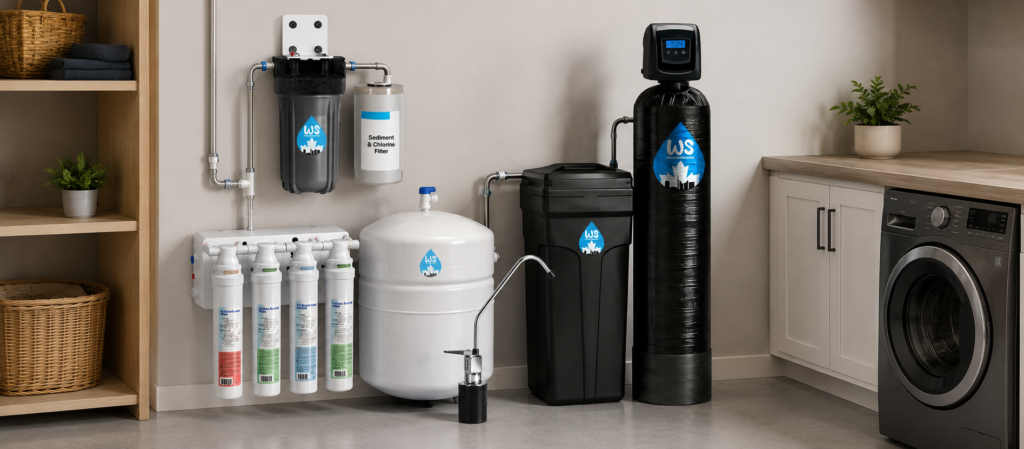
Some properties only need a strong whole-home softener, while others need a softener plus filtration because well water can carry sediment, iron, smell, or other minerals. And for drinking water, many rural homes also add an RO system because softening alone does not always improve taste or reduce dissolved substances enough for drinking and cooking.
Let’s discuss some of the best options for water softening setups tailored for acreages and farms:
| Setup Option | Best For | What It Helps With |
| Whole-home water softener | Acreage homes where hardness is the main issue | Scale, rough laundry, soap performance, appliance protection |
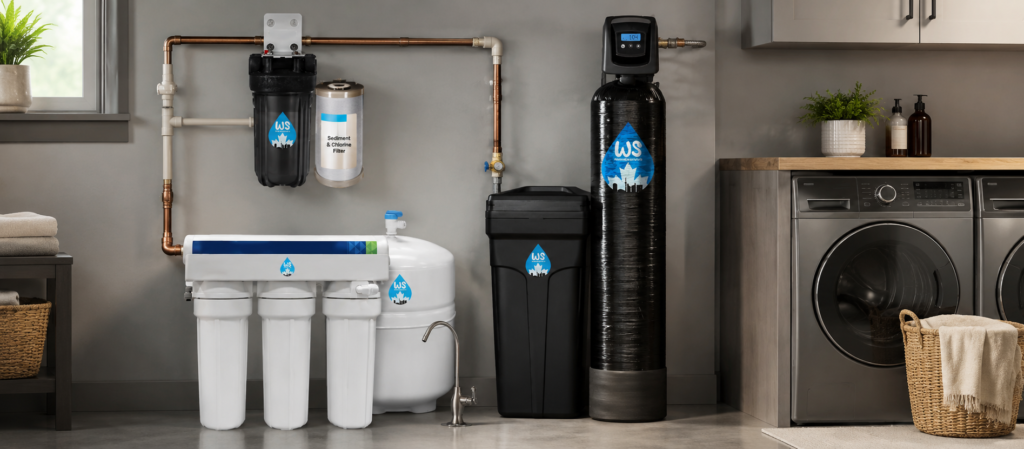
| Water softener with pre-filtration | Well water or farm water with sediment, iron, staining, or odor | Protects the softener, reduces staining, improves water quality before softening |
| Water softener + RO drinking water system | Homes that want better water for drinking, cooking, coffee, tea, and fridge lines | Gives softened water for the home and cleaner-tasting water at the kitchen tap |
Looking for premium quality water softeners designed to perform consistently in rural homes? Explore our well water softeners today!
Whole-Home Water Softener
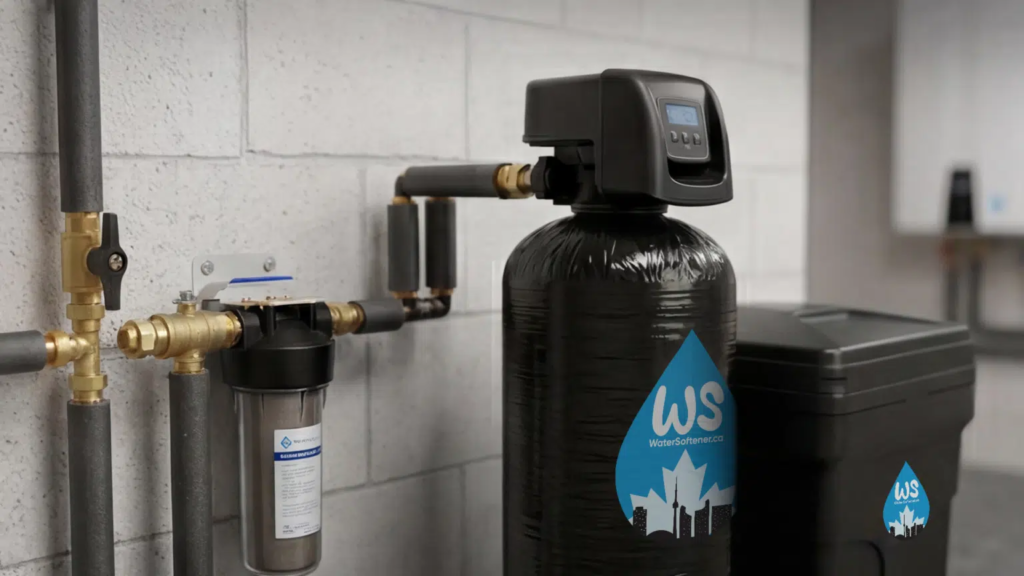
A whole-home water softener is usually the starting point for acreage and farm water. It treats the water before it moves through the house, so the water going to showers, laundry, sinks, dishwasher, and water heater is softened.
Its main job is to deal with hardness minerals like calcium and magnesium. These minerals are what cause scale on fixtures, cloudy dishes, rough towels, soap that does not lather well, and buildup inside appliances.
For rural properties, the softener often needs to be larger than a basic city-home unit. Acreage water can be harder, and the property may have more people, more bathrooms, a larger water heater, or extra water use from a shop or utility area. The system has to be sized for the actual water use, not just picked based on the size of the house.
Water Softener With Pre-Filtration
If the water comes from a well, a softener may not be enough on its own. Well water often brings sediment, iron, rust-colored staining, smell, or other minerals into the system. If those issues are not handled first, they can make the softener work harder and may shorten its life.
This is where pre-filtration comes in. A filter is installed before the softener to catch or reduce the things that should not go straight into the softener. For example, a sediment filter can catch sand, grit, or dirt. An iron filter can help with orange or brown staining. Other filters may be used if the water has odor or taste problems.
Think of pre-filtration as the protection stage. It prepares the water before it reaches the softener, so the softener can focus on hardness instead of trying to handle every water problem at once.
Water Softener Plus RO Drinking Water System
A water softener is great for protecting the home, but it is not the same as a drinking water system. This is where an RO system, or reverse osmosis system, becomes useful.
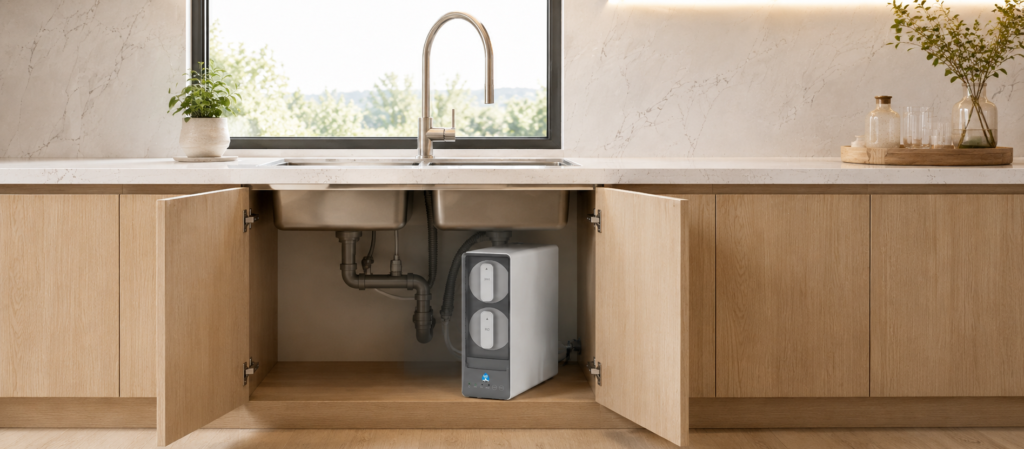
A softener mainly removes hardness minerals. It helps with scale, laundry, showers, plumbing, and appliances. But softened water can still have dissolved minerals, salts, taste issues, or other things that affect drinking water quality. An RO system is usually installed at the kitchen sink or connected to the fridge line to give cleaner-tasting water for drinking, cooking, coffee, tea, and ice.
For many acreage homes, this combination makes the most sense: the softener treats the whole home, while the RO system handles drinking water. That way, the house gets protection from hard water, and the kitchen gets water that feels better for everyday use.
Which Setup Suits Your Needs the Most?
If your main issue is scale, dry-feeling water, rough laundry, and appliance buildup, a properly sized whole-home softener may be enough. If your water also has staining, particles, or smell, you may need filtration before the softener. If the water is being used for drinking and cooking, adding an RO system is often the better choice.
For acreage and farm properties, the safest starting point is water testing. Once you know the hardness level, iron level, sediment issues, and overall water quality, it becomes much easier to choose a setup that fits the property instead of overbuying or underbuying.
Learn more about water softening solutions for rural and well water in Edmonton here.
Installation, Estimated Prices and Maintenance Guidelines for Water Softeners in Acreages & Farms
What The Installer Usually Checks First
Before installation, the installer usually looks at the water source, plumbing setup, available space, and overall water use. This helps decide where the system should go and whether the property needs only a softener or a softener with extra filtration.
| What Needs to Be Checked? | Why It Matters |
| Water source | Well water, cistern water, or hauled water can each have different treatment needs. |
| Water hardness level | This helps decide the correct softener size and settings. |
| Iron, sediment and odour issues | These may require filtration before the softener. |
| Main water line location | The softener should usually treat the water before it spreads through the home. |
| Pressure tank and pump setup | Common on acreages and farms, and important for proper flow. |
| Drain access | A softener needs a safe place to discharge water during regeneration. |
| Electrical outlet | Most modern softeners need power for the control valve. |
| Service space | There should be room for the tank, salt refills, and future filter changes |
Curious if a water softener is worth it in the long run? Read our blog on the comprehensive benefits of water softeners to know if installing one is a smart choice for your home.
Where the System Is Usually Installed
For most acreage homes, the water softener is installed near the main water entry point. This may be in a mechanical room, basement, utility room, pump room, or well room. The goal is to soften the water before it reaches the water heater, bathrooms, kitchen, laundry, and other household fixtures.
On farms or larger acreages, the setup may need more planning. The house may need softened water, while a shop, barn, or outdoor line may not need the same level of treatment. In some cases, the system treats only the home. In other cases, it may be sized to support more of the property.
A good installation plan should answer:
- Which buildings need softened water?
- Is the water being treated before the water heater?
- Is there enough flow for multiple taps or appliances running at once?
- Does the water need pre-filtration before softening?
- Can the homeowner easily access the system for salt refills and service?
Estimated Prices for Acreage and Farm Water Softener Setups
Prices can vary because acreage and farm water systems are often custom-sized. The final cost depends on the water test results, system capacity, plumbing work, and whether extra filtration or an RO drinking water system is included.
| Setup Type | Estimated Price Range |
| Basic whole-home water softener | $1,500 – $2,800 |
| High-capacity acreage water softener | $2,500 – $4,500 |
| Softener with pre-filtration | $3,500 – $6,500+ |
| Softener with RO drinking water system | $3,000 – $5,500+ |
| Larger farm or multi-building setup | $5,000 – $10,000+ |
These are only general estimates. A smaller acreage home with basic hard water may stay closer to the lower end. A farm property with high hardness, iron, sediment, odor, or multiple water-use areas will usually cost more because the system has to handle more.
Also read: Do You Really Need a $20,000 Well Water System? The Truth About Oversized Units in Canada
What Can Affect the Final Cost?
The price is not based only on the softener itself. A few other things can change the total:
Water quality:
f the water only has hardness, the setup is simpler. If it also has iron, sediment, smell, or high mineral content, extra filtration may be needed.
System size:
A larger household, bigger water heater, multiple bathrooms, or farm-use water demand may require a higher-capacity unit.
Plumbing access:
If the main water line is easy to reach, installation is usually simpler. If plumbing needs to be rerouted, the cost can increase.
Pre-filtration needs:
Sediment filters, iron filters, carbon filters, or other treatment equipment can add to the price.
RO drinking water system:
RO is usually installed separately at the kitchen sink or fridge line, so it adds equipment and installation cost.
Multiple buildings:
If the system has to serve a house, shop, barn, or other building, the layout may need more planning.
Maintenance Guidelines for Acreage and Farm Owners
Maintenance does not have to be complicated, but it does need to be consistent. The main thing is to keep the softener supplied with salt and make sure any filters before the softener are not clogged.
For most owners, this means checking the salt level every few weeks and refilling it before the brine tank gets too low. If the system has a sediment filter, that filter may need to be replaced more often, especially with well water. If the water has iron or odor treatment, those filters may also need scheduled service depending on the system.
A few simple habits help keep the system working properly:
- Keep extra salt on hand, especially during winter.
- Check pre-filters if water pressure starts to drop.
- Watch for orange staining, odor, or hard water symptoms coming back.
- Make sure the brine tank area stays easy to access.
- Have the system checked once a year if the water has heavy hardness, iron, or sediment.
For acreages and farms, regular checks are especially important because water quality and water demand can change over time.
Get the Right Water Softening Setup for Your Acreage or Farm
Once your water source, hardness level, filtration needs, and property layout are understood, it becomes much easier to choose a setup that actually fits your home, shop, barn, or full rural property.
At Water Softener Edmonton, we help acreage and farm owners find practical water softening solutions based on how their water is being used. Whether you need a whole-home softener, pre-filtration for well water, an RO system for drinking water, or a larger setup for a rural property, our team can walk you through the options in simple terms.
If you are dealing with hard water near Edmonton, reach out to us today.