For decades, municipal water treatment has been one of the greatest public health achievements in modern history. Disinfectants like chlorine and chloramine are added to tap water to eliminate harmful bacteria and viruses, helping prevent serious waterborne diseases.
But recent research suggests that the chemistry of treated water may be more complex than many homeowners realize.
A new study from researchers at Stevens Institute of Technology found that when disinfectants react with naturally occurring organic matter in water, they can form what are known as disinfection byproducts (DBPs).
This emerging research highlights an important point: even properly treated tap water contains a mix of minerals, disinfectant residuals, and chemical reactions that vary from home to home.
And that’s only part of the picture.
In Edmonton, many homes also deal with hard water — high levels of calcium and magnesium that can lead to scale buildup, reduced appliance efficiency, dry skin, and increased energy costs.
So while water may be disinfected for safety, it can still impact your home’s plumbing, your appliances, and even the way it tastes and feels.
A Two-Tier Solution For Resolving Water Problems in Edmonton
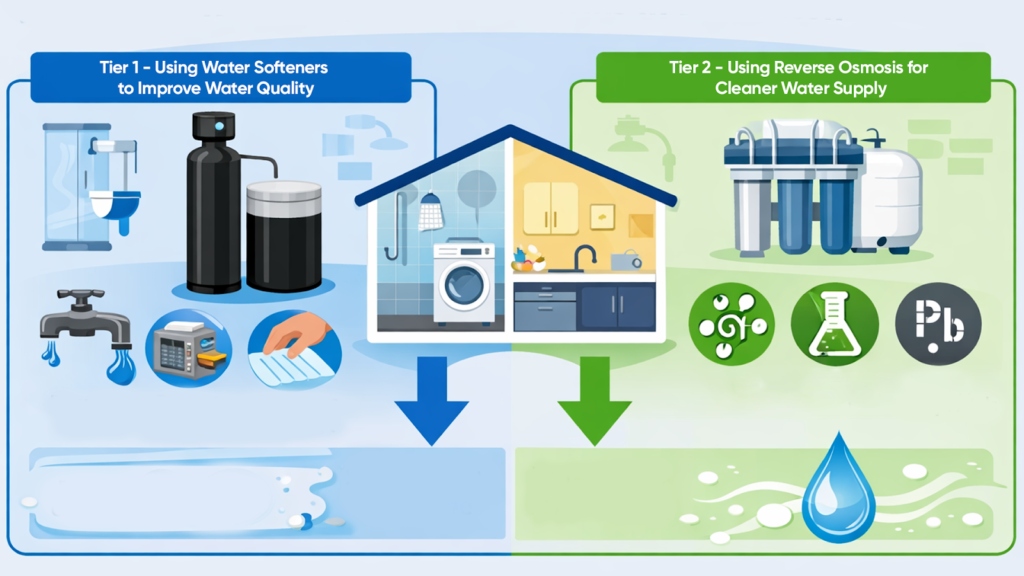
Resolving common home water issues often requires a two-tier solution that addresses both mineral content and chemical contaminants.
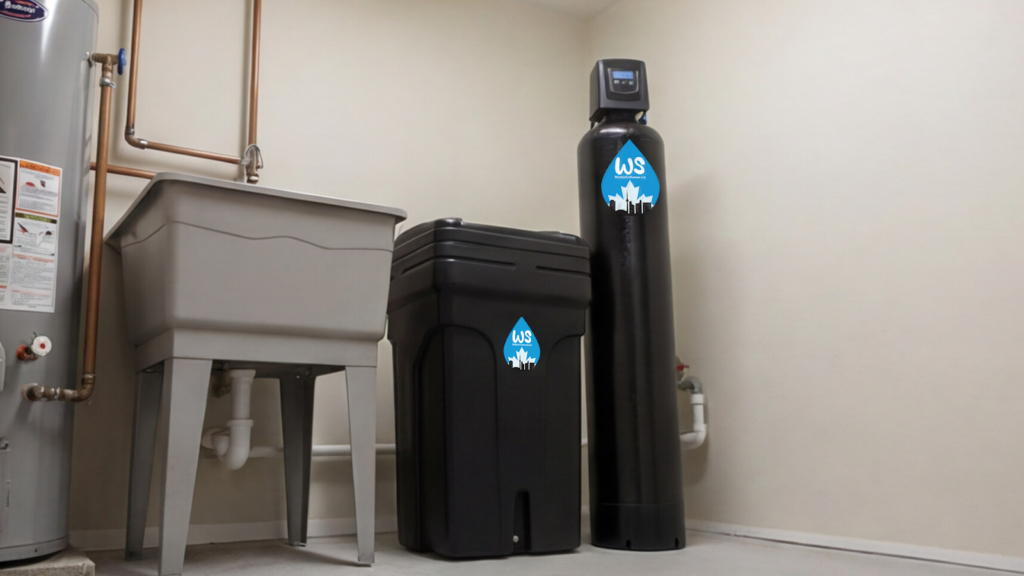
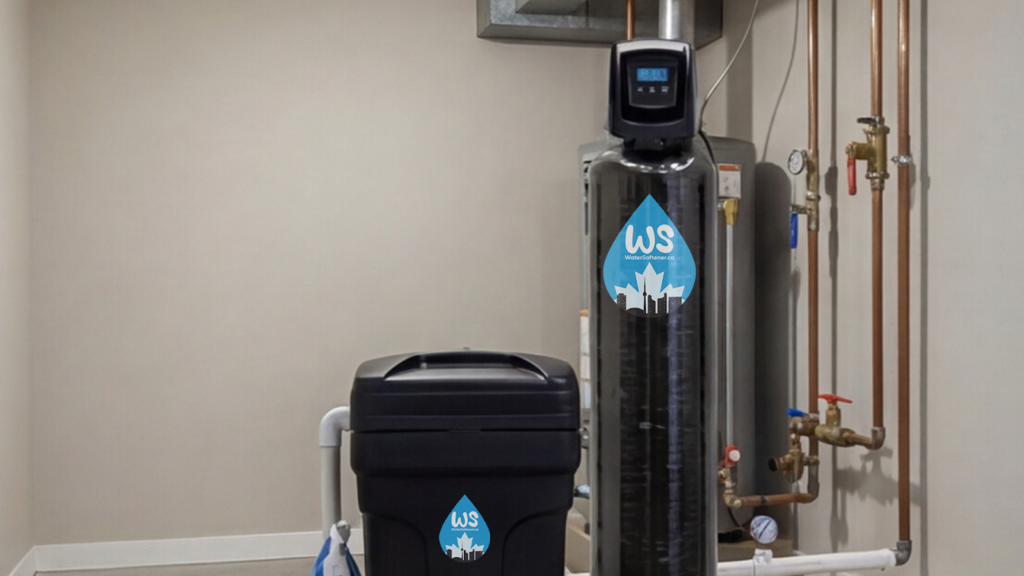
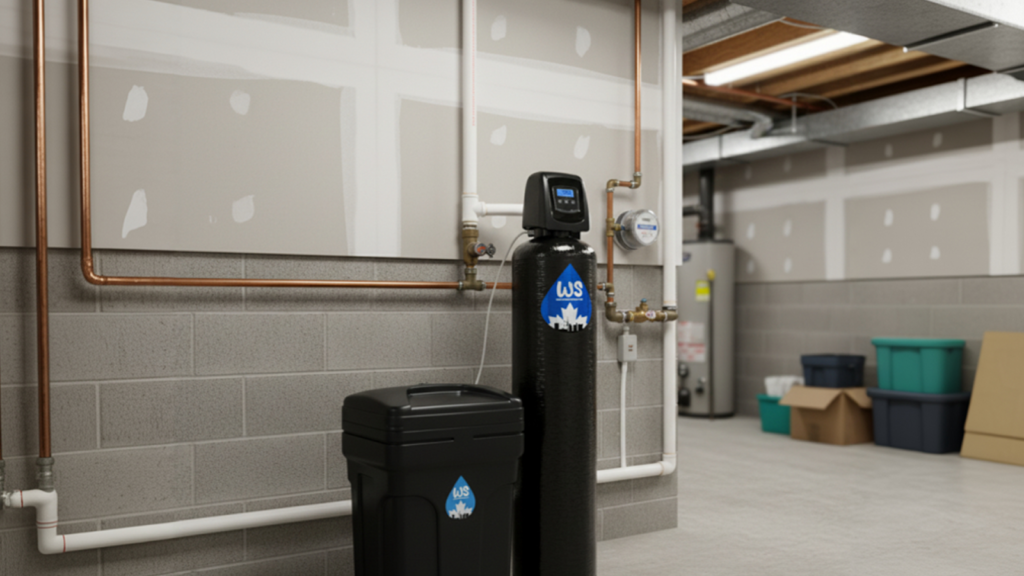
Water softener systems tackle hard water by removing calcium and magnesium, preventing scale buildup, protecting appliances, and improving daily comfort, while reverse osmosis (RO) filtration systems focus on the water you drink, reducing chlorine, disinfection byproducts, heavy metals, and other impurities.
Tier 1 – Using Water Softeners to Improve Water Quality
Even treated municipal water can contain chemical byproducts from disinfectants interacting with natural minerals in water. While these levels are safe to drink, hard water minerals like calcium and magnesium can influence water quality, contributing to scale buildup, appliance wear, and minor chemical interactions in your home plumbing.
Scale from hard water can reduce water heater efficiency by up to 24% as per the Water Research Quality Foundation. Calcium and magnesium can interact with disinfectant residues, ultimately worsening the effects of DBPs already present in tap water.
Related: Navigating Water Softening in Edmonton: Local Insights
For Edmonton homes, this makes water softening an important step. The city’s water supply, sourced from rivers like the North Saskatchewan, naturally carries higher levels of calcium and magnesium, making hard water an even greater concern for local homes.
Water softeners use an ion exchange process to remove hardness minerals, replacing them with sodium or potassium ions. This prevents scale from forming and improves overall water flow and efficiency throughout your home.
Many users report softer skin, smoother hair, and fewer irritations after switching to softened water, while it also reduces the amount of soap, shampoo, and cleaning products needed in laundry and bathrooms.
In essence, a water softener system is not just an investment in your health but an upgrade in your lifestyle as well.
Tier 2 – Using Reverse Osmosis for Cleaner Water Supply
While water softeners address hard water, reverse osmosis (RO) systems focus on the water you drink and cook with, providing an additional layer of protection that traditional filtration systems often cannot.
Unlike standard filters, which may remove chlorine or sediment, RO systems use a semi-permeable membrane to reduce disinfection byproducts, heavy metals, dissolved salts, and other microscopic impurities. This leads to cleaner and safer drinking water.
While softeners mainly address the hardness minerals in water, RO systems focus on removing DPBs, filtering out impurities as small as 0.001 microns. They complement softeners by delivering purified water at faucets, ice makers, and drinking points, while softeners protect pipes, appliances, and overall household water quality.
Combined together, a water softener and an RO system form a comprehensive two-tier solution, addressing both mineral-related issues and chemical contaminants at the source.
Signs Your Water May Be Causing Problems And How to Fix It
| Signs of Water Problems | Recommended Solution |
| Scale buildup on faucets, showerheads, or appliances | Water Softener Systems |
| Dry skin or hair after bathing | Water Softener Systems |
| Soap or shampoo not lathering well | Water Softener Systems |
| Cloudy or bad-tasting drinking water | Reverse Osmosis (RO) Filtration System |
| Concerns about disinfection byproducts (DBPs) | Reverse Osmosis (RO) Filtration System |
| Heavy metals or contaminants in drinking water | Reverse Osmosis (RO) Filtration System |
| Combined issues: hard water + chemical concerns | Water Softener + RO System |
What’s Really in Your Water?
Every home’s water is different. Hardness levels, minerals, and trace chemical byproducts can vary, even within the same city. The only way to know what’s in your water is through a test.
Tap here for a Free Water Test in Edmonton and get a clear, personalized report showing:
- Hardness levels and scale potential
- Presence of minerals affecting taste and appliances
- Insight into chemical byproducts and overall water quality
Tired of Dealing with Hard or Contaminated Water in Your Home?
At Water Softener Edmonton, we’re well-aware of the challenges Edmonton homeowners face with hard water, mineral buildup, and trace chemical byproducts in tap water. Our team provides customized solutions using high-quality water softeners and advanced reverse osmosis (RO) systems, ensuring you can enjoy clean water all year round.
Whether you want to protect your appliances, improve water taste, or reduce soap and detergent usage, we create a complete water solution as per your needs.
Let Water Softener Edmonton help you take control of your water quality with confidence.