Skip to content
Your water softener does a lot more than most people realize. Hard water is quite a common issue in Edmonton due to minerals from the North Saskatchewan River, coming into contact with your household water supply and leaving behind scales. A softener helps in this case by replacing those minerals with ‘softer’ minerals like sodium and potassium, ultimately improving water quality.
But like any system, it isn’t invincible. Over time, wear and tear, changing water quality, or simple aging can make it less effective. When it starts falling behind, the effects show up in gradual ways – dry skin after a shower, appliances not working efficiently, and clogged pipes.
That’s why it’s important to know when to replace your water softener in Edmonton. In this blog we’ll be highlighting the signs to look out for when a replacement is much due.
Table of Contents
ToggleHow Water Softeners Work
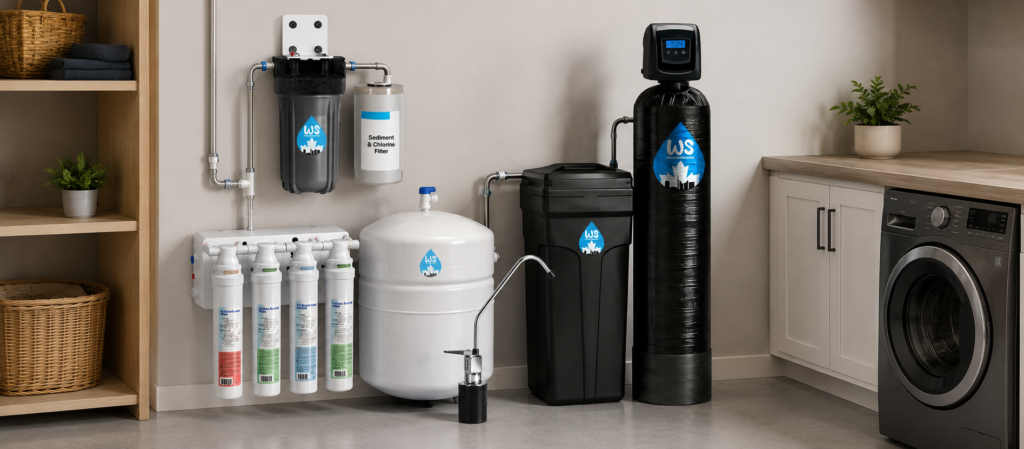
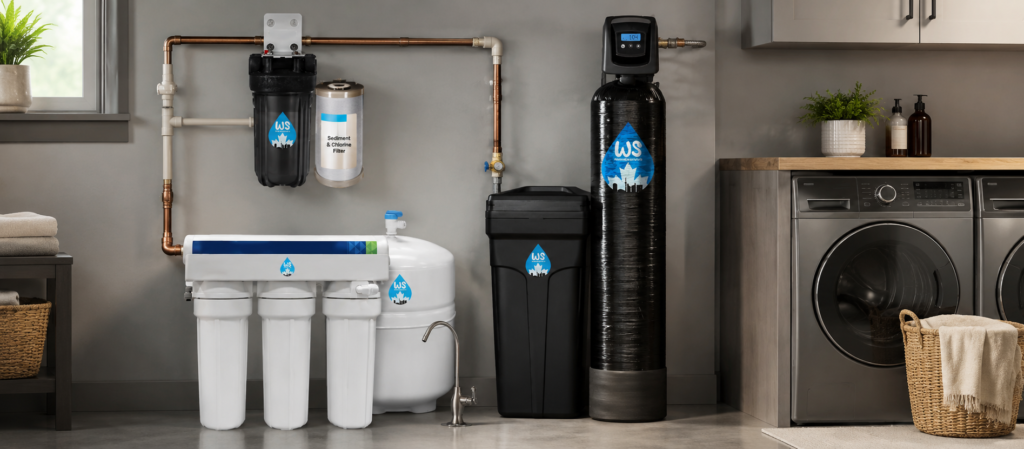
Think of your water softener as a mini water treatment system right in your home. Here’s a simple breakdown of how a softener process:
- Water enters the softener: Raw water from your household supply flows into the system, carrying minerals like calcium and magnesium.
- Minerals meet the resin: Inside the softener, there’s a resin bed charged with sodium ions. The hard minerals in the water swap places with the sodium on the resin.
- Soft water flows out: The treated water, now free of most hard minerals, continues through your pipes to faucets, showers, and appliances.
- Regeneration cycle: Over time, the resin gets saturated with minerals. During regeneration, salt stored in the brine tank replenishes the resin so it’s ready to soften water again.
Why Water Softeners Lose Efficiency Over Time
Even the best water softeners don’t last forever. Here’s why they can start to struggle:
- Aging resin: After years of exchanging minerals, the resin beads lose their effectiveness and can’t trap minerals as efficiently.
- Salt and brine issues: Improperly maintained salt levels or salt bridges can interrupt the regeneration cycle, leaving water harder than it should be.
- Changing water conditions: Edmonton’s water can vary in hardness or contain more iron and sediment over time, making the system work harder.
- Wear and tear: Mechanical parts like valves and timers naturally degrade, affecting how well the softener performs.
Recognizing these signs early is key to knowing when to replace your water softener in Edmonton.
Common Signs You Need to Replace Your Water Softener
| Sign | What It Looks Like | Why It Happens |
| Hard water returning | Soap doesn’t lather, film on fixtures | Softener resin is losing effectiveness |
| Softener age or frequent repairs | Old unit, leaking, noisy | Parts and resin wear down over time |
| Mineral buildup in appliances | Coffee makers, dishwashers, kettles clog | Softener can’t fully remove minerals anymore |
| Water tests still show hardness | Test strips show high mineral levels | Resin exhausted or regeneration failing |
| Rising salt/water use | More salt or water needed | Efficiency drops, system working harder |
Detergents Not Working Properly
You might notice that your soap just doesn’t behave the way it used to. Showers feel a little rougher, handwashing dishes leaves a faint film, and laundry doesn’t feel as soft.
You might even buy a new shampoo or detergent thinking it’s the product, but the cycle keeps repeating. That’s because the culprit isn’t the soap or detergent, it’s your water softener losing its efficiency over time due to a lack of maintenance.
In Edmonton, with city or well water carrying calcium and magnesium, this is often the first clear sign that your system is struggling.
Your Softener Needs Constant Repairs
Age matters. A softener that’s been running for over 10–15 years starts showing wear in its resin and mechanical parts. You might notice leaks, strange noises, or valves that don’t seem to work properly.
If you find yourself calling a technician multiple times a year just to keep it functioning, it’s often cheaper and more reliable to replace the unit entirely rather than patching it up constantly.
Mineral Buildup in Appliances
When your coffee maker develops stubborn scales faster than usual, or your dishwasher leaves chalky streaks on glasses, it’s not just bad luck. Your softener might not be fully removing minerals anymore.
Even simple appliances like kettles or humidifiers start showing signs of scale, and cleaning them frequently doesn’t solve the root problem. The problem lies within the softener, and replacing it is the only solution.
Water Tests Show Hardness
Testing your water can reveal a lot. If test strips or kits show high mineral content even after your water passes through the softener, it means the resin is exhausted or regeneration isn’t happening properly.
This is one of the most objective ways to see that your system is no longer doing its job, and it’s easy to overlook until small issues start showing up around the house.
Rising Salt or Water Usage
A sudden increase in how much salt you add or higher water bills can indicate inefficiency. If the system uses more resources to produce the same soft water, it’s probably working harder to compensate for worn-out resin or faulty parts.
City Water vs. Well Water Considerations
While the signs that a water softener needs replacing are similar across the board, there are subtle differences depending on whether your home is on city water or a well.
City water in Edmonton is treated, so it usually has lower iron levels but can still carry calcium and magnesium that cause hardness. Well water, on the other hand, often has higher mineral content, more iron, and sometimes sediment, which can wear down your softener faster and show up in different ways around your home.
Differences in Signs Between City and Well Water
| Sign | City Water | Well Water |
| Soap and water performance | Soap lathers less, thin film on surfaces | Soap may barely lather, skin feels noticeably rough |
| Appliance scale | Minor buildup on kettles or coffee makers over months | Heavy scale in kettles, dishwashers, and hot water tanks more quickly |
| Water discoloration | Rare, usually clear but still hard | Rusty or brownish tint from iron or sediment may appear |
| Softener stress | Slower wear, minor inefficiencies first | Faster wear, more frequent regeneration needed |
Whether you’re on city water or a well, paying attention to these differences makes it easier to decide when to replace your water softener in Edmonton.
Also read: Solutions for Rural and Well Water in Edmonton
What to Do if You Notice Signs of Water Softener Damage
If you’re seeing any of the signs we discussed, don’t panic—but don’t ignore them either. Acting quickly can save you money, protect your appliances, and keep your water feeling right. Here’s a clear step-by-step approach to follow:
- Test Your Water Hardness
Use a professional water test or a reliable home testing kit to check mineral levels. For reference, water is considered hard if calcium and magnesium levels are above 120 ppm (parts per million). If your test shows higher levels, it’s likely your softener isn’t working properly.
- Inspect Your Softener System
- Check the resin tank, brine tank, and valves for obvious issues like leaks, salt bridges, or clogs.
- Make sure the system is regenerating on schedule; if not, it may need servicing or replacement.
- Assess the Age and Maintenance History
If your softener is over 10–15 years old or has required frequent repairs, replacement is often more cost-effective than continued patchwork.
- Schedule a Professional Evaluation
A certified water treatment professional can test the efficiency of your softener, inspect for hidden problems, and measure hardness after the softener. Local experts are familiar with both city and well water variations, so regardless of your supply line, you’ll be able to get accurate results with regards to your water quality.
- Decide on Repair vs. Replacement
Minor issues like salt refills or valve adjustments can be fixed. On the other hand, worn resin, consistent hardness issues, or mechanical failures usually mean it’s time to replace your water softener entirely.
- Plan for Proper Installation and Maintenance
- If replacing, choose a system suited to your water type (city or well).
- Schedule regular maintenance and salt checks to prolong the life of the new unit and avoid recurring problems.
- Monitor After Replacement or Repair
- Test your water a few weeks after the repair or new installation to ensure hardness levels are within the ideal range (below 120 ppm).
- Keep an eye on appliances, water feel, and soap performance as ongoing indicators.
Replacing Your Water Softener? Let Us Help!
If your current system isn’t performing like it used to, we can help you find a long-lasting solution. At Water Softener Edmonton, our softeners are built to maintain efficiency for 10 years or more, giving you high-quality water without the frustration of frequent repairs or maintenance.
Whether your home uses city water or well water, our team will guide you to the right system, handle professional installation, and ensure everything runs smoothly from day one. Contact us today to explore our reliable water softeners and experience water that works as it should.