Is your water softener acting up, or has it been doing its job for years and suddenly started showing signs of wear? For many Edmonton homeowners, this is a common question: should you repair what you’ve got, or is it time to bring in a brand-new system?
Both options have their perks, but knowing when to fix and when to replace can save you time, money, and a lot of frustration.
Water softeners aren’t exactly “set it and forget it” appliances as they face wear and tear, mineral buildup, and mechanical hiccups. In this guide, we’ll walk through the key signs your system needs a closer inspection and when to repair or replace your water softener in Edmonton.
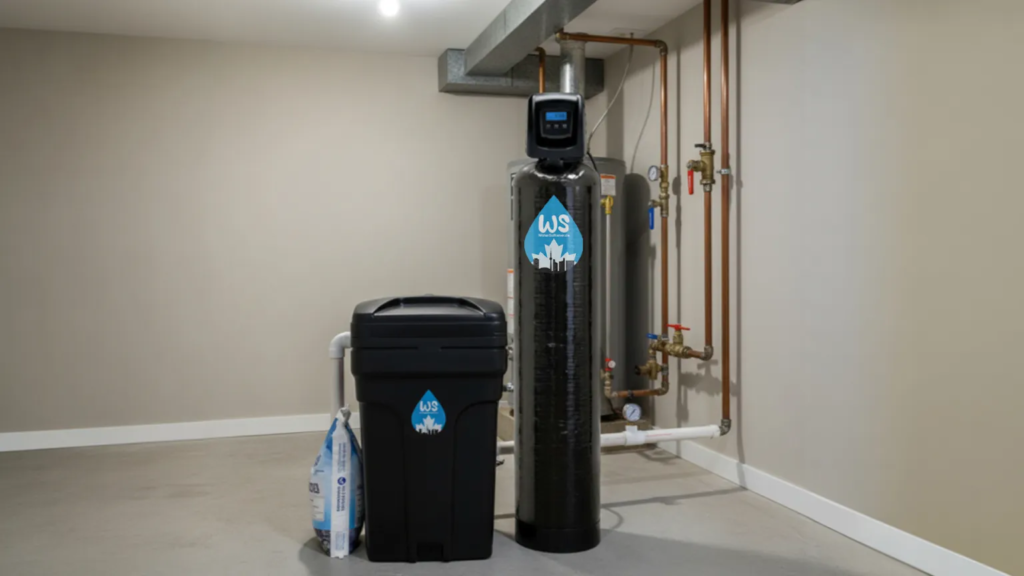
How Do Water Softeners Age With Time?
Over time, even the best water softeners start to show their age, and it’s not just about how many years they’ve been in your home. Here are the main reasons your system might start wearing down:
- Mineral buildup in the resin: Hard water deposits slowly coat the resin beads, reducing their ability to soften water effectively.
- Salt bridging or clogging: Salt can form crusts or lumps in the brine tank, which keeps your system from regenerating properly.
- Mechanical wear and tear: Motors, valves, and timers experience natural wear from daily operation.
- Resin degradation: Over time, the resin beads themselves lose efficiency and may need replacing.
- Corrosion and leaks: Pipes, fittings, or tank components can corrode or develop leaks, especially in older systems.
- Frequent heavy use: Larger households or high water consumption can accelerate wear compared to occasional use.
Physical Signs Your Water Softener May Need Attention
Sometimes your water softener tries to give you hints before things go really wrong. Paying attention to a few key signs can help you decide whether it’s time for a repair or a replacement.
- Unusual noises: If your system starts humming, clanking, or gurgling in ways it didn’t before, it could be a motor or valve issue. Imagine turning it on in the morning and hearing a strange rattling instead of the usual soft hum – that’s a red flag.
- Water isn’t as soft: If you notice that soap isn’t lathering like it used to or your water feels “heavier,” the resin may be wearing out or mineral buildup could be blocking efficiency.
- Frequent refills or salt problems: When you find yourself topping up salt more often than before, or notice clumps forming in the tank, it could mean the brine system isn’t regenerating properly.
- Leaks or puddles around the unit: Any dripping, pooling, or wet spots under your water softener deserve attention. Even small leaks can lead to bigger issues if ignored.
- Longer regeneration cycles: If the system is taking longer to complete a cycle, it might indicate worn-out components or blockages slowing things down.
When to Repair Your Water Softener in Edmonton
Repairing your water softener is the smarter choice when the problem is specific, limited, and doesn’t involve the system’s overall lifespan. Here’s a glance at common repair situations:
| Situation | Why Repair Makes Sense |
| Minor valve or motor issues | Components can be replaced without changing the whole unit |
| Electronic or timer malfunctions | Control systems can be reset while keeping the main system |
| Resin cleaning needed | Resin may be fouled by iron, manganese, or other deposits |
| Salt tank issues (not clumping) | Broken float, minor leaks, or brine line problems can be fixed |
| Seasonal or temporary efficiency dips | Adjusting the system may be enough |
Minor Valve or Motor Issues
If only a valve or motor is acting up, you don’t need to toss the whole system. Swapping a faulty component can get your softener back to full function quickly. Think of it like changing a car battery instead of buying a new car – the rest of the system is still in good shape.
Electronic or Timer Malfunctions
Some problems are all in the “brain” of the system. If the timer or control panel is misbehaving, a reset, software tweak, or part replacement is often all you need. Your water can go back to being perfectly soft without replacing the hardware.
Resin Cleaning or Maintenance
Even if your water feels fine, mineral deposits like iron or manganese can coat the resin beads and reduce efficiency. Cleaning or treating the resin can restore your system’s performance without a full replacement.
Salt Tank Issues
A broken float, minor brine line leaks, or small salt tank repairs are usually simple fixes. They don’t affect the rest of the system, so repairing them keeps your softener working for years more.
Seasonal or Temporary Efficiency Dips
Sometimes your softener seems less effective for short periods due to seasonal water changes or unusually heavy usage. A repair might be as simple as adjusting settings or flushing the system. No new softener required.
Want to learn more about how you can troubleshoot common problems in your water softener? Read here to know more!
When to Replace Your Water Softener in Edmonton
There comes a point when repairs aren’t enough, and replacing your water softener is the best course of action. Here’s an overview of such scenarios:
| Situation | Why Replacement Makes Sense |
| System is past its lifespan | Older units (10–15 years) often have multiple worn components |
| Frequent breakdowns | Constant repairs indicate deeper, ongoing issues |
| Inefficient performance | New models are more energy- and water-efficient |
| Upgrading for features | Desire for Wi-Fi control, automated regeneration, or compact design |
| Corrosion or leaks in the main tank | Major structural issues can’t be fixed safely |
System is Past Its Lifespan
Most water softeners last about 10–15 years, depending on usage and water hardness. If your unit is older than that, even minor repairs can be a band-aid solution. Picture spending hundreds of dollars fixing a 12-year-old system, only to face a different failure next month. Sometimes it’s more cost-effective to invest in a new, reliable unit.
Frequent Breakdowns
When small issues start piling up, it’s a sign that the system is struggling overall. Maybe you’re replacing valves, cleaning resin, and topping up salt constantly. A new softener can handle your household’s water demands without constant attention and effort.
Inefficient Performance
Older softeners often use more water and salt to do the same job. If your bills are creeping up or you notice fluctuations in water quality despite repairs, a new system can save you money in the long run. You can consider investing in modern units that automatically adjust regeneration cycles based on actual usage – no wasted water or salt.
Upgrading for Features
Even if your old softener is “working,” sometimes it’s about convenience. Newer models offer features like Wi-Fi monitoring, app notifications, and automatic regeneration. Imagine getting a text alert when your salt is low or being able to adjust settings from your phone – these upgrades can make daily life easier.
Corrosion or Leaks in the Main Tank
If you spot rust, cracks, or persistent leaks in the main tank, repairs aren’t enough. Structural damage can cause water damage in your home and affect other plumbing components. Replacing the unit ensures your home is safe and your water stays clean.
Also read: When and How to Replace Water Softener Filters
Cost Considerations: What Repairs and Replacements Actually Cost
Knowing the ballpark numbers can make the decision feel a lot less abstract. Here’s a realistic look at what you might expect to spend when repairing or replacing a water softener.
Typical Repair Costs
Repairs can vary depending on the part that’s failing. Here are some common examples:
- Valve or motor replacement: $200–$400
- Control panel or timer fix: $150–$350
- Resin cleaning or minor resin treatment: $100–$250
- Salt tank repair (float, brine line, small leaks): $50–$150
For instance, if your softener’s motor stops working, paying around $300 could restore full function. That’s a reasonable short-term solution if the system is otherwise in good shape.
Replacement Costs
Replacing a whole unit is more expensive upfront but can save money in the long term, especially if the old system is inefficient. Usual costs in Edmonton for a residential water softener, including installation, are:
- Small/medium systems (1–2 bathrooms): $1,200–$2,000
- Larger homes (3+ bathrooms or high water usage): $2,000–$3,500
- Premium or high-efficiency models: $3,500–$5,000
Example: If your 12-year-old system keeps breaking down and you spend $300 on repairs twice a year, that’s $600 annually. Over five years, you could easily exceed the cost of a new, more efficient softener that uses less water and salt.
Hidden Costs to Consider
It’s not just parts and labor. There are some indirect costs that can make replacement more appealing:
- Higher water and salt usage: Older systems can be 20–30% less efficient.
- Frequent service calls: A $150 service call adds up quickly if it’s happening multiple times per year.
- Potential water damage: Leaks or corrosion in an old system can create costly home repairs.
Confused Whether to Repair or Replace? Let Our Team Help!
Deciding whether to repair or replace your water softener in Edmonton can be tricky, since every home is different. Instead of guessing or risking repeated repairs, our team at Water Softener Edmonton can take a close look at your setup, identify exactly what’s going on, and give you a clear recommendation that fits both your needs and your budget.
We’ve helped countless homeowners navigate these choices, from fixing minor valve issues to installing brand-new high-efficiency systems. Whether your goal is to extend the life of your current softener or upgrade to a more modern model, we’ll walk you through all your options. Contact us today!