Table of Contents
ToggleIs a Water Softener Worth It in Edmonton? What Reddit Homeowners Say
Ask Edmonton homeowners whether you need a water softener and you will get completely different answers.
One homeowner will say it was among the best upgrades they made. Another will tell you they have lived in Edmonton for decades without one and have never felt the need.
So, is a water softener worth it in Edmonton?
For many households, yes. A water softener may be worthwhile if you constantly deal with white scale, cloudy glassware, soap scum, stiff laundry or mineral buildup inside water-using appliances.
However, it is not an essential purchase for every Edmonton home. Some people find the city’s water completely manageable without one.
The honest answer depends on how much hard water affects your home, how often you clean mineral deposits and what you expect a softener to fix.
How Hard Is Edmonton’s Water?
According to EPCOR’s Edmonton water-quality information, water from the North Saskatchewan River contains an average of approximately 165 milligrams of calcium carbonate per litre.
EPCOR classifies the water as moderately hard. It also explains that the calcium and magnesium responsible for hardness are not associated with negative health effects.
In other words, Edmonton’s municipal water is safe to drink. A water softener is not required to make it safe.
The reason homeowners install one is more practical: mineral deposits, cleaning, water feel and appliance maintenance.
Why Edmonton Homeowners Disagree
Edmonton’s water is hard enough for mineral deposits to appear, but not so hard that every household considers a softener necessary.
That creates two common experiences.
Some homeowners regularly find:
- Chalky residue around faucets
- White spots on shower glass
- Cloudy dishes and glassware
- Mineral buildup in kettles
- Clogged showerheads
- Scale inside humidifiers
- Soap that does not lather easily
Others see only minor deposits that can be removed with occasional cleaning.
Both experiences can be valid. The condition of your plumbing, water use, cleaning habits and appliances can all influence how noticeable the hardness becomes.
What Is the Edmonton Reddit Verdict?
After reading multiple local discussions, the general Reddit verdict is fairly balanced:
A water softener is usually a comfort and maintenance upgrade in Edmonton, not a requirement for safe drinking water.
In one r/Edmonton discussion about residential water softeners, several homeowners said the difference was subtle but noticeable. They mentioned cleaner dishes, softer laundry, improved shower water and less calcium buildup.
Other homeowners said they had lived comfortably without a system and did not consider Edmonton’s water hard enough to justify the expense.
Another Edmonton Reddit discussion about water softeners and humidifiers produced similar answers. Some users loved the reduction in mineral buildup, while others said installing a whole-home softener solely for one humidifier would be excessive.
Reddit comments are personal experiences, not scientific evidence. However, they are useful for understanding the everyday problems homeowners notice before and after installation.
What Edmonton Homeowners Like About Water Softeners
1. Less Scale to Scrub
The biggest advantage discussed on Reddit is usually not drinking-water quality. It is easier cleaning.
Hardness minerals remain behind when water evaporates. That is why a clean faucet can develop a white ring and shower glass can look cloudy shortly after it has been wiped down.
Homeowners commonly notice scale on:
- Faucets
- Shower doors
- Showerheads
- Dishwasher interiors
- Coffee makers
- Kettles
- Humidifier components
- Hot-water equipment
A water softener will not eliminate every cleaning task, but it can reduce the mineral film that repeatedly returns.
If you currently descale fixtures every few weeks or regularly clean appliances with vinegar, that time savings may make a water softener worth it.
2. Better Soap and Shampoo Performance
Hardness minerals react with soap, which can make it more difficult to create a good lather and leave residue behind.
Some Edmonton homeowners report that after installing a softener:
- Shampoo lathers more easily
- Less body wash is needed
- Clothes feel softer after washing
- Dishes come out clearer
- Soap scum forms less quickly
- Hair feels easier to manage
The difference is personal. Some people love how softened water feels, while others describe it as slippery.
That slippery feeling does not necessarily mean soap is still on the skin. Soap behaves differently when calcium and magnesium are no longer interfering with it.
A water softener should not be presented as a medical treatment for eczema, dry skin or hair loss. However, reducing mineral residue may make showers more comfortable for some people.
3. Less Buildup in Appliances
Appliance protection is another reason homeowners search for a water softener in Edmonton.
Scale can collect inside equipment that repeatedly heats or evaporates water, including:
- Tankless water heaters
- Traditional hot-water tanks
- Dishwashers
- Washing machines
- Furnace humidifiers
- Coffee makers
In Edmonton Reddit discussions, some homeowners specifically said they installed a softener when upgrading a water heater or tankless system. Others reported less buildup on humidifiers, showerheads and faucets afterward.
A complete system may not make financial sense solely to avoid cleaning one small appliance. The value becomes stronger when hard water affects several fixtures and appliances throughout the home.
Homeowners with tankless water heaters should also check the manufacturer’s hardness limits and recommended descaling schedule.
Why Some Edmonton Homeowners Skip a Softener
1. The Water Is Already Safe
Hard water and unsafe water are not the same thing.
EPCOR confirms that Edmonton’s hardness comes mainly from naturally occurring calcium and magnesium. These minerals may create scale, but they are not considered a health concern at the levels found in the municipal water supply.
A water softener is therefore a household-comfort product, not something every Edmonton homeowner must purchase for health reasons.
Homeowners should be cautious of anyone using fear-based claims about ordinary calcium deposits to pressure them into buying an expensive system.
2. The Improvement May Feel Too Small
A softener tends to offer more value when the existing problem is significant.
Someone scraping scale from shower glass every week is likely to appreciate the change more than someone who cleans a showerhead once a year.
Some homeowners in local Reddit discussions described the difference as noticeable enough that they would install a softener again. Others said their water was already acceptable and the improvement did not justify the purchase.
Before deciding, consider how much hard water currently costs you in:
- Cleaning time
- Descaling products
- Appliance maintenance
- Replacement parts
- Soap and detergent use
- Everyday frustration
If those costs are minimal, a softener may remain optional.
3. Salt-Based Systems Need Maintenance
Traditional ion-exchange softeners require salt and periodic regeneration.
Depending on the system and household, the owner may need to:
- Check the brine tank
- Refill softener salt
- Watch for salt bridging
- Confirm the unit is regenerating properly
- Clean the tank when necessary
- Arrange repairs if water begins feeling hard again
Modern metered units can reduce unnecessary salt and water consumption, but they are not completely maintenance-free.
For some homeowners, occasional salt refills are a small trade-off for easier cleaning. For others, it is another household task they would rather avoid.
Is Softened Water Safe to Drink?
A sodium-based water softener exchanges calcium and magnesium ions for sodium ions. This may increase the sodium content of the treated water.
Health Canada recommends that when a sodium-based softener is used, a frequently consumed water source, such as the kitchen tap, bypass the system. A separate unsoftened supply is particularly important for people following a medically required sodium-restricted diet. Read Health Canada’s water-softener guidance for more information.
A common home configuration is to soften water supplied to:
- Showers
- Bathrooms
- Laundry equipment
- Dishwashers
- Hot-water appliances
The kitchen drinking-water line and outdoor faucets can remain unsoftened.
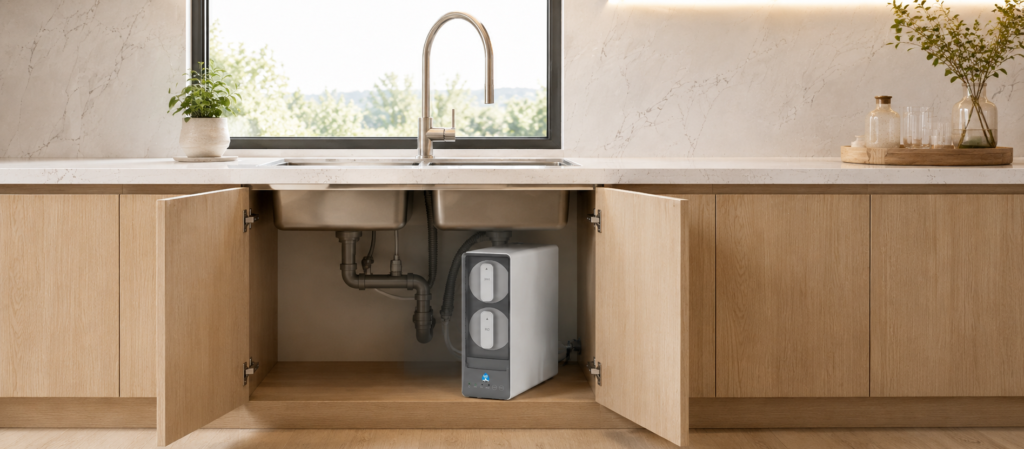
Some households also install reverse osmosis at the kitchen sink. However, a reverse-osmosis system and a water softener perform different jobs. The softener addresses hardness throughout the home, while an RO system treats drinking water at a specific tap.
What Reddit Gets Right About Buying a Softener
Test the Water Before Buying
One of the most sensible pieces of Reddit advice is to confirm the actual problem before purchasing equipment.
White scale commonly points to hardness, but not every stain, odour or residue requires a water softener.
Testing becomes particularly important if you notice:
- Orange or reddish staining
- Black residue
- Sulphur-like odours
- Cloudy water
- Visible sediment
- A sudden change in taste
- Water supplied by a private well
A traditional water softener is designed primarily to address hardness. Iron, sediment, chlorine, bacteria and unusual odours may require different treatment.
Homeowners can book a free water test in Edmonton before comparing system types or installation quotes. The test can help establish whether hardness is the main concern and prevent you from paying for equipment that does not match the problem. (watersofteneredmonton.ca)
Compare Complete Installed Costs
Reddit homeowners are often sceptical of expensive bundles and high-pressure presentations. That scepticism is reasonable.
When comparing quotes, ask what is included in the stated price.
A useful quote should identify:
- The system model
- Household capacity
- Expected flow rate
- Installation labour
- Required plumbing modifications
- Warranty coverage
- Salt consumption
- Regeneration settings
- Filters and replacement schedules
- Future service fees
The cheapest softener is not automatically the best value. However, a higher price should be supported by meaningful differences in efficiency, capacity, warranty or service.
Pay Attention to System Size
A bigger system is not automatically better.
Proper sizing should account for:
- Tested water hardness
- Number of residents
- Number of bathrooms
- Peak water demand
- Typical daily water use
- Available installation space
An undersized softener may regenerate too frequently or struggle during periods of high demand. An unnecessarily large system may cost more without providing a meaningful household benefit.
Is a Water Softener Worth It for Your Home?
A water softener is more likely to be worth it when several of the following apply:
- White scale returns shortly after cleaning.
- Shower glass constantly looks cloudy.
- Faucets and showerheads need frequent descaling.
- Dishes remain spotted after washing.
- Your humidifier or coffee maker develops heavy buildup.
- Soap and shampoo perform poorly.
- Laundry feels stiff after washing.
- You own scale-sensitive equipment.
- You plan to remain in the home for several years.
- Reducing cleaning and maintenance is important to you.
It may not be worth it when:
- Mineral buildup is minor.
- You already like the feel of Edmonton water.
- Your main concern is chlorine taste rather than hardness.
- You are renting or moving soon.
- Installation would require extensive plumbing changes.
- You do not want to purchase or refill salt.
- You have not confirmed what is causing the problem.
Not Sure Whether Hardness Is the Real Problem?
White deposits, cloudy dishes and recurring scale may indicate hard water, but testing removes the guesswork.
Salt-Based or Salt-Free: Which Makes More Sense?
Most Edmonton homeowners considering treatment will encounter two options.
Salt-Based Water Softener
A salt-based ion-exchange system removes calcium and magnesium from the water.
It is generally the better fit when the main goals are:
- Producing genuinely softened water
- Reducing scale throughout the home
- Improving soap performance
- Changing how shower water feels
- Protecting several water-using appliances
The trade-offs include salt refills, regeneration and some ongoing maintenance.
Salt-Free Water Conditioner
A salt-free system focuses on reducing scale formation without using softener salt or a regeneration cycle.
It may suit homeowners who:
- Do not want to carry salt bags
- Mainly want scale prevention
- Prefer the existing feel of their water
- Want to avoid the slippery feel associated with softened water
- Want additional filtration features
A conditioner does not remove calcium and magnesium through ion exchange, so it will not produce exactly the same result as a traditional softener.
Water Softener Edmonton currently lists both standard city-water softeners and a salt-free water conditioner, allowing homeowners to compare full softening with salt-free scale control. (watersofteneredmonton.ca)
Water-Softener Options for Edmonton City Water
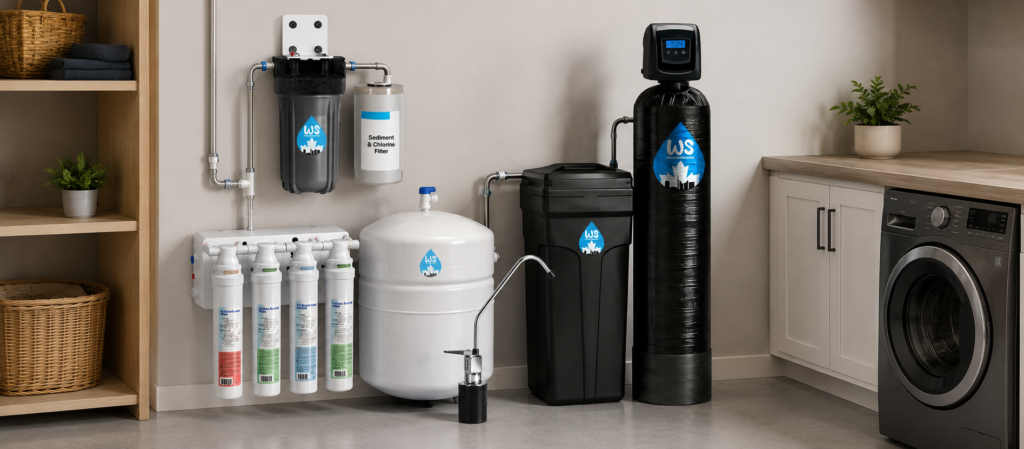
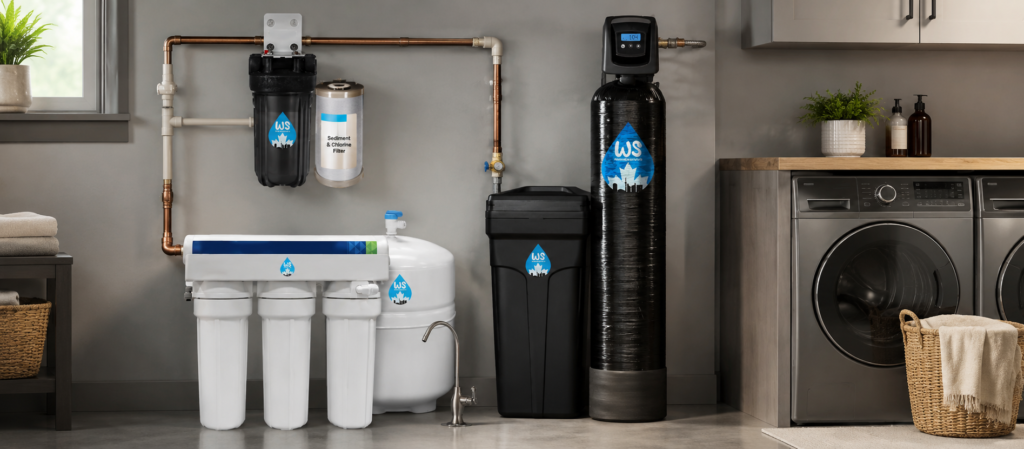
Water Softener Edmonton currently lists two traditional city-water systems.
Advanced Unit
The Advanced Unit is listed for households of one to four people and provides flow rates of up to 10 GPM. It includes professional installation and a 10-year tank warranty.
Platinum Unit
The Platinum Unit is listed for households of one to eight people and provides flow rates of up to 15 GPM. It includes professional installation and a lifetime tank warranty.
The better option is not simply the most expensive one. It should be selected according to household size, water demand, tested hardness and plumbing configuration.
Homeowners can compare water softeners for Edmonton city water to review the current system details, installed pricing, warranties and available filtration add-ons. (watersofteneredmonton.ca)
Why Professional Installation Matters
Choosing the right softener is only part of the process. The drain connection, bypass valves and backflow protection must also be installed properly.
A water softener releases wastewater during regeneration. An incorrect drain connection may create contamination or backflow risks.
Before attempting a DIY installation, review the applicable water-softener installation requirements in Edmonton. Professional installation can also help ensure that the unit is correctly sized, programmed and connected without accidentally softening outdoor water lines. (watersofteneredmonton.ca)
Frequently Asked Questions
Do Edmonton Homes Need Water Softeners?
No. Edmonton’s municipal water is safe without a softener. However, its mineral content can create scale, cloudy dishes and appliance buildup. A softener may be worthwhile when those issues become expensive or frustrating.
Does a Water Softener Remove Chlorine?
A standard water softener is designed to address calcium and magnesium hardness. It does not automatically remove chlorine or chloramine.
Chlorine concerns may require a separate pre-filter, carbon tank or whole-home filtration system.
Will Softened Water Taste Salty?
Properly operating softened water should not taste like brine. However, a sodium-based system can increase the amount of sodium in treated water.
Many homeowners leave the kitchen tap unsoftened or install a separate drinking-water system.
How Often Will I Need to Add Salt?
Salt use depends on the system’s efficiency, household water use, hardness level and regeneration settings.
A properly sized metered unit should regenerate according to actual demand rather than following an unnecessarily frequent fixed schedule.
Does Soft Water Help Dry Skin?
Some homeowners report more comfortable skin and hair after installing a softener, while others notice little difference.
A softener may reduce mineral and soap residue, but it should not be treated as a cure for eczema or another medical condition.
Is a Salt-Free Conditioner the Same as a Water Softener?
No. A traditional softener removes hardness minerals through ion exchange. A salt-free conditioner changes how those minerals behave to reduce scale formation, but the minerals remain in the water.
Can I Install a Water Softener Myself?
DIY installation may be possible for someone with suitable plumbing experience. However, incorrect drain, bypass or backflow connections can create serious problems.
Professional installation is usually the safer option, particularly when the home requires plumbing modifications.
The Honest Answer
So, is a water softener worth it in Edmonton?
For homeowners constantly dealing with scale, water spots, soap scum and appliance buildup, it can be a valuable upgrade. The benefit appears in small, repeated moments: less scrubbing, fewer deposits, better soap performance and easier maintenance.
For someone who barely notices the mineral content, the same system may feel unnecessary.
That is the balanced conclusion found across Edmonton Reddit discussions. A water softener is neither a scam nor a requirement for every property. Its value depends on how much hard water is already costing your household in cleaning time, maintenance and frustration.
Find Out Whether a Softener Makes Sense for Your Home
Do not choose a system based only on a sales pitch, a neighbour’s experience or a Reddit comment.
Start by confirming your water conditions, then compare options based on household size, flow rate, maintenance and installed cost.
Water Softener Edmonton provides no-obligation testing and professionally installed systems designed for Edmonton city water.