Most people never really notice their water quality is off until it starts creating problems in their everyday lives. Maybe your black clothes never look fully clean, your morning shower leaves your skin feeling tight, or your water heater just doesn’t seem to last as long as it should.
In a city like Edmonton, where mineral-heavy water is part of everyday life, these problems accumulate until they are addressed head-on. Otherwise, they become expensive or frustrating enough to deal with in the long term.
That’s where water softeners come in to resolve your water quality issues, but here’s the part most people don’t realize: the “right” setup isn’t the same for everyone. A family home in the suburbs, a downtown condo, and an acreage outside the city all deal with water differently.
And that’s why in this blog, we’ll be discussing the best water softener solutions for homes in Edmonton, based on factors like your plumbing system, water consumption levels and even your daily routine.

What Determines the Right Water Softener for Your Home in Edmonton?
Before you even start comparing systems, it helps to understand what’s actually driving the decision. Most homeowners don’t end up with the wrong water softener due to bad products, but because they didn’t factor in how their home actually uses water.
- How Much Water You Actually Use
A smaller household that runs a couple of showers a day is going to have very different needs compared to a busy family home where water is constantly being used across multiple points.
The problem is, systems don’t “scale” automatically. If you install an undersized water softener, it won’t keep up consistently with your water consumption needs. You might notice softened water sometimes, but not when you need it most. On the flip side, going oversized just adds cost without much real benefit.
In simple terms:
- Low usage → compact or mid-size systems usually work fine
- Higher usage → you need more capacity to keep performance consistent
- Water Hardness Levels in Your City
Even though Edmonton is known for hard water, the intensity can still vary slightly depending on where you are and your water source.
Most people skip testing and just assume, but that’s where things go wrong.
A proper water test gives you a clear number to work with. That number directly affects:
- how strong your system needs to be
- how often it regenerates
- how efficient it runs over time
Without that, you’re basically picking blind.
- Where Your Water Comes From
This is one of the biggest dividing lines.
If you’re on city water, the issue is usually straightforward – mineral hardness. That’s exactly what standard softeners are built to handle.
If you’re on well water, it’s rarely just hardness.
You might be additionally dealing with:
- iron (rust staining)
- sediment (cloudiness or particles)
- sulfur (odor issues)
At that point, a softener alone isn’t enough. You would require a setup where filtration and softening work together, not separately.
- Space and Layout Of Your Property
This is where theory meets reality.
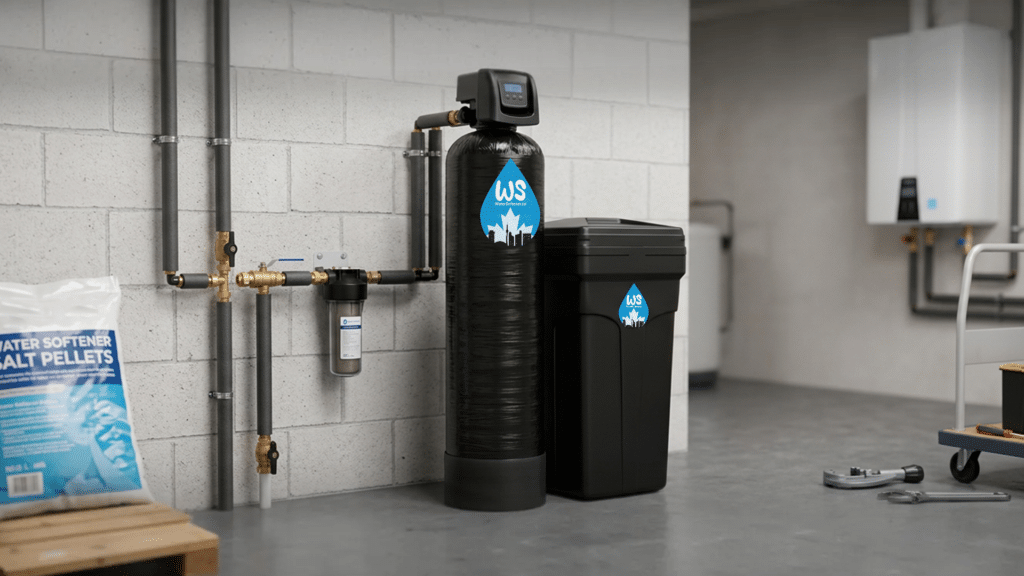
Some homes give you plenty of room to work with, especially detached houses with basements, allowing you to install whole-home water softeners. Others don’t. Townhouses can be tighter, and condos can come with restrictions that limit what you can install in the first place.
That naturally narrows down your options.
Sometimes it’s not about choosing the “best” system but the best one that actually fits your space.
- Your Plumbing Setup
Even the right system won’t work if it can’t be installed properly. You need:
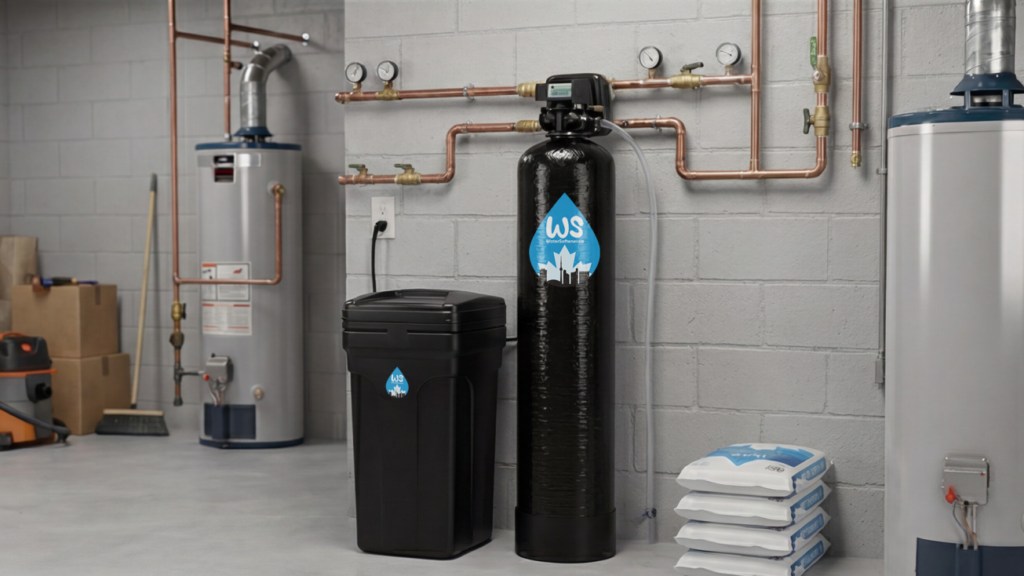
- a main water line access point (so the system treats water before it spreads through the home)
- a nearby drain for the regeneration cycle
If those aren’t in the right place, installation becomes more complicated, or more expensive than expected.
Best Water Softener Solutions Based on Home Type in Edmonton
| Home Type | Expected Household Size | Recommended System Grain Size | Best System Type |
| Detached Home | 3-6 people | 32,000 – 48,000 grains | Standard ion-exchange (single tank) |
| Townhouse / Duplex | 2-4 people | 24,000 – 40,000 grains | Compact or mid-size system |
| Condo / Apartment | 1-3 people | Not always applicable | Point-of-use / portable systems |
| Rural / Acreage (Well Water) | 3-6+ people | 40,000 – 64,000+ grains | Combo system (softener + filtration) |
| Large / Luxury Homes | 5-8+ people | 64,000 – 80,000+ grains | Dual-tank systems |
Note: These are general estimates based on Edmonton usage patterns and typical hardness levels (~10–20 grains per gallon).
Detached Single-Family Homes
In Edmonton, detached homes usually have the advantage of space (basements, utility rooms), which means installation isn’t much of a constraint. The focus here is more on capacity and consistency.
For a typical family of 4, you’re usually looking at:
- 32,000 to 48,000 grain systems
- Salt-based ion exchange units
- Regeneration every 5–7 days (depending on usage)
What matters here is avoiding undersizing. A system that’s too small will regenerate too frequently, which not only wastes salt and water but also reduces efficiency over time.
If you’re looking for an advanced, low-maintenance water softening system with an automatic regeneration system, we highly recommend you to have a look at our city water softeners.
Townhouses & Duplexes
Townhouses sit in an interesting middle ground. Water usage is still moderate, but space can start becoming a limiting factor, especially in tighter mechanical rooms.
You don’t necessarily need a full-size system here, but going too compact can backfire.
A typical setup looks like:
- 24,000 to 40,000 grain capacity
- Slim or space-saving units
- Slightly more frequent regeneration cycles compared to detached homes
The key here is balance. You want something compact enough to fit comfortably, but still capable of handling peak usage without noticeable drops in performance.
Condos & Apartments
This is where things shift completely.
In many Edmonton condos, you either:
- Already have building-wide softening, or
- Aren’t allowed to install a whole-home system at all
So instead of forcing a full system where it doesn’t belong, solutions here tend to be more targeted.
What actually makes sense:
- Shower-specific filters (for skin and hair)
- Under-sink filtration systems (for drinking water)
- Small portable softeners (in rare cases, if permitted)
Realistically, your daily usage might only be around 80–150 gallons, so a full-scale system would be overkill even if it were allowed.
Also read: Navigating Condo Rules for Water Softener Installation in Edmonton
Rural Homes & Acreages (Well Water Users)
With well water, you’re rarely dealing with just hardness. Iron levels can range anywhere from 1 to 10+ ppm, and sediment is often present as well.
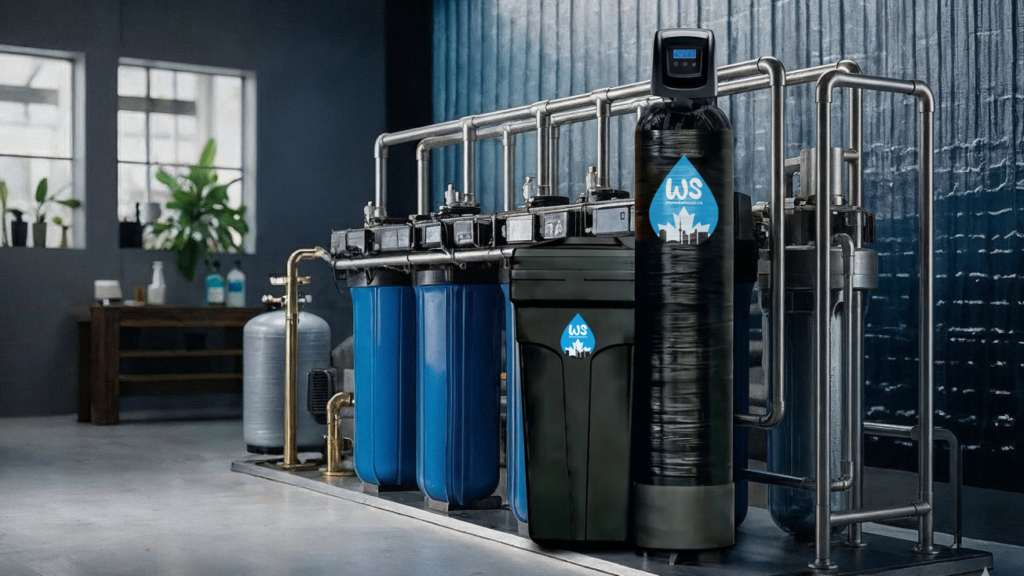
A proper setup for rural homes doesn’t just include a softener but a combination system.
| Water Issue | Common Range | What You Need |
| Hardness | 15–25 GPG | High-capacity softener (40K–64K grains) |
| Iron | 1–10+ ppm | Iron filter or oxidizing system |
| Sediment | Varies | Pre-filter (sediment filter) |
Because of this, systems are usually:
- 40,000 to 64,000+ grain capacity
- Paired with filtration stages before softening
- Designed for higher daily usage (often 300–500+ gallons)
This is one case where customization matters more than anything else.
We offer a variety of powerful, high-performance well water softeners for rural properties in Edmonton. Browse through our products today!
Large Homes / Luxury Properties
Larger homes bring a different kind of challenge. Multiple bathrooms, simultaneous water use, and higher-end fixtures all require consistent pressure and soft water without interruption.
That’s where dual-tank systems come in.
Instead of one tank regenerating and temporarily reducing supply, dual systems alternate—so you always have soft water available.
Typical setup:
- 64,000 to 80,000+ grain capacity
- Dual-tank configuration
- Designed for 400–700+ gallons per day
These systems cost more upfront, but they’re built for performance and convenience at scale.
Did you know that installing a water softener in your home can not just improve how your water feels during a shower, but also reduce your energy bills? Read this blog to know more.
When Do You Need a Whole-Home Water Softener?
A whole-home water softener usually makes sense when hard water is showing up across your home, not just in one isolated spot. If the effects keep coming up in your shower, laundry, cleaning routine, and appliances, smaller fixes often stop being enough.
You’re more likely to need a whole-home system if:
- Hard water is affecting multiple areas: This can include dry skin after showers, soap that does not lather properly, laundry that feels rough, and mineral buildup in more than one bathroom or fixture.
- Your home uses a lot of water: Many Edmonton family homes use around 250 to 400 gallons per day, and that kind of daily demand gives hardness minerals more chances to build up throughout the system.
- You want to protect appliances: Hard water can gradually reduce the efficiency of water heaters, dishwashers, and washing machines by leaving scale inside them over time.
- You own the property: Whole-home systems work best in homes where you have control over the plumbing, enough room for installation, and the ability to maintain the unit over time.
- Small fixes are adding up: If you are already considering separate filters for showers, sinks, and other areas, it may be more practical to solve the issue at the source.
- Your hardness level is high: When water tests show hardness in the range of 15 to 20+ grains per gallon, a full softening system often makes more sense than trying to manage the effects one by one.
A whole-home softener may not be necessary if your concern is limited to drinking water, or if you live in a condo or rental where installation is restricted.
But if hard water is affecting the way your whole home functions, treating it at the main line is usually the smarter move.
Find the Right Water Softener for Your Home Today
At the end of the day, choosing a water softener is all about picking what fits your home and meets your needs. The right setup depends on how much water you use, how your plumbing is laid out, and what kind of water you’re starting with. Two homes in the same neighborhood can end up needing completely different solutions, and that’s normal.
If you’re not sure where to start, it’s worth getting a proper assessment instead of guessing your way through it. At Water Softener Edmonton, our team recommends the optimum system for you based on your household size, your daily water usage, your space, and your plumbing setup. That way, you’re not overpaying for something you don’t need or ending up with a system that struggles to keep up.
If you’re thinking about installing a water softener or upgrading your current setup, feel free to reach out. We’ll help you figure out what works best for your home and walk you through options that actually work long-term.